Khayer Nasibeh, Marashi Sayed-Amir, Mirzaie Mehdi, Goshadrou Fatemeh
Department of Basic Sciences, Faculty of Paramedical Sciences, Shahid Beheshti University of Medical Sciences, Tehran, Iran.
Department of Biotechnology, College of Science, University of Tehran, Tehran, Iran.
PLoS One. 2017 Sep 21;12(9):e0184697. doi: 10.1371/journal.pone.0184697. eCollection 2017.
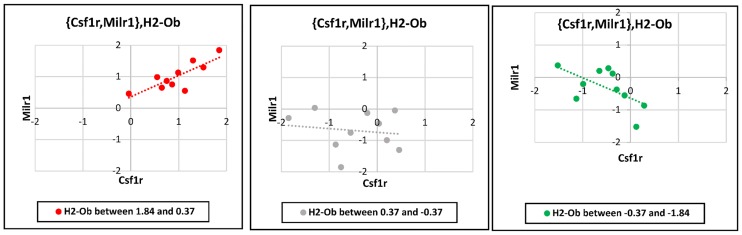
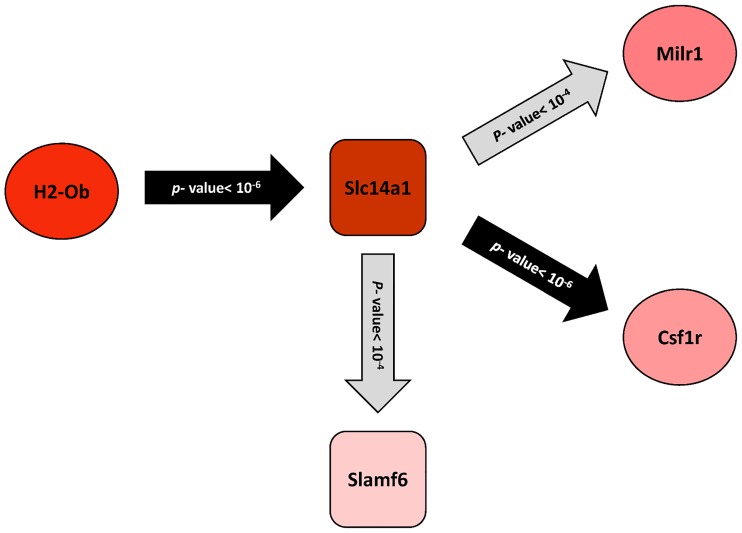
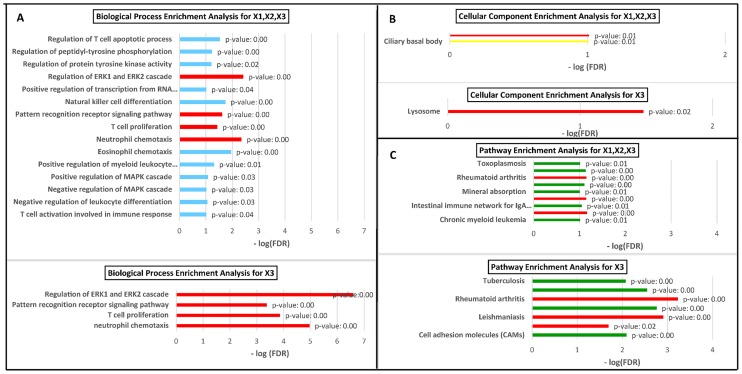
Alzheimer's disease (AD) is the most common cause for dementia in human. Currently, more than 46 million people in the world suffer from AD and it is estimated that by 2050 this number increases to more than 131 million. AD is considered as a complex disease. Therefore, understanding the mechanism of AD is a universal challenge. Nowadays, a huge number of disease-related high-throughput "omics" datasets are freely available. Such datasets contain valuable information about disease-related pathways and their corresponding gene interactions. In the present work, a three-way interaction model is used as a novel approach to understand AD-related mechanisms. This model can trace the dynamic nature of co-expression relationship between two genes by introducing their link to a third gene. Apparently, such relationships cannot be traced by the classical two-way interaction model. Liquid association method was applied to capture the statistically significant triplets which are involved in three-way interaction. Subsequently, gene set enrichment analysis (GSEA) and gene regulatory network (GRN) inference were applied to analyze the biological relevance of the statistically significant triplets. The results of this study suggest that the innate immunity processes are important in AD. Specifically, our results suggest that H2-Ob as the switching gene and the gene pair {Csf1r, Milr1} form a statistically significant and biologically relevant triplet, which may play an important role in AD. We propose that the homeostasis-related link between mast cells and microglia is presumably controlled with H2-Ob expression levels as a switching gene.
阿尔茨海默病(AD)是人类痴呆最常见的病因。目前,全球有超过4600万人患有AD,预计到2050年这一数字将增至1.31亿以上。AD被认为是一种复杂疾病。因此,了解AD的发病机制是一项全球性挑战。如今,大量与疾病相关的高通量“组学”数据集可免费获取。此类数据集包含有关疾病相关通路及其相应基因相互作用的宝贵信息。在本研究中,采用三向相互作用模型作为一种新方法来理解与AD相关的机制。该模型通过引入两个基因与第三个基因的联系,能够追踪这两个基因共表达关系的动态性质。显然,经典的双向相互作用模型无法追踪这种关系。应用液相关联方法来捕获参与三向相互作用的具有统计学意义的三联体。随后,应用基因集富集分析(GSEA)和基因调控网络(GRN)推断来分析具有统计学意义的三联体的生物学相关性。本研究结果表明,固有免疫过程在AD中很重要。具体而言,我们的结果表明,H2-Ob作为开关基因,基因对{Csf1r,Milr1}形成一个具有统计学意义且与生物学相关的三联体,这可能在AD中发挥重要作用。我们提出,肥大细胞和小胶质细胞之间与稳态相关的联系可能受作为开关基因的H2-Ob表达水平控制。