Olmos-Alonso Adrian, Schetters Sjoerd T T, Sri Sarmi, Askew Katharine, Mancuso Renzo, Vargas-Caballero Mariana, Holscher Christian, Perry V Hugh, Gomez-Nicola Diego
1 Centre for Biological Sciences, University of Southampton, Southampton, UK.
1 Centre for Biological Sciences, University of Southampton, Southampton, UK 2 Institute for Life Sciences, University of Southampton, Southampton, UK.
Brain. 2016 Mar;139(Pt 3):891-907. doi: 10.1093/brain/awv379. Epub 2016 Jan 8.
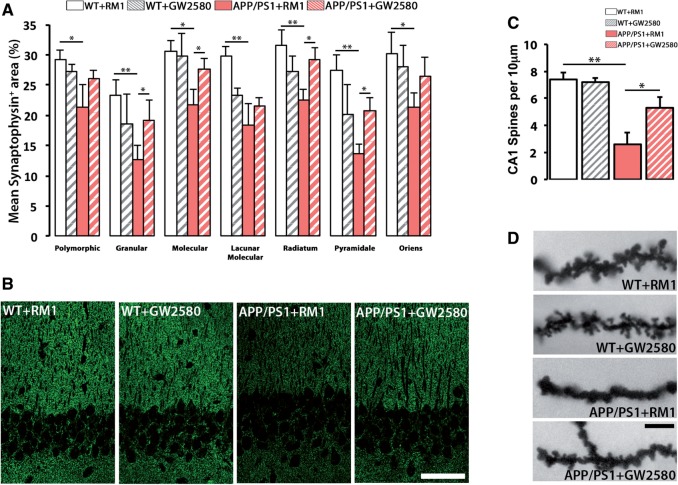
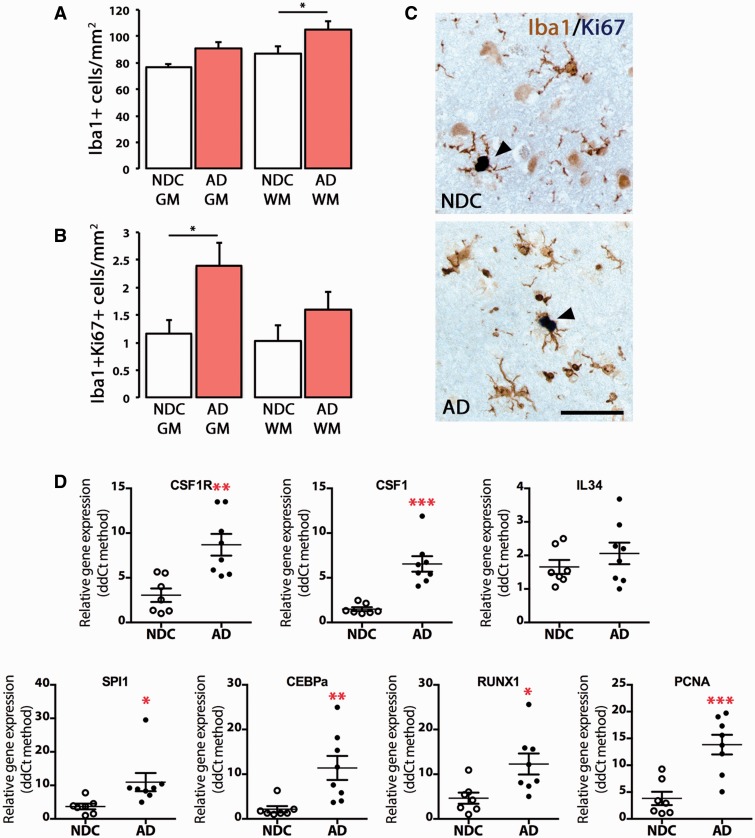
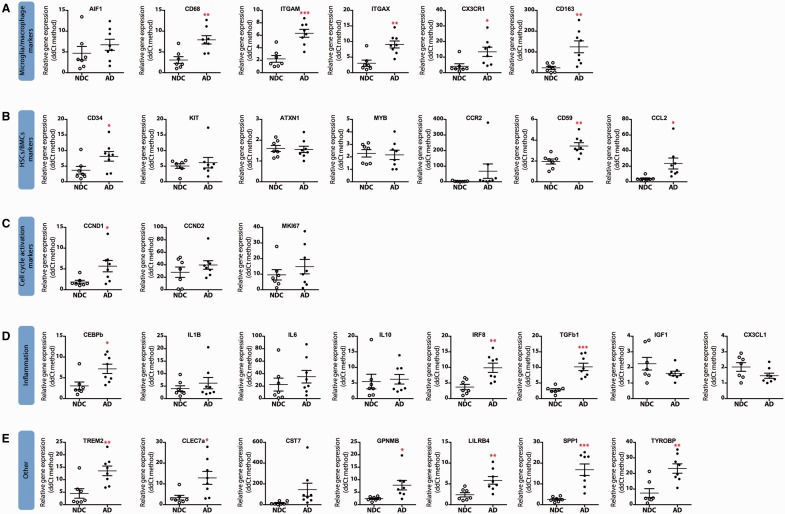
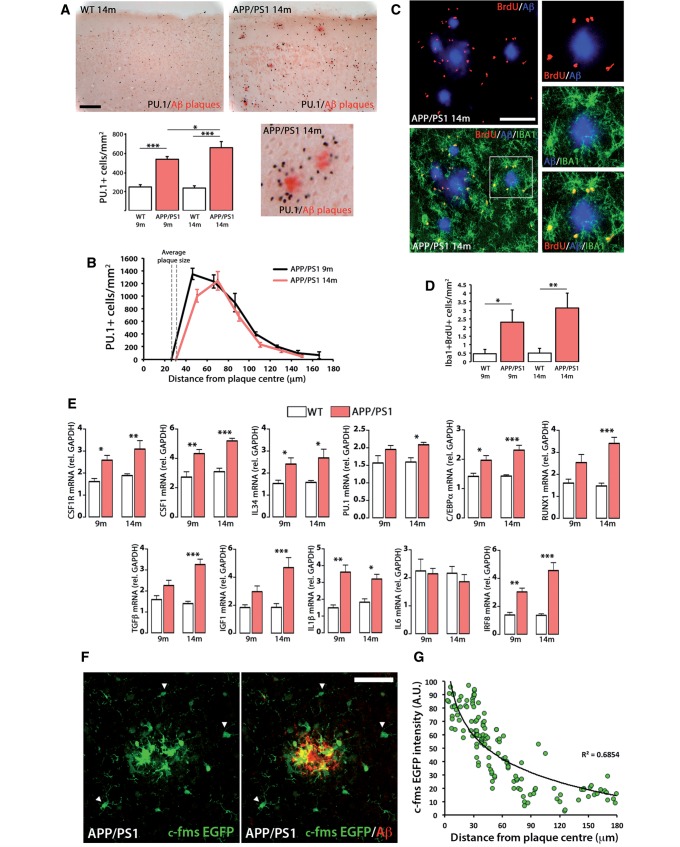
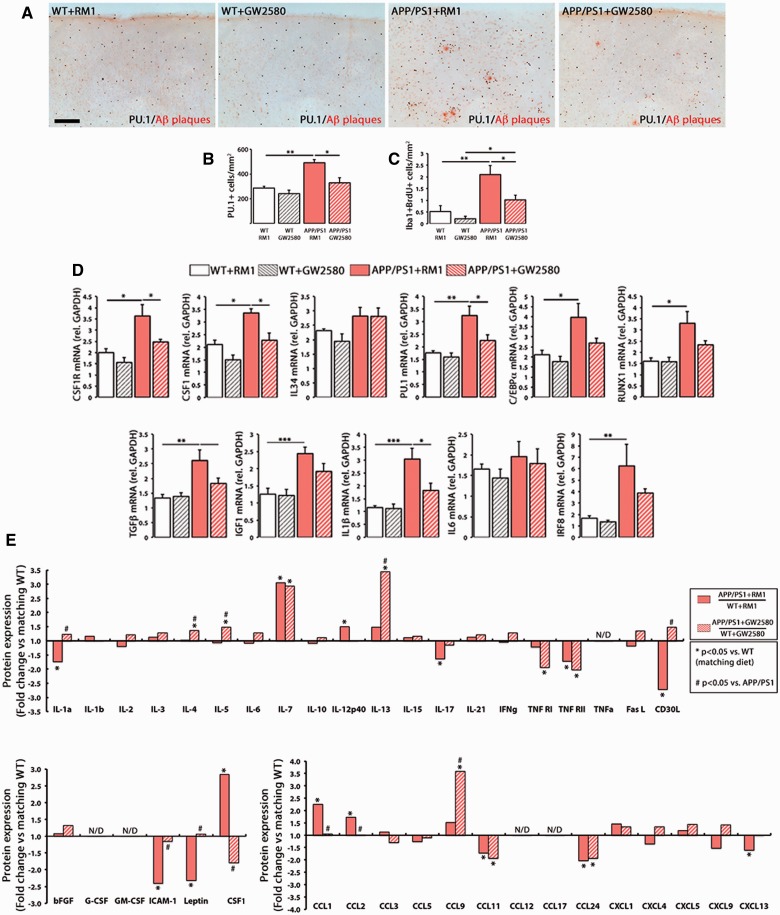
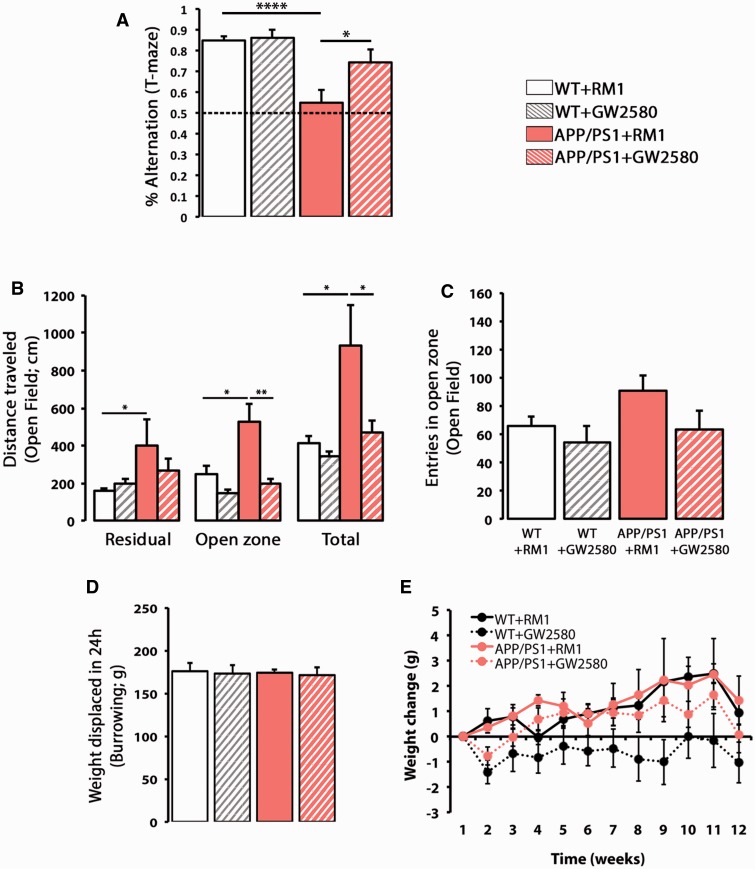
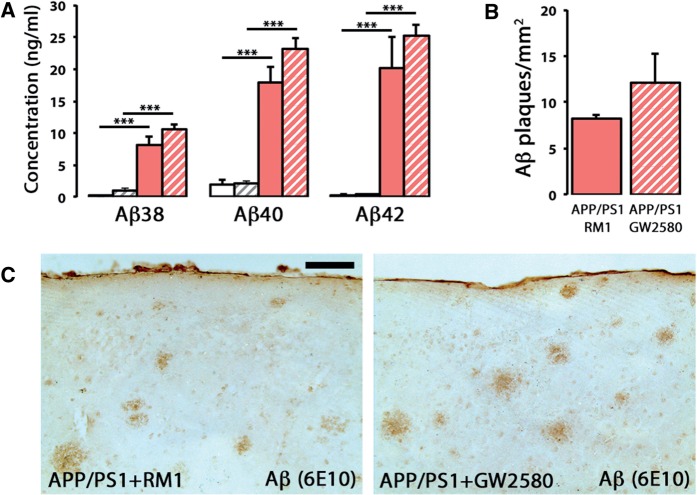
The proliferation and activation of microglial cells is a hallmark of several neurodegenerative conditions. This mechanism is regulated by the activation of the colony-stimulating factor 1 receptor (CSF1R), thus providing a target that may prevent the progression of conditions such as Alzheimer's disease. However, the study of microglial proliferation in Alzheimer's disease and validation of the efficacy of CSF1R-inhibiting strategies have not yet been reported. In this study we found increased proliferation of microglial cells in human Alzheimer's disease, in line with an increased upregulation of the CSF1R-dependent pro-mitogenic cascade, correlating with disease severity. Using a transgenic model of Alzheimer's-like pathology (APPswe, PSEN1dE9; APP/PS1 mice) we define a CSF1R-dependent progressive increase in microglial proliferation, in the proximity of amyloid-β plaques. Prolonged inhibition of CSF1R in APP/PS1 mice by an orally available tyrosine kinase inhibitor (GW2580) resulted in the blockade of microglial proliferation and the shifting of the microglial inflammatory profile to an anti-inflammatory phenotype. Pharmacological targeting of CSF1R in APP/PS1 mice resulted in an improved performance in memory and behavioural tasks and a prevention of synaptic degeneration, although these changes were not correlated with a change in the number of amyloid-β plaques. Our results provide the first proof of the efficacy of CSF1R inhibition in models of Alzheimer's disease, and validate the application of a therapeutic strategy aimed at modifying CSF1R activation as a promising approach to tackle microglial activation and the progression of Alzheimer's disease.
小胶质细胞的增殖和激活是几种神经退行性疾病的标志。这一机制受集落刺激因子1受体(CSF1R)激活的调控,从而提供了一个可能预防诸如阿尔茨海默病等疾病进展的靶点。然而,尚未有关于阿尔茨海默病中小胶质细胞增殖的研究以及CSF1R抑制策略疗效的验证报道。在本研究中,我们发现人类阿尔茨海默病中小胶质细胞增殖增加,这与CSF1R依赖性促有丝分裂级联反应的上调增加一致,且与疾病严重程度相关。使用阿尔茨海默病样病理的转基因模型(APPswe,PSEN1dE9;APP/PS1小鼠),我们确定在淀粉样β斑块附近,小胶质细胞增殖呈CSF1R依赖性逐渐增加。口服酪氨酸激酶抑制剂(GW2580)对APP/PS1小鼠的CSF1R进行长期抑制,导致小胶质细胞增殖受阻,且小胶质细胞炎症表型转变为抗炎表型。对APP/PS1小鼠的CSF1R进行药物靶向作用,使其在记忆和行为任务中的表现得到改善,并预防了突触退化,尽管这些变化与淀粉样β斑块数量的改变无关。我们的结果首次证明了CSF1R抑制在阿尔茨海默病模型中的疗效,并验证了旨在改变CSF1R激活的治疗策略作为应对小胶质细胞激活和阿尔茨海默病进展的一种有前景方法的应用。