Chakraborty Saikat, Krishnan Yamuna
National Centre for Biological Sciences-TIFR, Bangalore, Karnataka 560065, India.
Department of Chemistry, University of Chicago, Chicago, IL 60637, USA.
Nucleic Acids Res. 2017 Sep 19;45(16):9694-9705. doi: 10.1093/nar/gkx613.
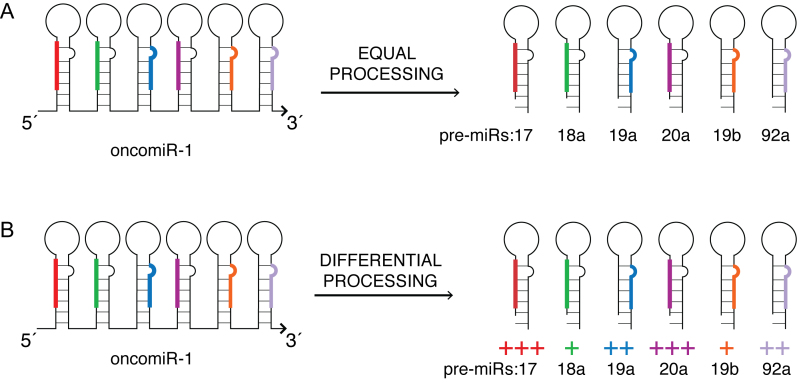
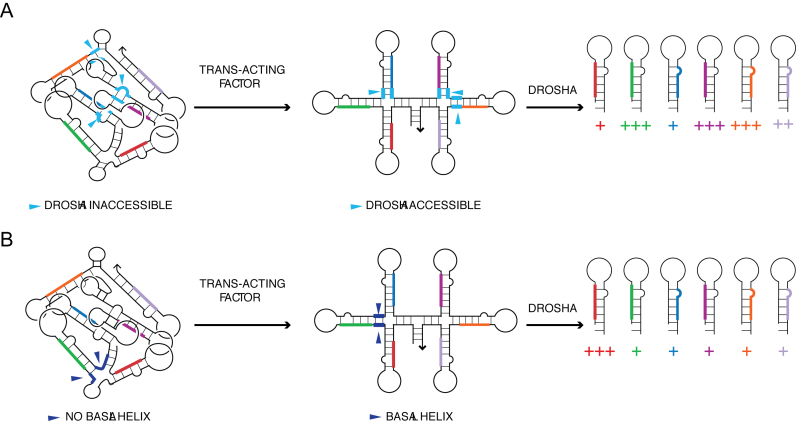
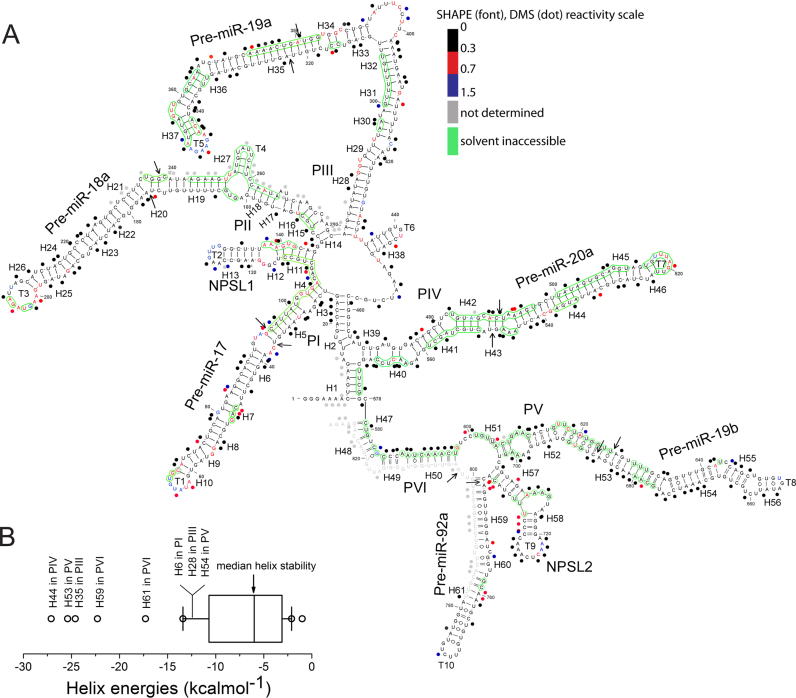
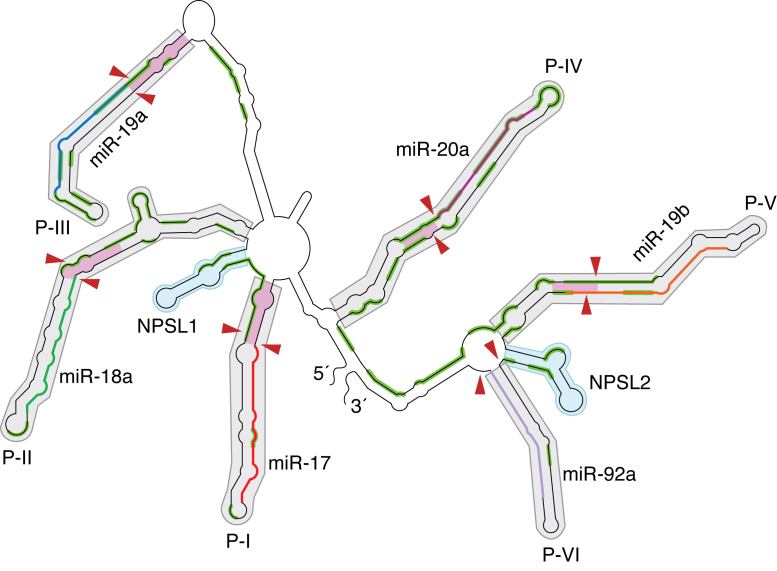
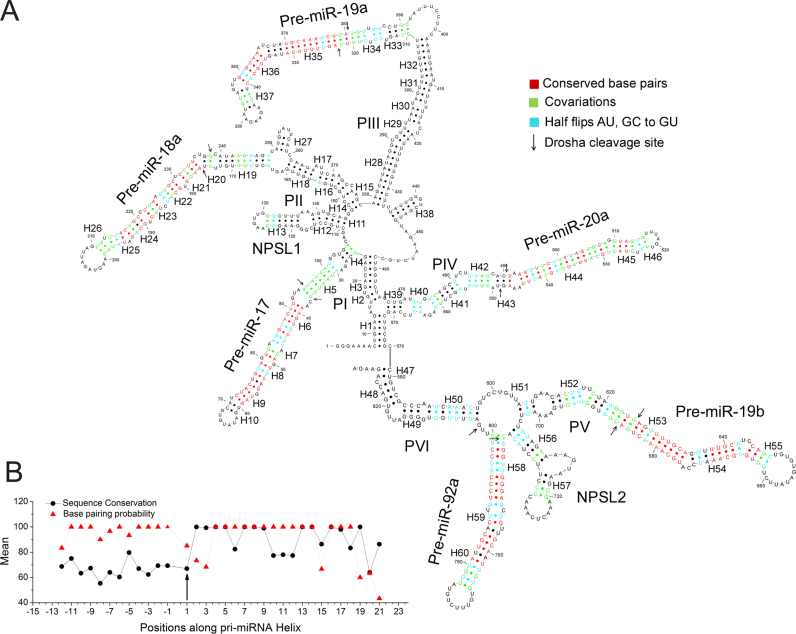
The miR-17-92a cluster, also known as 'oncomiR-1', is an RNA transcript that plays a pivotal regulatory role in cellular processes, including the cell cycle, proliferation and apoptosis. Its dysregulation underlies the development of several cancers. Oncomir-1 comprises six constituent miRNAs, each processed with different efficiencies as a function of both developmental time and tissue type. The structural mechanisms that regulate such differential processing are unknown, and this has impeded our understanding of the dysregulation of oncomiR-1 in pathophysiology. By probing the sensitivity of each nucleotide in oncomiR-1 to reactive small molecules, we present a secondary structural map of this RNA at single-nucleotide resolution. The secondary structure and solvent accessible regions of oncomiR-1 reveal that most of its primary microRNA domains are suboptimal substrates for Drosha-DGCR8, and therefore resistant to microprocessing. The structure indicates that the binding of trans-acting factors is required to remodel the tertiary organization and unmask cryptic primary microRNA domains to facilitate their processing into pre-microRNAs.
miR-17-92a簇,也被称为“致癌miR-1”,是一种RNA转录本,在包括细胞周期、增殖和凋亡在内的细胞过程中发挥关键的调节作用。其失调是多种癌症发生发展的基础。致癌miR-1由六个组成性miRNA组成,每个miRNA根据发育时间和组织类型的不同,加工效率也不同。调节这种差异加工的结构机制尚不清楚,这阻碍了我们对致癌miR-1在病理生理学中失调的理解。通过探测致癌miR-1中每个核苷酸对反应性小分子的敏感性,我们以单核苷酸分辨率展示了该RNA的二级结构图。致癌miR-1的二级结构和溶剂可及区域表明,其大多数初级微小RNA结构域是Drosha-DGCR8的次优底物,因此对微加工具有抗性。该结构表明,需要反式作用因子的结合来重塑三级结构并暴露隐藏的初级微小RNA结构域,以促进它们加工成前体微小RNA。