Taniguchi Junichi, Pandian Ganesh N, Hidaka Takuya, Hashiya Kaori, Bando Toshikazu, Kim Kyeong Kyu, Sugiyama Hiroshi
Department of Chemistry, Graduate School of Science Kyoto University, Sakyo-Ku, Kyoto 606-8502, Japan.
Institute for Integrated Cell-Materials Science (WPI-iCeMS) Kyoto University, Sakyo-Ku, Kyoto 606-8502, Japan.
Nucleic Acids Res. 2017 Sep 19;45(16):9219-9228. doi: 10.1093/nar/gkx693.
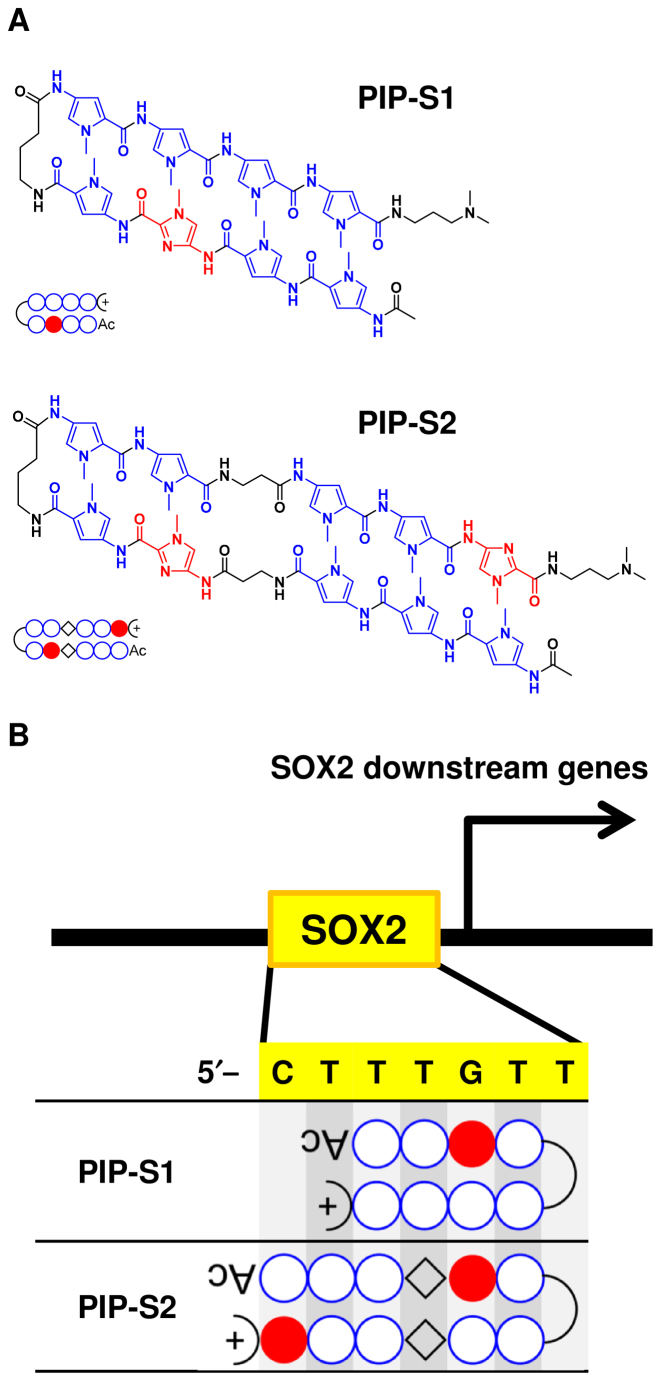
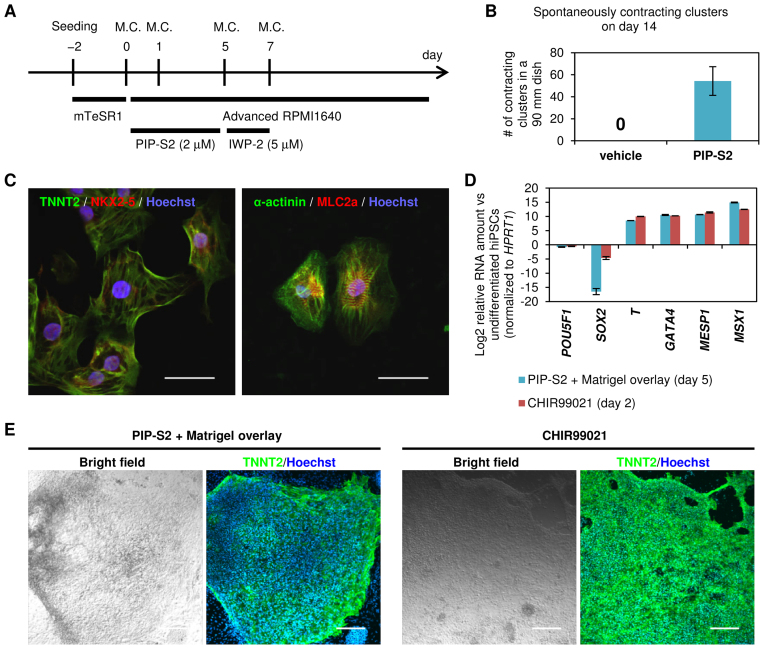
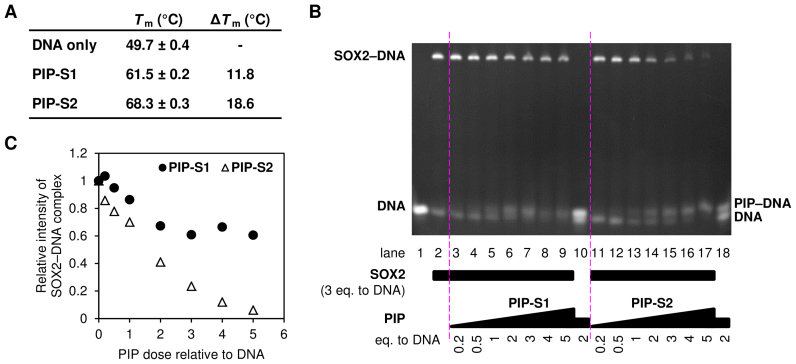
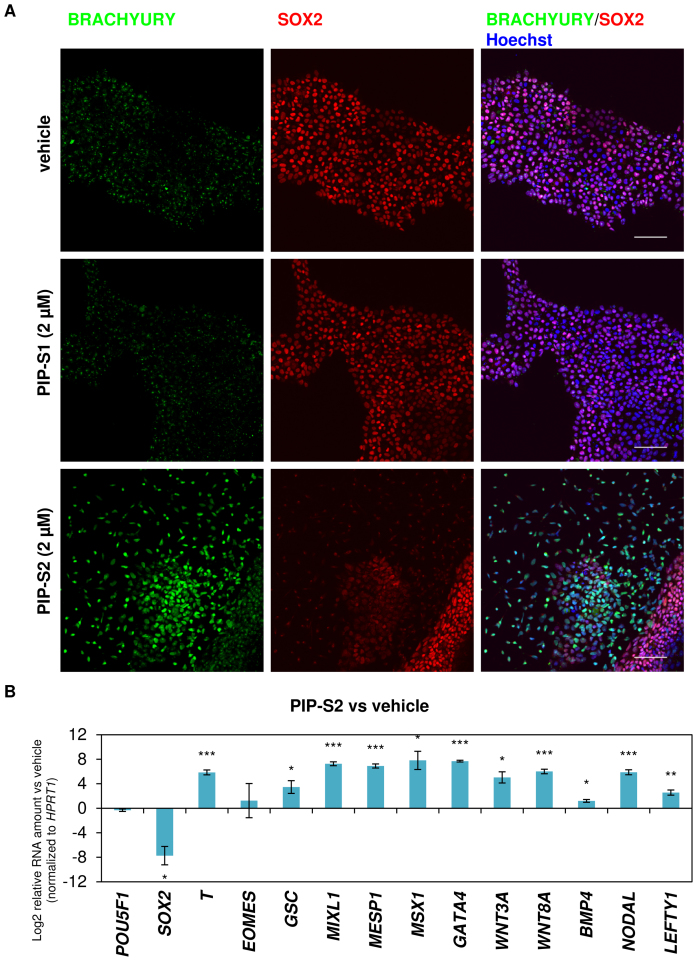
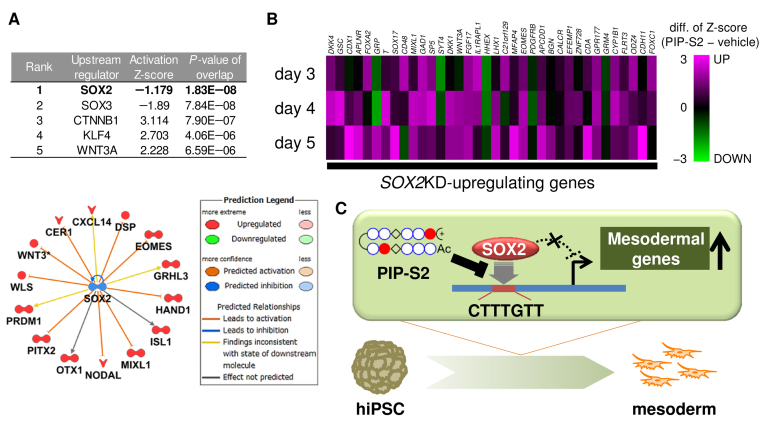
Targeted differentiation of human induced pluripotent stem cells (hiPSCs) using only chemicals would have value-added clinical potential in the regeneration of complex cell types including cardiomyocytes. Despite the availability of several chemical inhibitors targeting proteins involved in signaling pathways, no bioactive synthetic DNA-binding inhibitors, targeting key cell fate-controlling genes such as SOX2, are yet available. Here, we demonstrate a novel DNA-based chemical approach to guide the differentiation of hiPSCs using pyrrole-imidazole polyamides (PIPs), which are sequence-selective DNA-binding synthetic molecules. Harnessing knowledge about key transcriptional changes during the induction of cardiomyocyte, we developed a DNA-binding inhibitor termed PIP-S2, targeting the 5'-CTTTGTT-3' and demonstrated that inhibition of SOX2-DNA interaction by PIP-S2 triggers the mesoderm induction in hiPSCs. Genome-wide gene expression analyses revealed that PIP-S2 induced mesoderm by targeted alterations in SOX2-associated gene regulatory networks. Also, employment of PIP-S2 along with a Wnt/β-catenin inhibitor successfully generated spontaneously contracting cardiomyocytes, validating our concept that DNA-binding inhibitors could drive the directed differentiation of hiPSCs. Because PIPs can be fine-tuned to target specific DNA sequences, our DNA-based approach could be expanded to target and regulate key transcription factors specifically associated with desired cell types.
仅使用化学物质对人诱导多能干细胞(hiPSC)进行定向分化,在包括心肌细胞在内的复杂细胞类型再生方面将具有增值临床潜力。尽管有几种针对信号通路相关蛋白的化学抑制剂,但尚无针对关键细胞命运控制基因(如SOX2)的生物活性合成DNA结合抑制剂。在此,我们展示了一种基于DNA的新型化学方法,使用吡咯-咪唑聚酰胺(PIP)来指导hiPSC的分化,PIP是序列选择性DNA结合合成分子。利用心肌细胞诱导过程中关键转录变化的知识,我们开发了一种名为PIP-S2的DNA结合抑制剂,靶向5'-CTTTGTT-3',并证明PIP-S2对SOX2-DNA相互作用的抑制触发了hiPSC中的中胚层诱导。全基因组基因表达分析表明,PIP-S2通过对SOX2相关基因调控网络的靶向改变诱导中胚层。此外,将PIP-S2与Wnt/β-连环蛋白抑制剂一起使用成功产生了自发收缩的心肌细胞,验证了我们的概念,即DNA结合抑制剂可以驱动hiPSC的定向分化。由于PIP可以进行微调以靶向特定的DNA序列,我们基于DNA的方法可以扩展到靶向和调节与所需细胞类型特异性相关的关键转录因子。