Department of Biomedical Engineering, School of Medicine, School of Engineering, University of Alabama at Birmingham, Birmingham, AL35233, USA.
Sci Rep. 2019 Dec 18;9(1):19389. doi: 10.1038/s41598-019-55620-x.
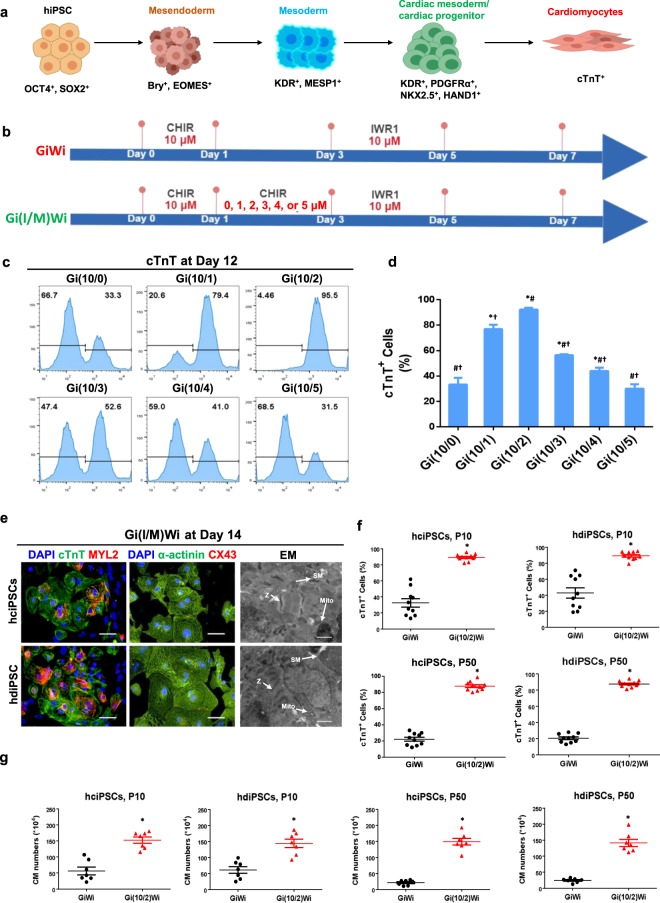
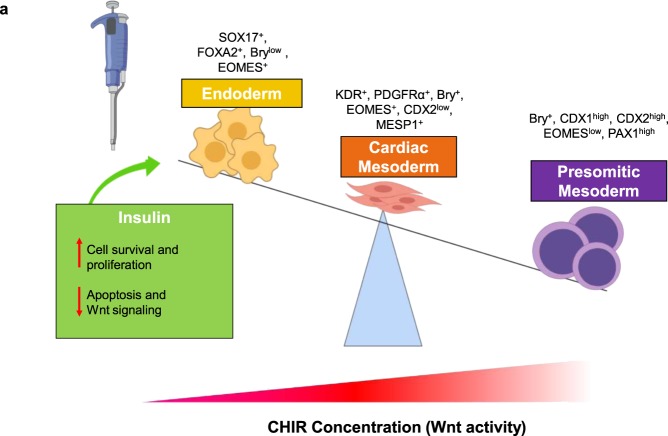
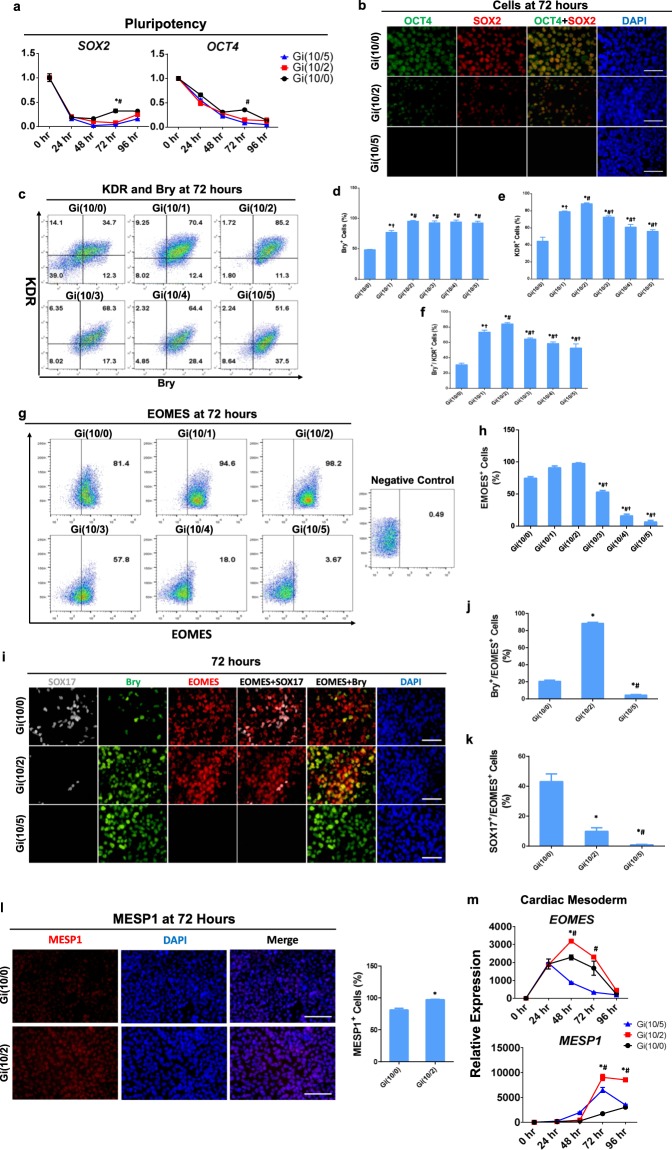
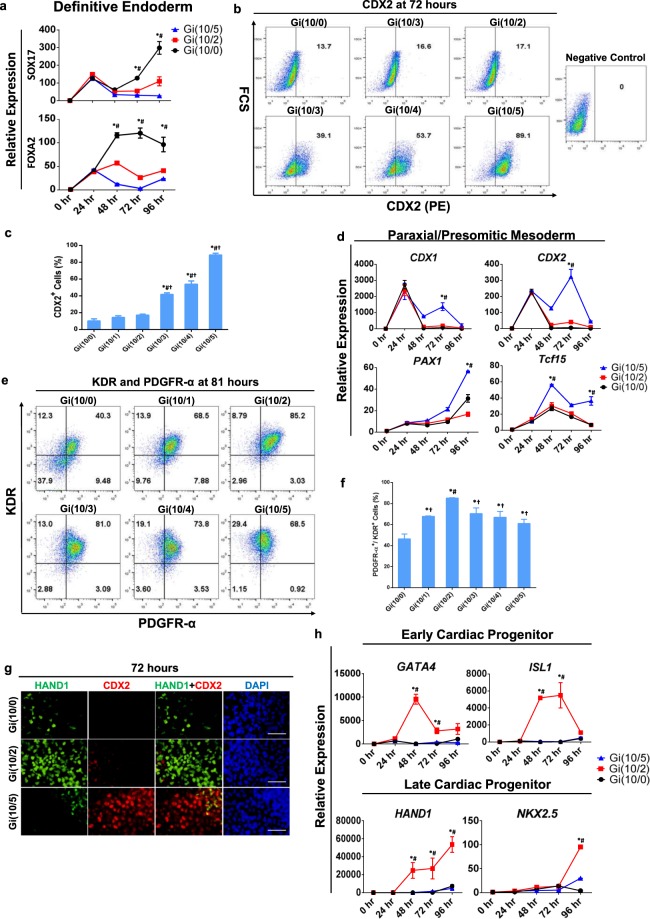
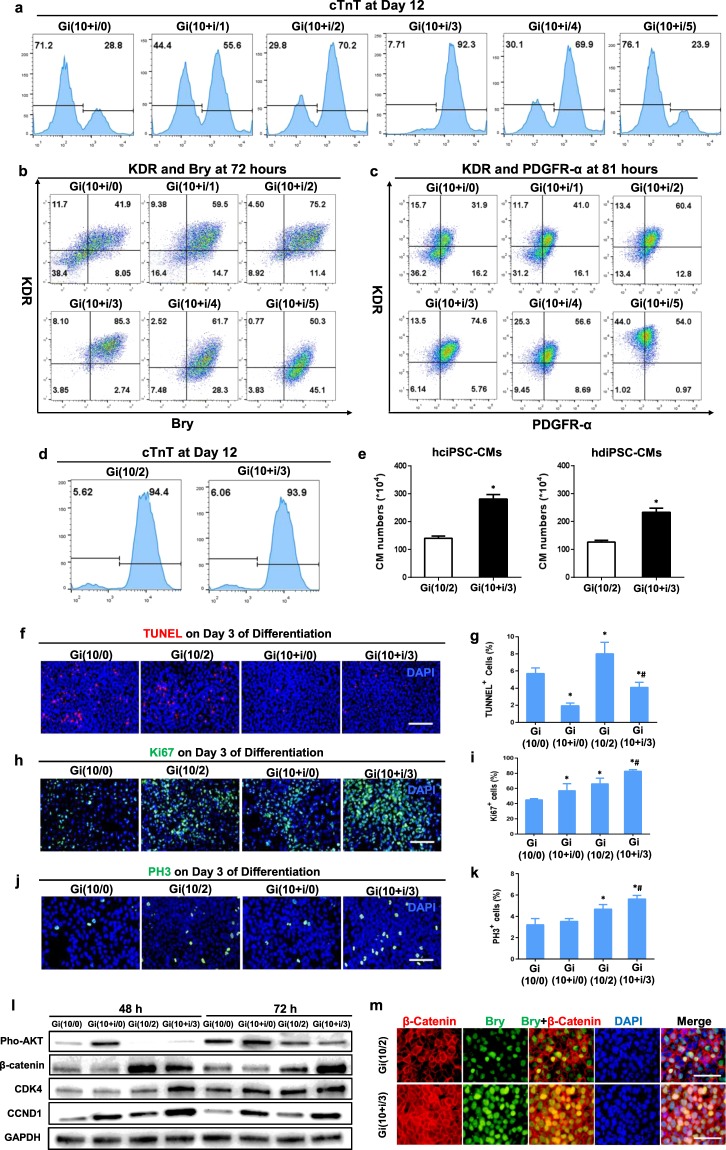
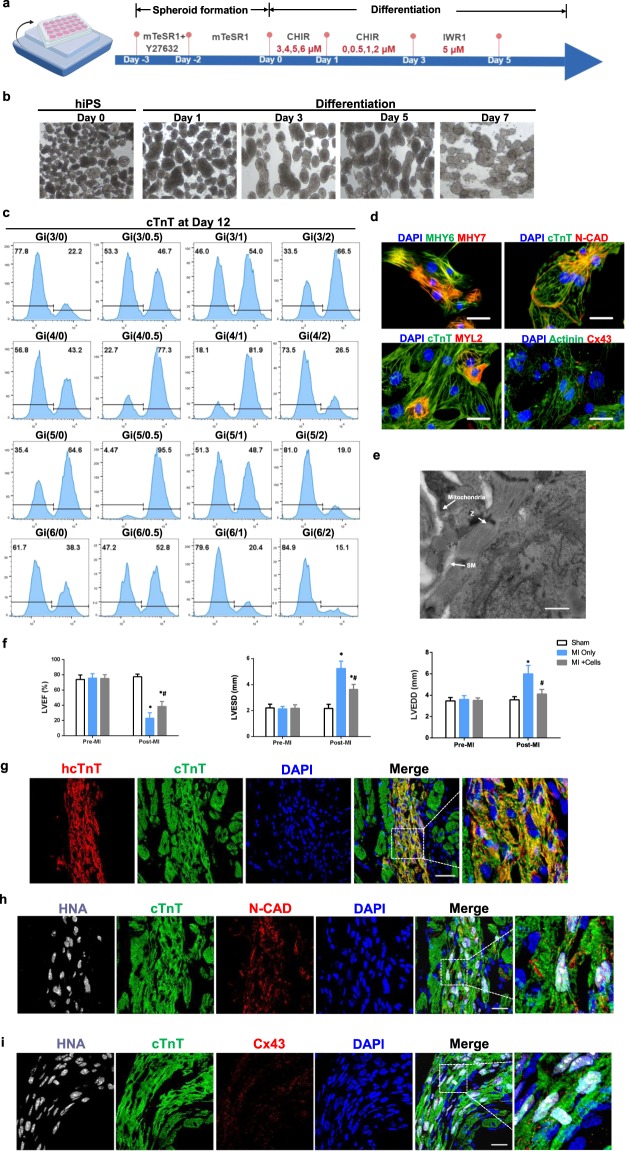
Differentiation of cardiomyocytes (CMs) from human induced pluripotent stem cells (hiPSCs) is critically dependent upon the regulation of the Wnt signaling pathway. The mechanisms remain unclear with regard to the dose and timing of each differentiation inducer, and the interaction of the inducers that regulate the Wnt in mesendoderm specification to cardiac mesoderm. Consequently, it remains far from optimal in differentiation efficiency and consistency from hiPSC lines to CMs. Here, we have carefully deciphered the role of Wnt signaling pathway manipulation on mesoderm specification in a dosage and time dependent manner. To examine the hypothesis of that fate specification of hiPSC-CMs differentiation is dictated by temporal and spatial factors that regulate Wnt, we evaluate hiPSC-CM differentiation with: (1) two-phase modulation of Wnt, (2) dosage variant of GSK3β inhibitors, (3) treatment with insulin, and (4) 3-dimentional suspension culture environment on iPSC-CM differentiation. The results highlight the importance of mesendoderm specification to cardiac mesoderm, which needs precisely regulation of Wnt in a dosage dependent and temporal on/off manner. This temporal regulation dictates the final efficiency and purity of derived cardiomyocytes. After the initial activation of Wnt signaling pathway to generate mesendoderm, the maintenance of Wnt signaling at an appropriate dose is critical to direct the cell fate into cardiac mesoderm. Otherwise, lower Wnt signals lead to definitive endoderm and higher Wnt signals induce presomitic mesoderm differentiation. The precisely specification of cardiac mesoderm results in not only greater than 90% of cTnT cardiomyocytes but also high cardiomyocytes yield under both monolayer and suspension culture conditions. Thus, the current findings provide critical insights to decipher the temporal mechanism of Wnt activation in regulation of hiPSC-CMs differentiation, and more importantly provide the guidelines for the consistent and high-yield and high-quality hiPSC-CMs production in cardiovascular research.
心肌细胞(CMs)从人诱导多能干细胞(hiPSCs)的分化极大地依赖于 Wnt 信号通路的调节。关于每个分化诱导剂的剂量和时间以及调节中胚层特化的 Wnt 的诱导剂的相互作用的机制尚不清楚,以将诱导剂调节为心脏中胚层。因此,从 hiPSC 系到 CMs 的分化效率和一致性仍然远非最佳。在这里,我们已经仔细解读了 Wnt 信号通路调节在剂量和时间依赖性方式中的中胚层特化中的作用。为了检验 hiPSC-CM 分化的命运特化是由调节 Wnt 的时空因素决定的假设,我们通过以下方式评估 hiPSC-CM 分化:(1)Wnt 的两阶段调节,(2)GSK3β 抑制剂的剂量变异,(3)胰岛素处理,以及(4)iPSC-CM 分化的 3 维悬浮培养环境。结果强调了中胚层特化对心脏中胚层的重要性,这需要 Wnt 的精确剂量和时间依赖性开/关调节。这种时间调节决定了衍生心肌细胞的最终效率和纯度。在初始激活 Wnt 信号通路以生成中胚层之后,维持适当剂量的 Wnt 信号对于将细胞命运定向为心脏中胚层至关重要。否则,较低的 Wnt 信号会导致明确的内胚层,而较高的 Wnt 信号会诱导前体中胚层分化。心脏中胚层的精确特化不仅导致 cTnT 心肌细胞超过 90%,而且在单层和悬浮培养条件下也具有较高的心肌细胞产量。因此,目前的发现为理解 Wnt 激活在 hiPSC-CMs 分化中的时间机制提供了关键见解,更重要的是为心血管研究中一致,高产和高质量的 hiPSC-CMs 生产提供了指导。