Department of Bioengineering, Nagaoka University of Technology, 1603-1 Kamitomioka, Nagaoka, Niigata, 940-2188, Japan.
Department of Science of Technology Innovation, Nagaoka University of Technology, 1603-1 Kamitomioka, Nagaoka, Niigata, 940-2188, Japan.
Sci Rep. 2021 Nov 2;11(1):21426. doi: 10.1038/s41598-021-00763-z.
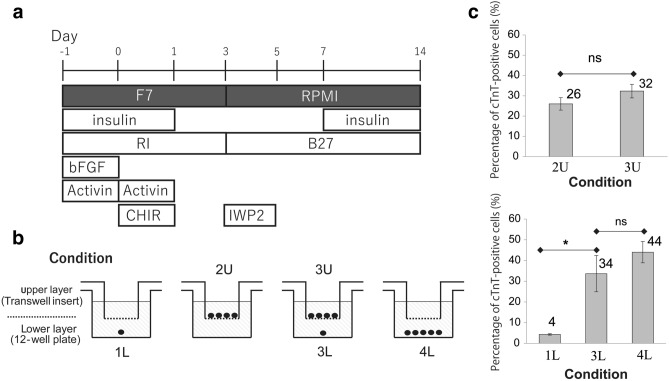
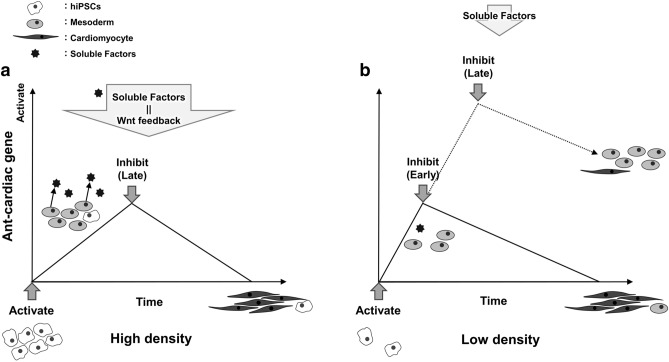
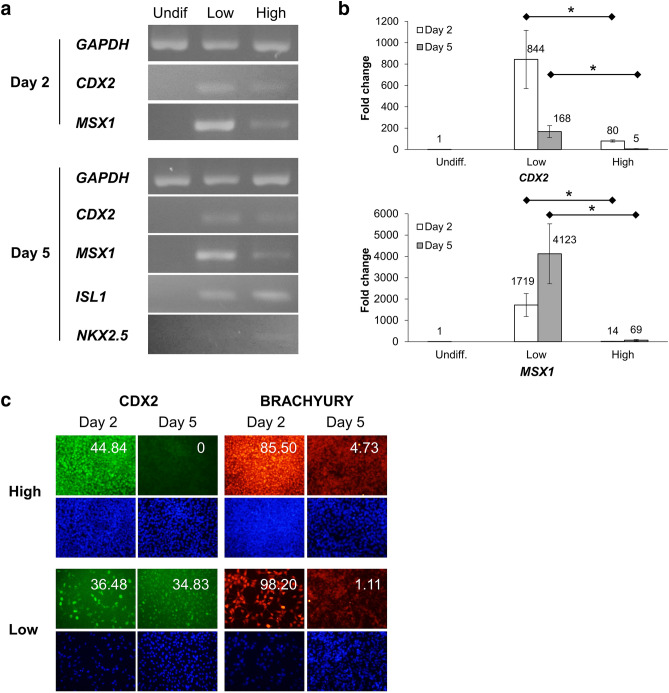
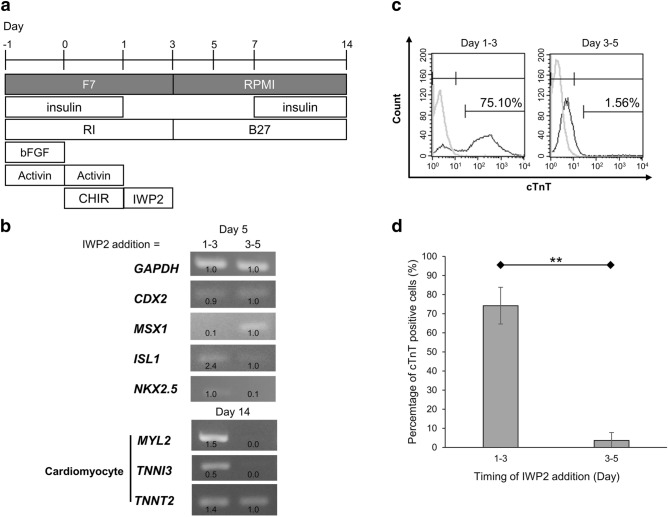
Cardiomyocytes derived from human induced pluripotent stem cells (hiPSCs) have received increasing attention for their clinical use. Many protocols induce cardiomyocytes at an initial high cell density (confluence) to utilize cell density effects as hidden factors for cardiomyocyte differentiation. Previously, we established a protocol to induce hiPSC differentiation into cardiomyocytes using a defined culture medium and an initial low cell density (1% confluence) to minimize the hidden factors. Here, we investigated the key factors promoting cardiomyocyte differentiation at an initial low cell density to clarify the effects of cell density. Co-culture of hiPSCs at an initial low cell density with those at an initial high cell density showed that signals secreted from cells (auto/paracrine factors) and not cell-cell contact signals, played an important role in cardiomyocyte differentiation. Moreover, although cultures with initial low cell density showed higher expression of anti-cardiac mesoderm genes, earlier treatment with a Wnt production inhibitor efficiently suppressed the anti-cardiac mesoderm gene expression and promoted cardiomyocyte differentiation by up to 80% at an initial low cell density. These results suggest that the main effect of cell density on cardiomyocyte differentiation is inhibition of Wnt signaling at the early stage of induction, through auto/paracrine factors.
人心肌细胞诱导多能干细胞(hiPSCs)为其临床应用受到越来越多的关注。许多方案诱导心肌细胞在初始高细胞密度(汇合)以利用细胞密度效应作为心肌细胞分化的隐藏因素。以前,我们建立了一个使用定义的培养基和初始低细胞密度(1%汇合)诱导 hiPSC 分化为心肌细胞的方案,以最小化隐藏因素。在这里,我们研究了在初始低细胞密度下促进心肌细胞分化的关键因素,以阐明细胞密度的影响。在初始低细胞密度下与初始高细胞密度下共培养 hiPSC 表明,细胞分泌的信号(自分泌/旁分泌因子)而不是细胞-细胞接触信号,在心肌细胞分化中发挥重要作用。此外,尽管初始低细胞密度培养物显示出更高的抗心脏中胚层基因表达,但早期用 Wnt 产生抑制剂处理可有效抑制抗心脏中胚层基因表达,并通过自分泌/旁分泌因子在初始低细胞密度下将心肌细胞分化提高多达 80%。这些结果表明,细胞密度对心肌细胞分化的主要影响是通过自分泌/旁分泌因子在诱导的早期抑制 Wnt 信号。