Molecular Medical Bioscience Laboratory, Yokohama City University Graduate School of Medical Life Science, Yokohama, 230-0045, Japan.
Cellular Neuroscience, Neurodegeneration and Repair Program, Departments of Neurology and Neuroscience, Yale University School of Medicine, New Haven, CT, 06536, USA.
Sci Rep. 2017 Sep 21;7(1):12119. doi: 10.1038/s41598-017-12449-6.
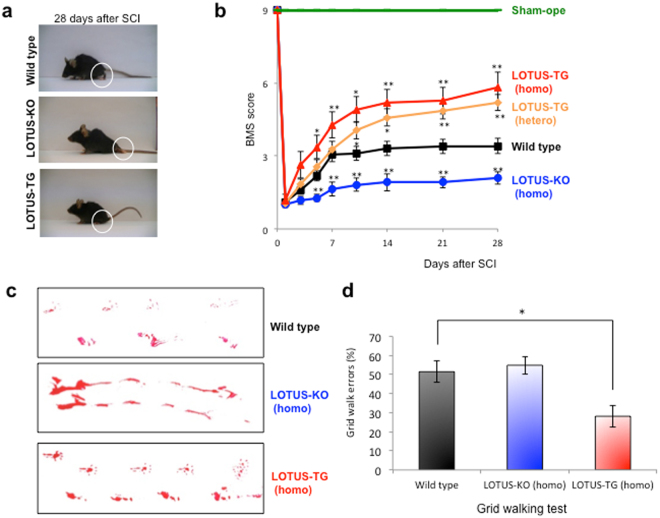
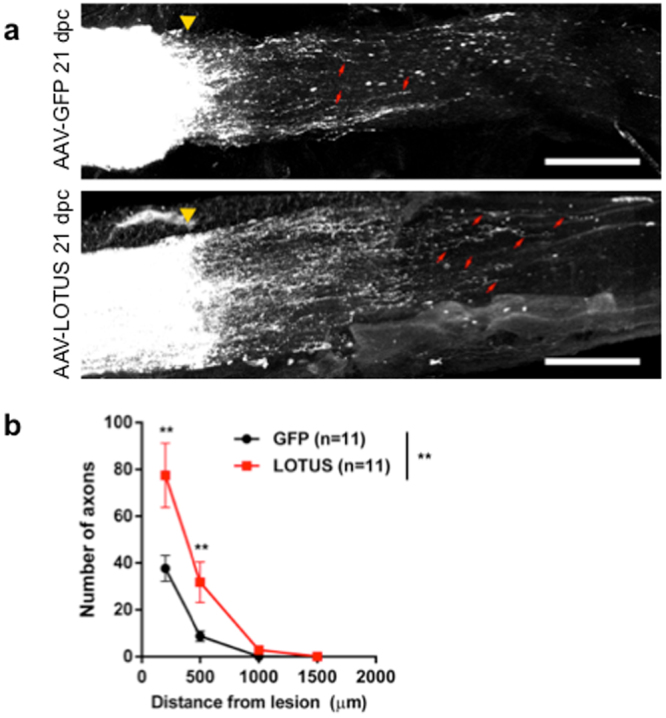
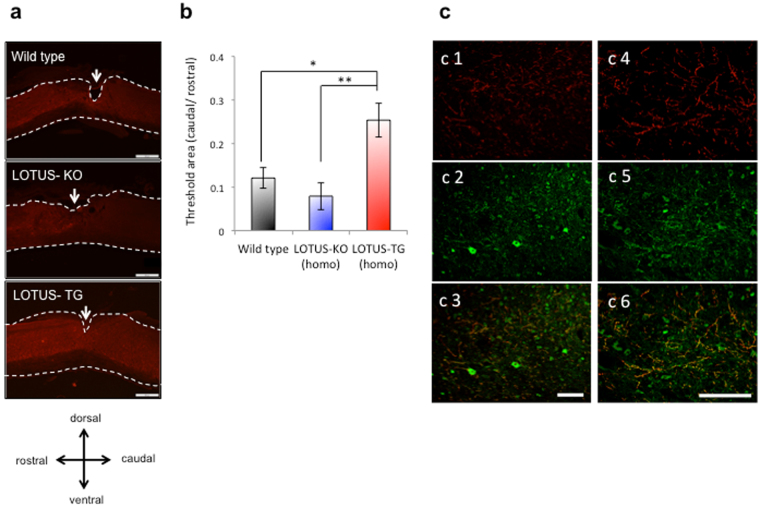
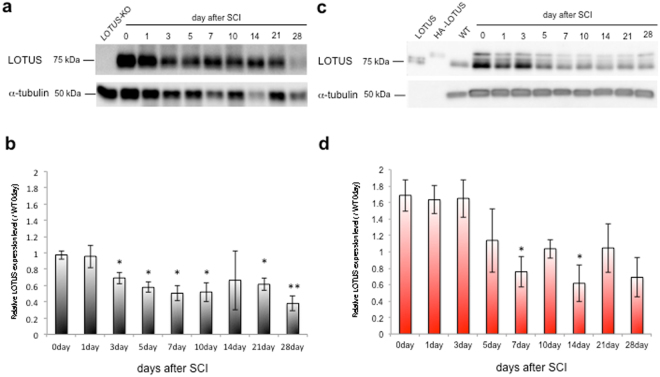
Axonal regeneration in the adult mammalian central nervous system is limited in part by the non-permissive environment, including axonal growth inhibitors such as the Nogo-A protein. How the functions of these inhibitors can be blocked remains unclear. Here, we examined the role of LOTUS, an endogenous Nogo receptor antagonist, in promoting functional recovery and neural repair after spinal cord injury (SCI), as well as axonal regeneration after optic nerve crush. Wild-type untreated mice show incomplete but substantial intrinsic motor recovery after SCI. The genetic deletion of LOTUS delays and decreases the extent of motor recovery, suggesting that LOTUS is required for spontaneous neural repair. The neuronal overexpression of LOTUS in transgenic mice promotes motor recovery after SCI, and recombinant viral overexpression of LOTUS enhances retinal ganglion cell axonal regeneration after optic nerve crush. Thus, the level of LOTUS function titrates axonal regeneration.
成年哺乳动物中枢神经系统中的轴突再生受到一定限制,部分原因是其所处的抑制环境,包括轴突生长抑制剂,如 Nogo-A 蛋白。这些抑制剂的功能如何被阻断仍不清楚。在这里,我们研究了内源性 Nogo 受体拮抗剂 LOTUS 在促进脊髓损伤 (SCI) 后功能恢复和神经修复以及视神经挤压后轴突再生中的作用。未经处理的野生型小鼠在 SCI 后表现出不完全但实质性的内在运动恢复。LOTUS 的基因缺失延迟并减少了运动恢复的程度,这表明 LOTUS 是自发神经修复所必需的。在转基因小鼠中神经元过表达 LOTUS 可促进 SCI 后的运动恢复,而重组病毒过表达 LOTUS 可增强视神经挤压后视网膜神经节细胞轴突的再生。因此,LOTUS 功能水平可控制轴突再生。