Ibáñez-Salazar Alejandro, Bañuelos-Hernández Bernardo, Rodríguez-Leyva Ildefonso, Chi-Ahumada Erika, Monreal-Escalante Elizabeth, Jiménez-Capdeville María E, Rosales-Mendoza Sergio
Laboratorio de Biofarmacéuticos Recombinantes, Facultad de Ciencias Químicas, Universidad Autónoma de San Luis PotosíSan Luis Potosí, Mexico.
Sección de Biotecnología, Centro de Investigación en Ciencias de la Salud y Biomedicina, Universidad Autónoma de San Luis PotosíSan Luis Potosí, Mexico.
Front Neurosci. 2017 Sep 7;11:495. doi: 10.3389/fnins.2017.00495. eCollection 2017.
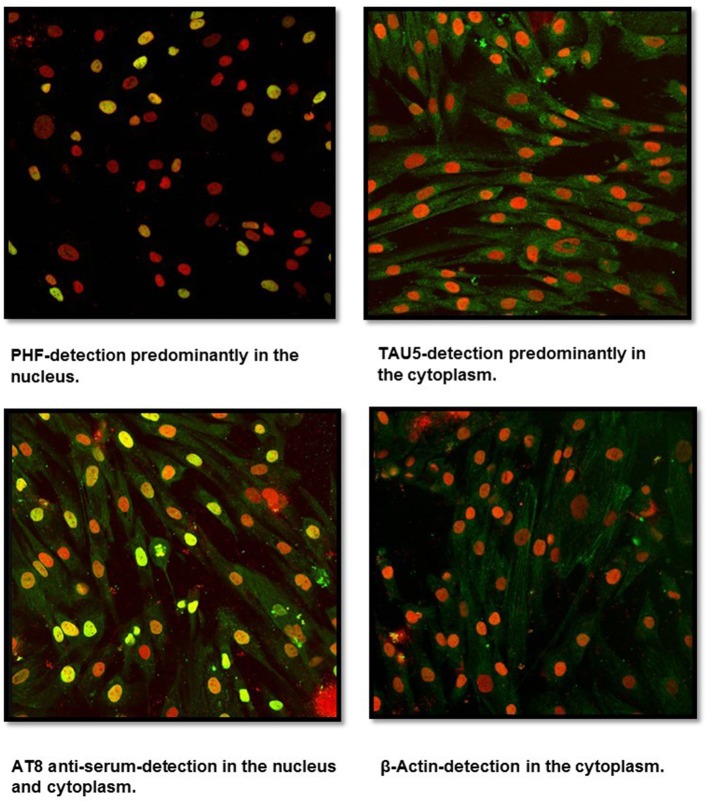
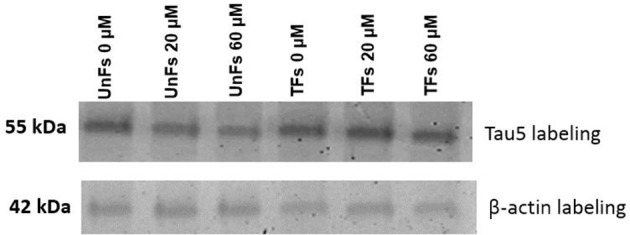
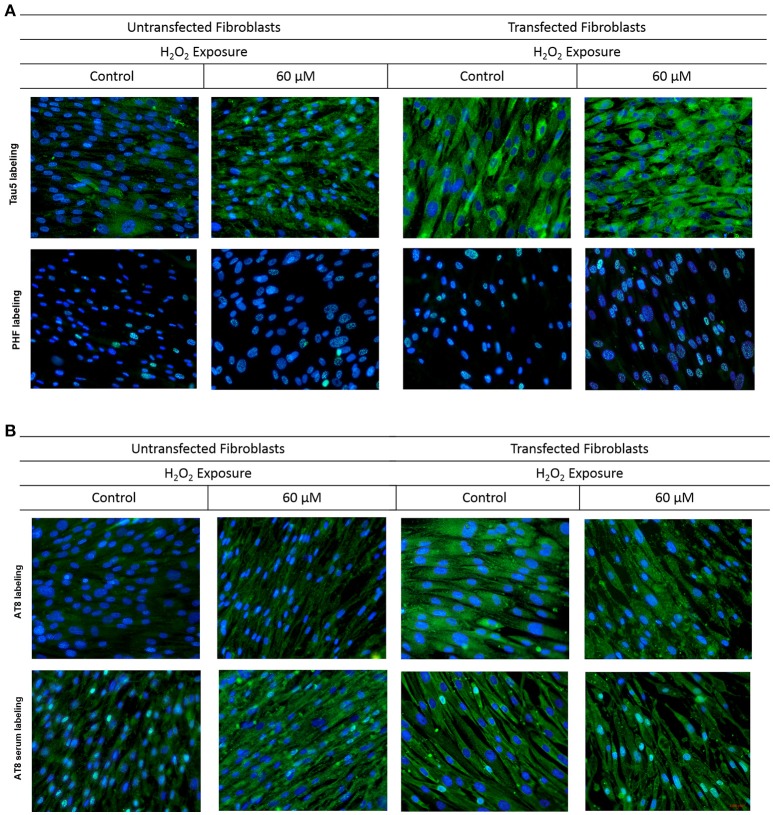
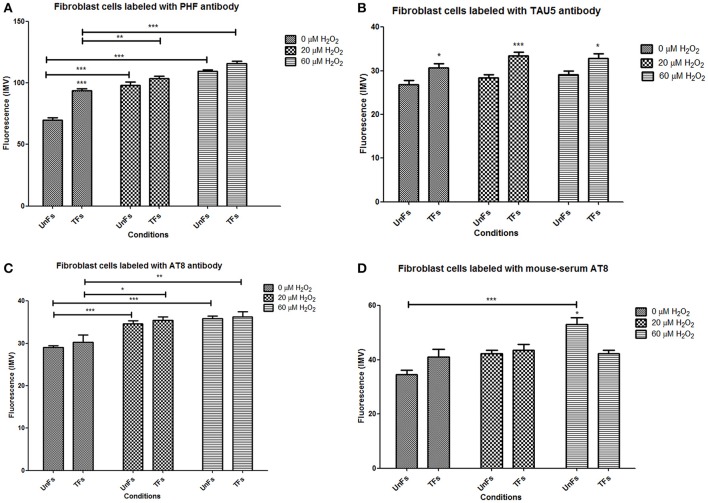
Since the tau protein is closely involved in the physiopathology of Alzheimer's disease (AD), studying its behavior in cellular models might lead to new insights on understanding this devastating disease at molecular levels. In the present study, primary cultures of human fibroblasts were established and used to determine the expression and localization of the tau protein in distinct phosphorylation states in both untransfected and tau gene-transfected cells subjected to oxidative stress. Higher immunopositivity to phospho-tau was observed in cell nuclei in response to oxidative stress, while the levels of total tau in the cytosol remained unchanged. These findings were observed in both untransfected cells and those transfected with the tau gene. The present work represents a useful model for studying the physiopathology of AD at the cellular level in terms of tau protein implications.
由于tau蛋白与阿尔茨海默病(AD)的生理病理学密切相关,在细胞模型中研究其行为可能会在分子水平上为理解这种毁灭性疾病带来新的见解。在本研究中,建立了人成纤维细胞的原代培养物,并用于确定在遭受氧化应激的未转染细胞和tau基因转染细胞中不同磷酸化状态的tau蛋白的表达和定位。在氧化应激下,细胞核中观察到对磷酸化tau的免疫阳性更高,而细胞质中总tau的水平保持不变。在未转染细胞和转染了tau基因的细胞中均观察到这些结果。就tau蛋白的影响而言,本研究代表了在细胞水平上研究AD生理病理学的有用模型。