RNA Therapeutics Institute, University of Massachusetts Medical School, Worcester, MA, USA.
Program in Bioinformatics and Integrative Biology, University of Massachusetts Medical School, Boston, MA, USA.
Sci Rep. 2017 Sep 22;7(1):12139. doi: 10.1038/s41598-017-11639-6.
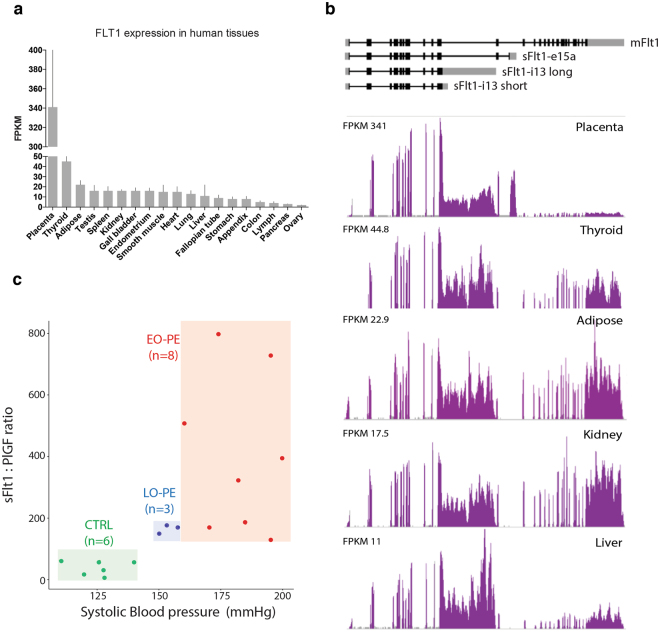
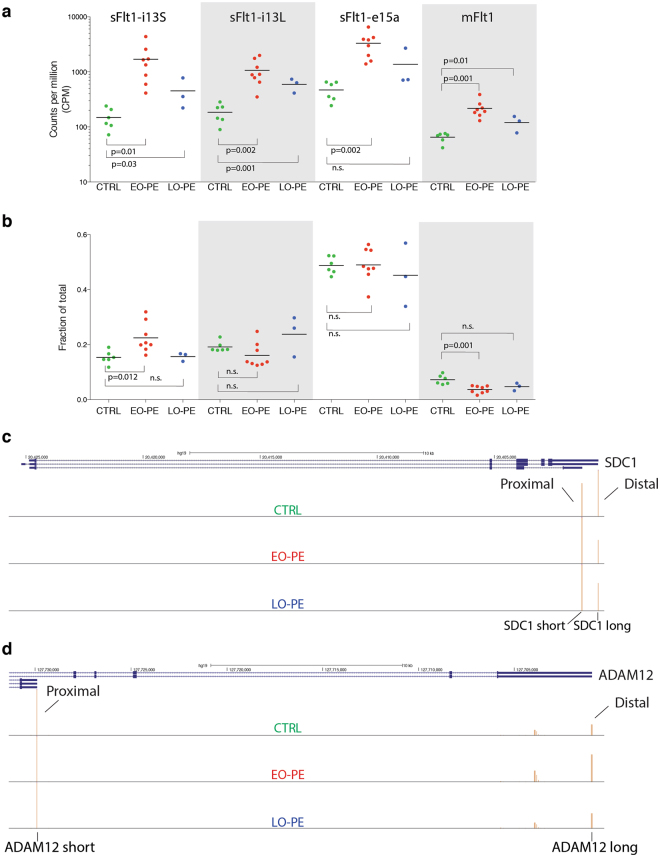
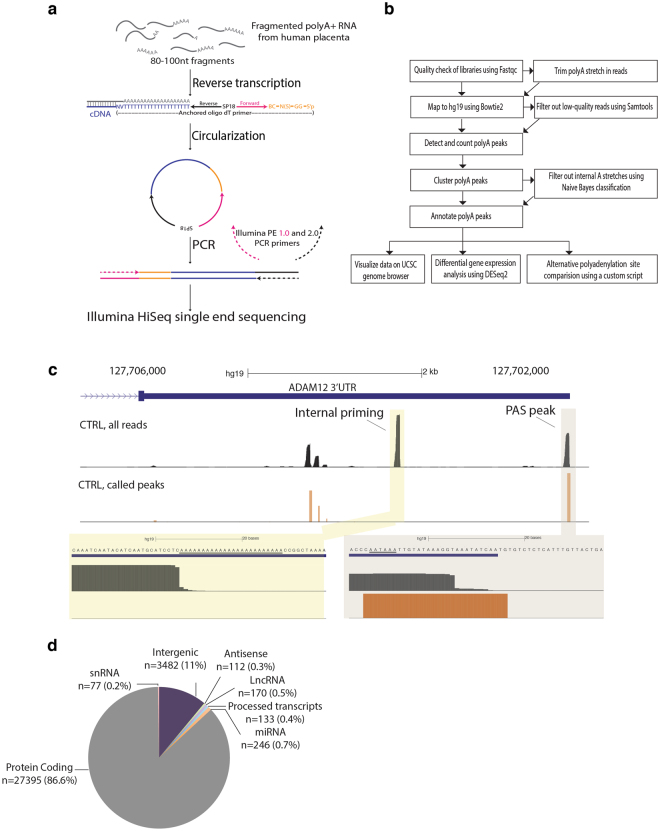
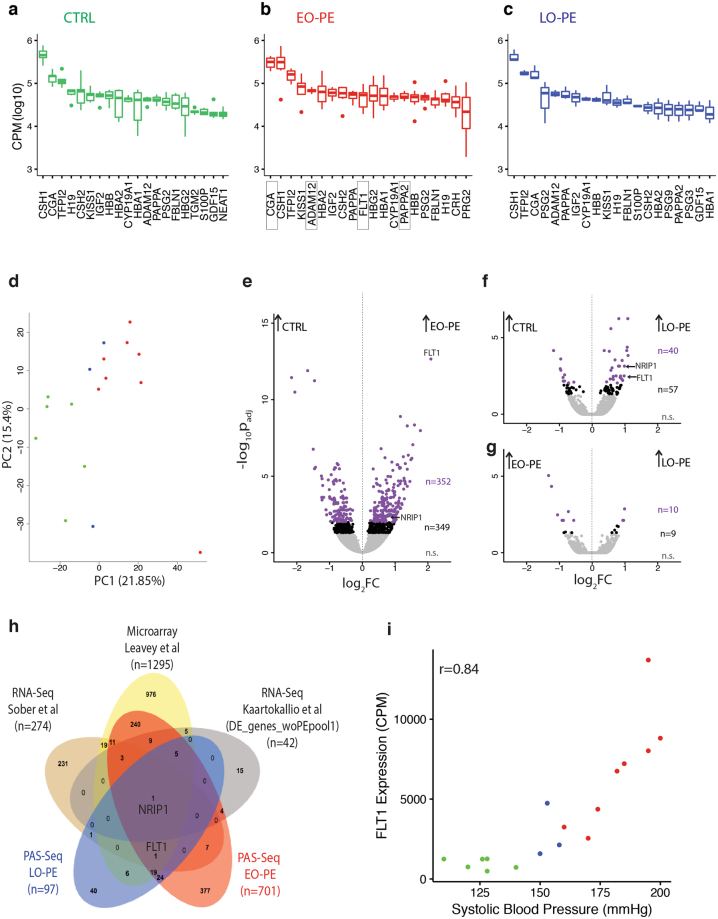
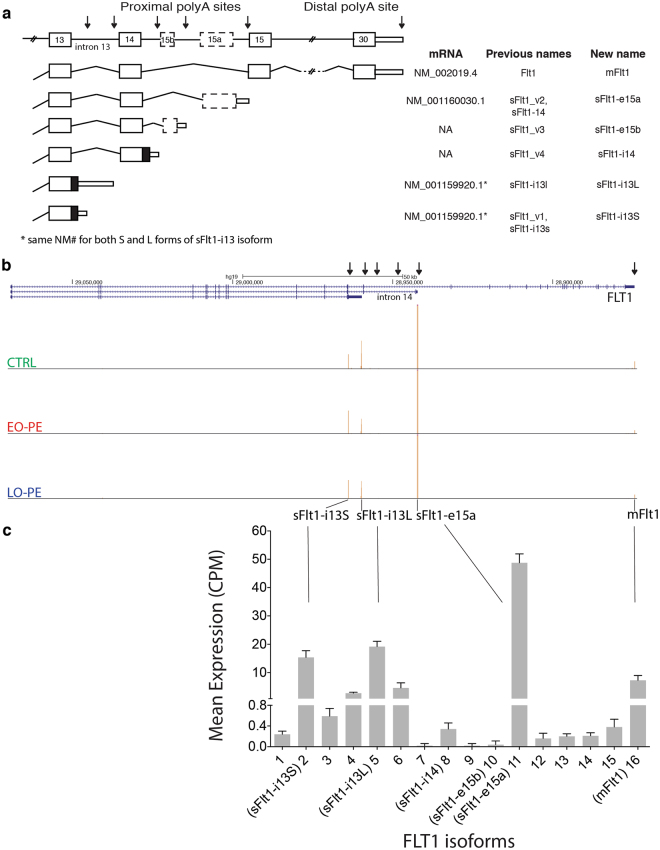
Maternal symptoms of preeclampsia (PE) are primarily driven by excess anti-angiogenic factors originating from the placenta. Chief among these are soluble Flt1 proteins (sFlt1s) produced from alternatively polyadenylated mRNA isoforms. Here we used polyadenylation site sequencing (PAS-Seq) of RNA from normal and PE human placentae to interrogate transcriptome-wide gene expression and alternative polyadenylation signatures associated with early-onset PE (EO-PE; symptom onset < 34 weeks) and late-onset PE (LO-PE; symptom onset > 34 weeks) cohorts. While we observed no general shift in alternative polyadenylation associated with PE, the EO-PE and LO-PE cohorts do exhibit gene expression profiles distinct from both each other and from normal placentae. The only two genes upregulated across all transcriptome-wide PE analyses to date (microarray, RNA-Seq and PAS-Seq) are NRIP1 (RIP140), a transcriptional co-regulator linked to metabolic syndromes associated with obesity, and Flt1. Consistent with sFlt1 overproduction being a significant driver of clinical symptoms, placental Flt1 mRNA levels strongly correlate with maternal blood pressure. For Flt1, just three mRNA isoforms account for > 94% of all transcripts, with increased transcription of the entire locus driving Flt1 upregulation in both EO-PE and LO-PE. These three isoforms thus represent potential targets for therapeutic RNA interference (RNAi) in both early and late presentations.
子痫前期(PE)的母体症状主要由胎盘来源的过量抗血管生成因子驱动。其中最重要的是从交替多聚腺苷酸化 mRNA 异构体产生的可溶性 Flt1 蛋白(sFlt1s)。在这里,我们使用正常和 PE 人胎盘的 RNA 多聚腺苷酸化位点测序(PAS-Seq)来研究与早发型 PE(EO-PE;症状发作<34 周)和晚发型 PE(LO-PE;症状发作>34 周)队列相关的全转录组基因表达和交替多聚腺苷酸化特征。虽然我们没有观察到与 PE 相关的多聚腺苷酸化的一般变化,但 EO-PE 和 LO-PE 队列确实表现出与彼此以及正常胎盘不同的基因表达谱。迄今为止,在所有全转录组 PE 分析中(微阵列、RNA-Seq 和 PAS-Seq)上调的唯一两个基因是 NRIP1(RIP140),这是一个与肥胖相关的代谢综合征相关的转录共调节剂,以及 Flt1。与 sFlt1 过度产生是临床症状的重要驱动因素一致,胎盘 Flt1 mRNA 水平与母体血压强烈相关。对于 Flt1,只有三种 mRNA 异构体占所有转录本的>94%,整个基因座的转录增加导致 EO-PE 和 LO-PE 中 Flt1 的上调。因此,这三种异构体代表了早期和晚期表现中潜在的治疗性 RNA 干扰(RNAi)靶标。