Mercier Blandine C, Labaronne Emmanuel, Cluet David, Guiguettaz Laura, Fontrodona Nicolas, Bicknell Alicia, Corbin Antoine, Wencker Mélanie, Aube Fabien, Modolo Laurent, Jouravleva Karina, Auboeuf Didier, Moore Melissa J, Ricci Emiliano P
RNA Therapeutics Institute, University of Massachusetts Medical School, Worcester, Massachusetts 01605, USA.
Laboratory of Biology and Modeling of the Cell (LBMC), Université de Lyon, ENS de Lyon, Université Claude Bernard, CNRS UMR 5239, Inserm U1293, 69007 Lyon, France.
Genome Res. 2024 Apr 25;34(3):394-409. doi: 10.1101/gr.277863.123.
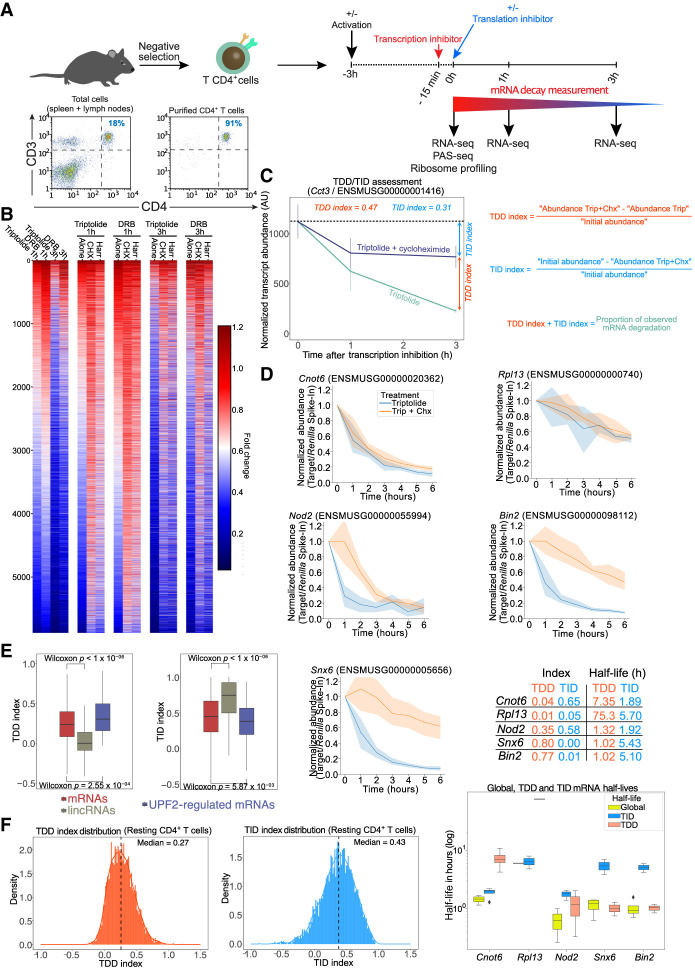
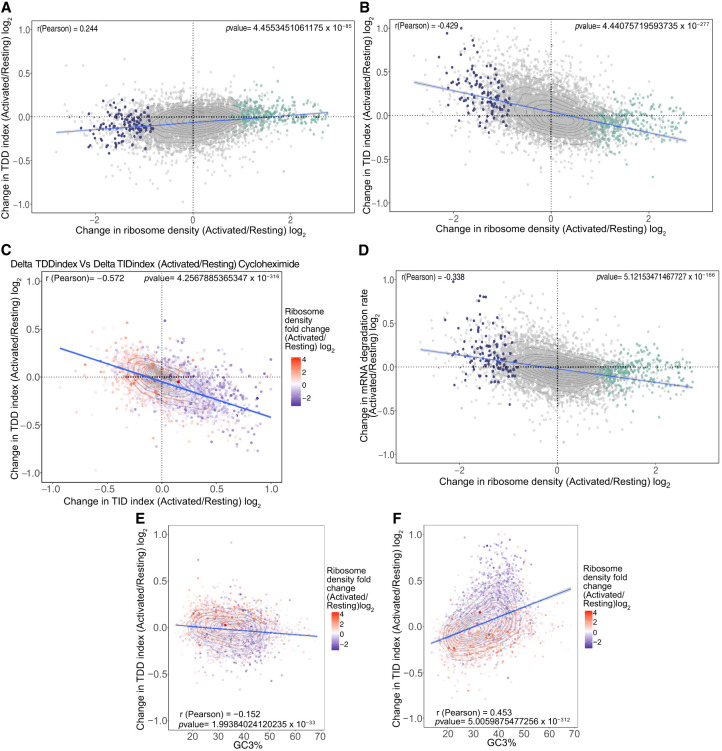
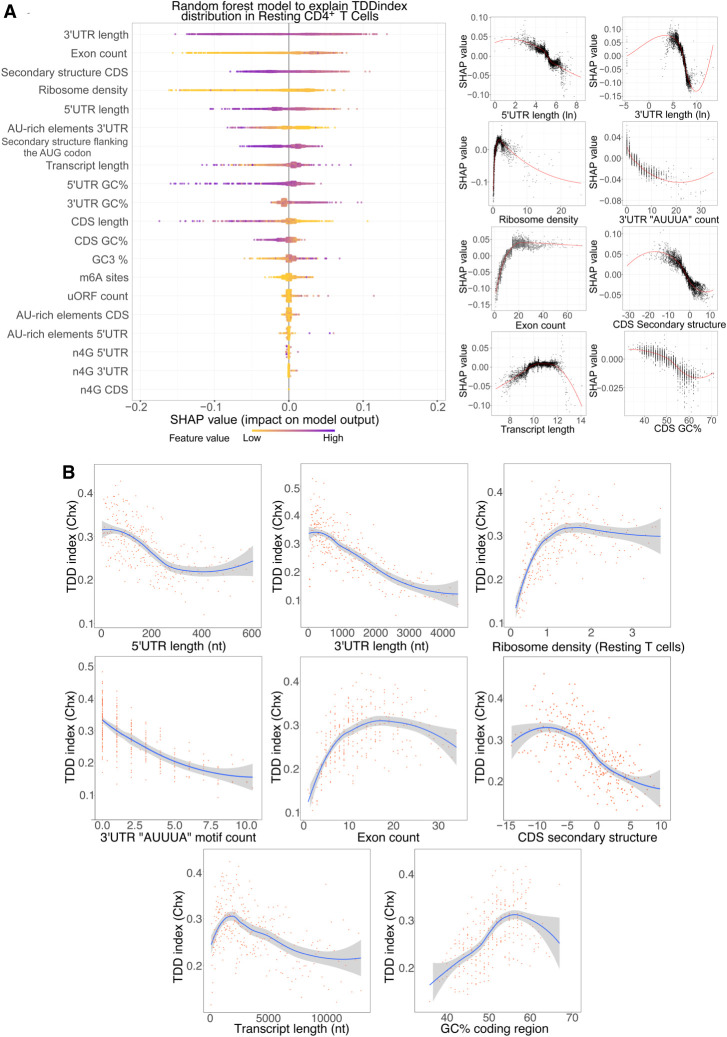
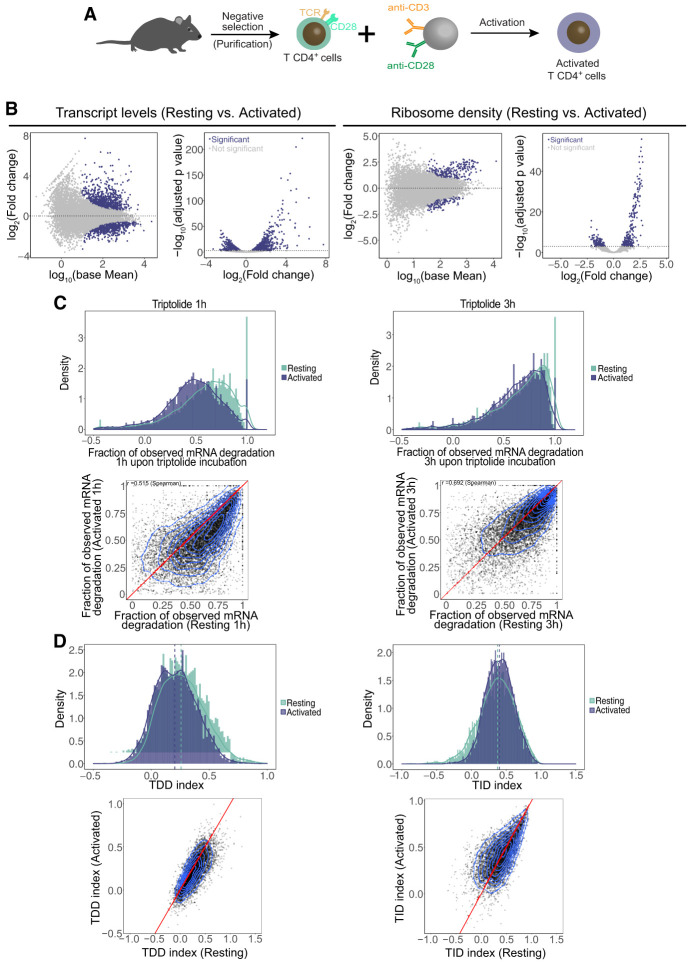
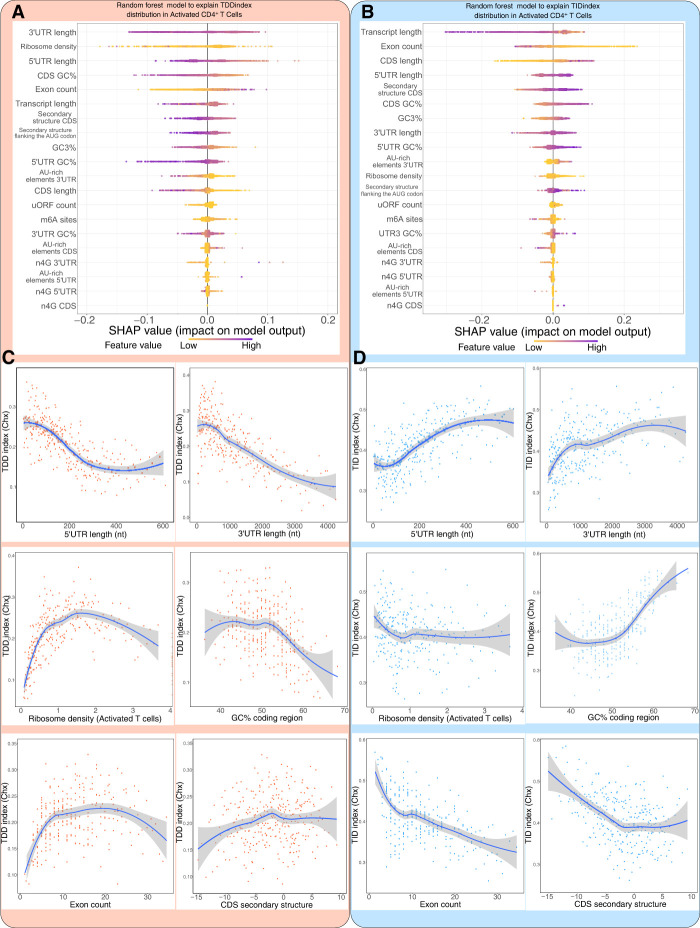
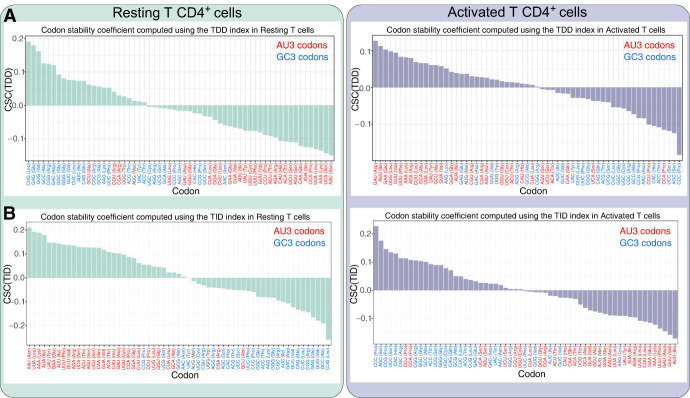
mRNA translation and decay are tightly interconnected processes both in the context of mRNA quality-control pathways and for the degradation of functional mRNAs. Cotranslational mRNA degradation through codon usage, ribosome collisions, and the recruitment of specific proteins to ribosomes is an important determinant of mRNA turnover. However, the extent to which translation-dependent mRNA decay (TDD) and translation-independent mRNA decay (TID) pathways participate in the degradation of mRNAs has not been studied yet. Here we describe a comprehensive analysis of basal and signal-induced TDD and TID in mouse primary CD4 T cells. Our results indicate that most cellular transcripts are decayed to some extent in a translation-dependent manner. Our analysis further identifies the length of untranslated regions, the density of ribosomes, and GC3 content as important determinants of TDD magnitude. Consistently, all transcripts that undergo changes in ribosome density within their coding sequence upon T cell activation display a corresponding change in their TDD level. Moreover, we reveal a dynamic modulation in the relationship between GC3 content and TDD upon T cell activation, with a reversal in the impact of GC3- and AU3-rich codons. Altogether, our data show a strong and dynamic interconnection between mRNA translation and decay in mammalian primary cells.
在mRNA质量控制途径以及功能性mRNA的降解过程中,mRNA翻译和降解都是紧密相连的过程。通过密码子使用、核糖体碰撞以及特定蛋白质募集到核糖体上进行的共翻译mRNA降解是mRNA周转的一个重要决定因素。然而,翻译依赖性mRNA降解(TDD)和翻译非依赖性mRNA降解(TID)途径在mRNA降解中所起作用的程度尚未得到研究。在此,我们描述了对小鼠原代CD4 T细胞中基础和信号诱导的TDD及TID的全面分析。我们的结果表明,大多数细胞转录本在一定程度上以翻译依赖性方式降解。我们的分析进一步确定了非翻译区的长度、核糖体密度和GC3含量是TDD程度的重要决定因素。一致地,所有在T细胞激活后其编码序列内核糖体密度发生变化的转录本,其TDD水平都有相应变化。此外,我们揭示了T细胞激活后GC3含量与TDD之间关系的动态调节,富含GC3和AU3的密码子的影响发生了逆转。总之,我们的数据表明在哺乳动物原代细胞中mRNA翻译和降解之间存在强烈且动态的相互联系。