de Bruijn Tessa W P, Sohier Jody, van der Burg Jan J W
Department of Pediatric Rehabilitation, Sint Maartenskliniek, Postbus 9011, 6500 GM Nijmegen, The Netherlands.
Department of Pedagogical and Educational Sciences, Radboud University, Postbus 9104, 6500 HE Nijmegen, The Netherlands.
J Dev Phys Disabil. 2017;29(5):735-755. doi: 10.1007/s10882-017-9553-1. Epub 2017 May 31.
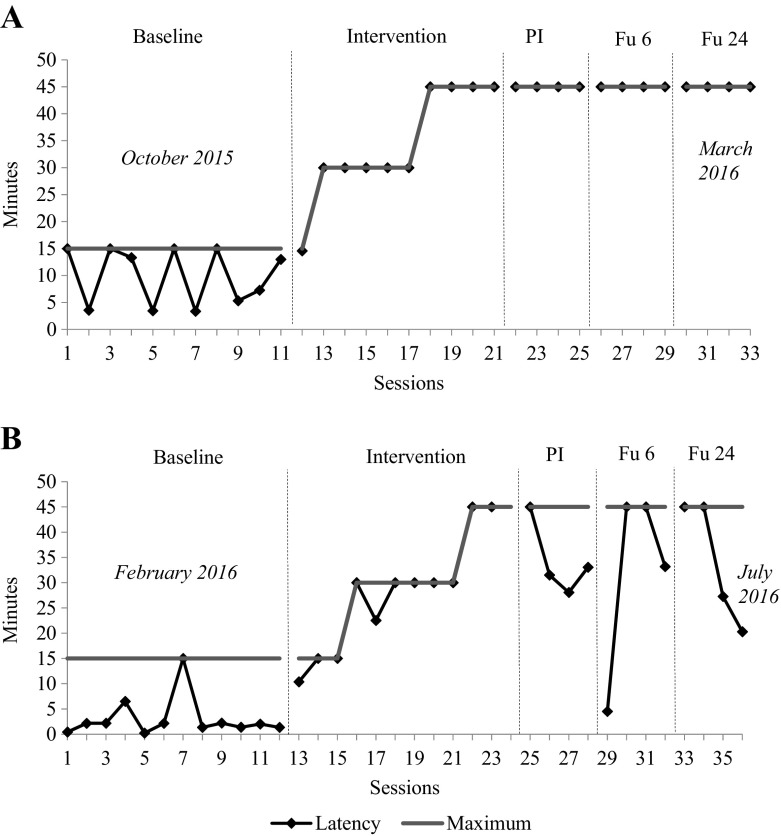
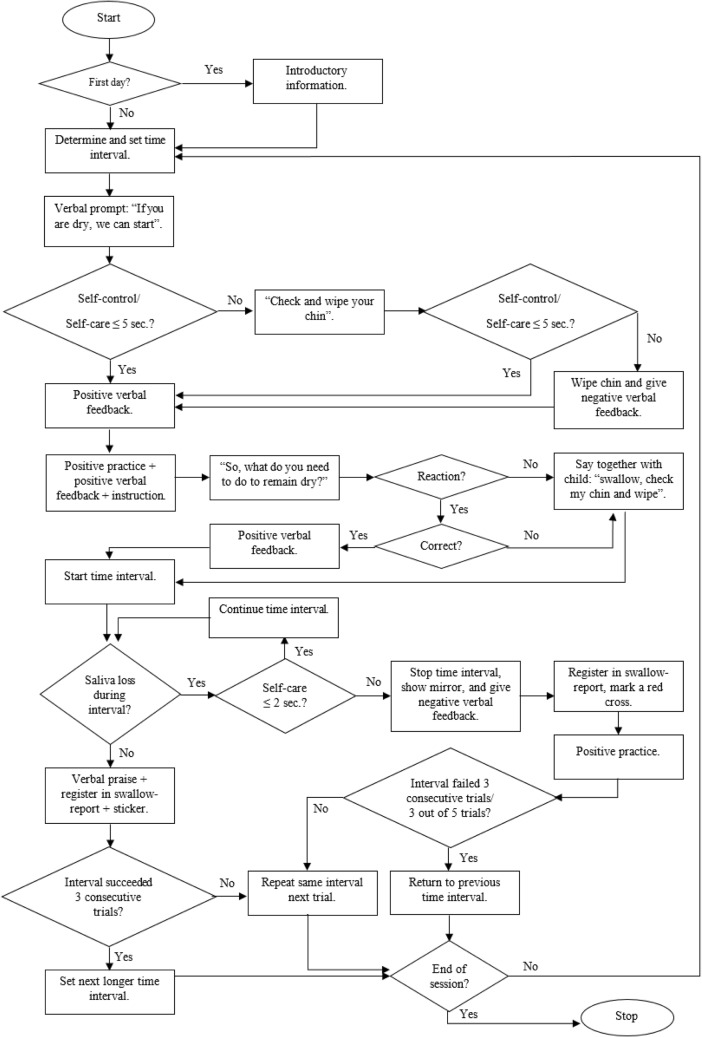
Drooling is a distressing condition, which is often caused by reduced oral motor control associated with a neurological disorder. It has significant medical, practical and psychosocial impact on children or youth and their families. Therefore, treatment is necessary. Although behavioural therapy for drooling shows promising results, it is generally time- and cost-intensive. For this reason, alternative ways to provide behavioural treatment for chronic drooling need to be explored. In a pair of case studies, the feasibility and potential of an outpatient variant of a behavioural treatment programme for drooling based on self-management strategies was researched with two children with oral motor difficulties. In a three week programme, these children were taught to perform a self-management routine in order to achieve saliva control during regular visits to the child rehabilitation centre. In addition, their parents and teachers were taught to prompt the self-management routine and instructed to provide additional practice at home and at school. In doing so, they were offered support by means of telehealth and personal contact. At the end of the treatment programme, both children showed a significant decrease in drooling severity. Their parents and teachers were satisfied with the treatment effect. Although the present treatment programme showed promising results, further adaptions are necessary to make the treatment programme more widely accessible.
流口水是一种令人苦恼的状况,通常由与神经障碍相关的口腔运动控制能力下降引起。它对儿童或青少年及其家庭具有重大的医学、实际和心理社会影响。因此,治疗是必要的。尽管针对流口水的行为疗法显示出有希望的结果,但它通常需要耗费时间和成本。出于这个原因,需要探索为慢性流口水提供行为治疗的替代方法。在一对案例研究中,针对两名有口腔运动困难的儿童,研究了基于自我管理策略的门诊行为治疗方案对治疗流口水的可行性和潜力。在一个为期三周的方案中,教导这些儿童执行自我管理程序,以便在定期前往儿童康复中心时实现唾液控制。此外,教导他们的父母和教师提示自我管理程序,并指导他们在家庭和学校提供额外的练习。在此过程中,通过远程医疗和个人联系为他们提供支持。在治疗方案结束时,两个孩子的流口水严重程度都显著降低。他们的父母和教师对治疗效果感到满意。尽管目前的治疗方案显示出有希望的结果,但仍需要进一步调整以使治疗方案更广泛地可用。