Walczyńska Aleksandra, Sobczyk Łukasz
Institute of Environmental Sciences Jagiellonian University Krakow Poland.
Ecol Evol. 2017 Aug 11;7(18):7434-7441. doi: 10.1002/ece3.3263. eCollection 2017 Sep.
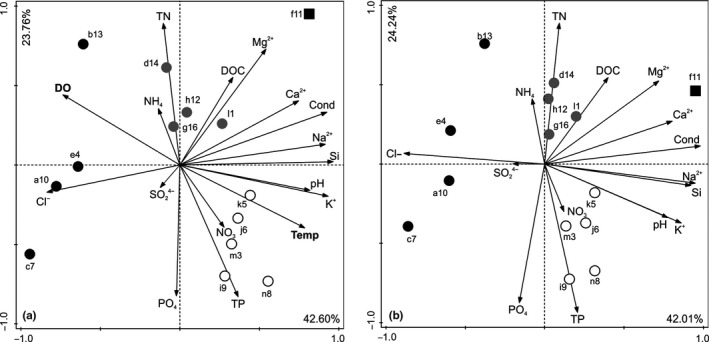
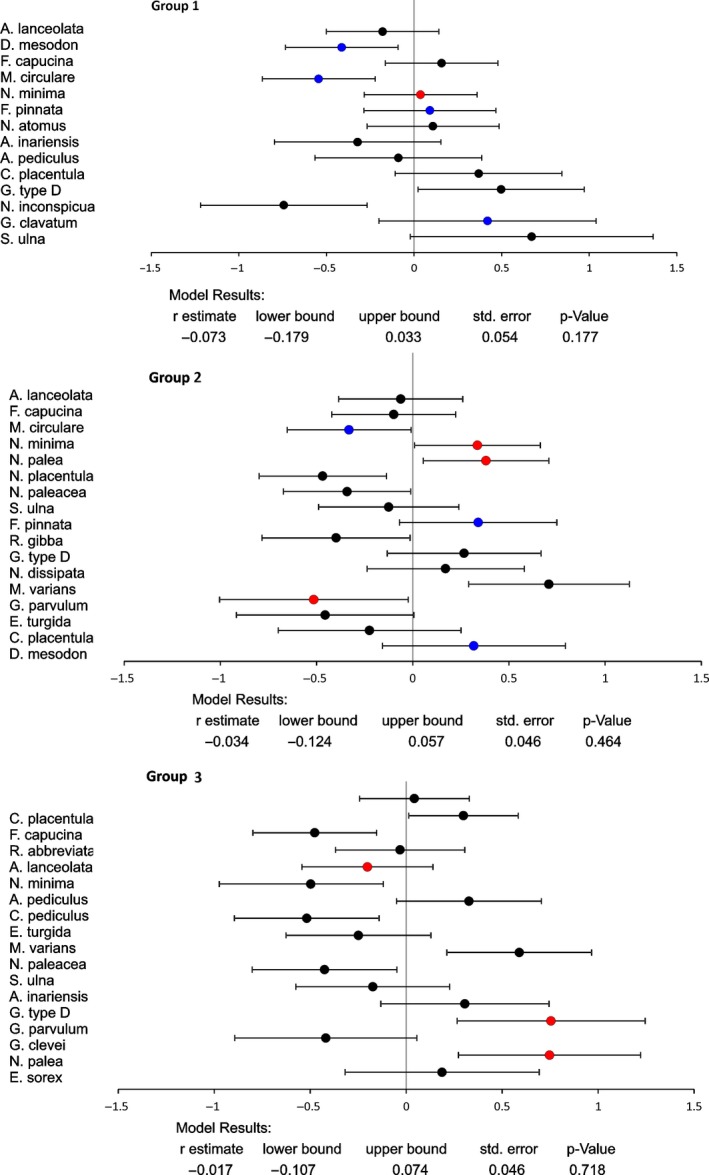
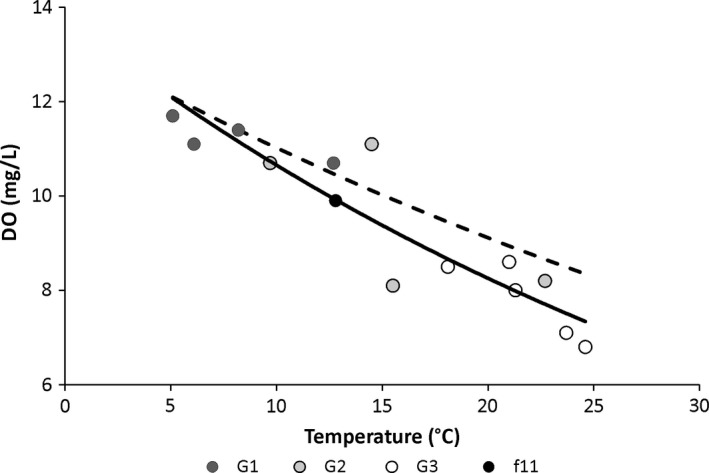
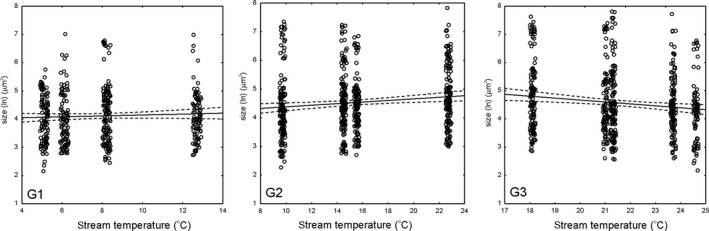
The observation that ectotherm size decreases with increasing temperature (temperature-size rule; TSR) has been widely supported. This phenomenon intrigues researchers because neither its adaptive role nor the conditions under which it is realized are well defined. In light of recent theoretical and empirical studies, oxygen availability is an important candidate for understanding the adaptive role behind TSR. However, this hypothesis is still undervalued in TSR studies at the geographical level. We reanalyzed previously published data about the TSR pattern in diatoms sampled from Icelandic geothermal streams, which concluded that diatoms were an exception to the TSR. Our goal was to incorporate oxygen as a factor in the analysis and to examine whether this approach would change the results. Specifically, we expected that the strength of size response to cold temperatures would be different than the strength of response to hot temperatures, where the oxygen limitation is strongest. By conducting a regression analysis for size response at the community level, we found that diatoms from cold, well-oxygenated streams showed no size-to-temperature response, those from intermediate temperature and oxygen conditions showed reverse TSR, and diatoms from warm, poorly oxygenated streams showed significant TSR. We also distinguished the roles of oxygen and nutrition in TSR. Oxygen is a driving factor, while nutrition is an important factor that should be controlled for. Our results show that if the geographical or global patterns of TSR are to be understood, oxygen should be included in the studies. This argument is important especially for predicting the size response of ectotherms facing climate warming.
外温动物体型随温度升高而减小这一观察结果(温度-体型规则;TSR)已得到广泛支持。这一现象引发了研究人员的兴趣,因为其适应作用以及实现这一作用的条件都尚未明确界定。根据最近的理论和实证研究,氧气供应是理解TSR背后适应作用的一个重要候选因素。然而,在地理层面的TSR研究中,这一假设仍未得到充分重视。我们重新分析了先前发表的关于从冰岛地热溪流中采集的硅藻TSR模式的数据,该研究得出硅藻是TSR的一个例外。我们的目标是将氧气作为一个因素纳入分析,并检验这种方法是否会改变结果。具体而言,我们预期对低温的体型响应强度与对高温(氧气限制最强)的响应强度会有所不同。通过对群落层面的体型响应进行回归分析,我们发现来自寒冷、氧气充足溪流的硅藻没有体型-温度响应,来自中等温度和氧气条件的硅藻呈现反向TSR,而来自温暖、氧气不足溪流的硅藻呈现显著的TSR。我们还区分了氧气和营养在TSR中的作用。氧气是一个驱动因素,而营养是一个需要加以控制的重要因素。我们的结果表明,如果要理解TSR的地理或全球模式,就应该在研究中纳入氧气。这一观点对于预测面临气候变暖的外温动物的体型响应尤为重要。