Chen G-L, Ye T, Chen H-L, Zhao Z-Y, Tang W-Q, Wang L-S, Xia J-L
Department of Oncology, Minhang Hospital, Fudan University, Shanghai, China.
Department of Medicine 3, Institute for Clinical Immunology, Friedrich-Alexander-University Erlangen-Nuremberg (FAU) and Universitätsklinikum Erlangen, Erlangen, Germany.
Oncogenesis. 2017 Sep 25;6(9):e382. doi: 10.1038/oncsis.2017.81.
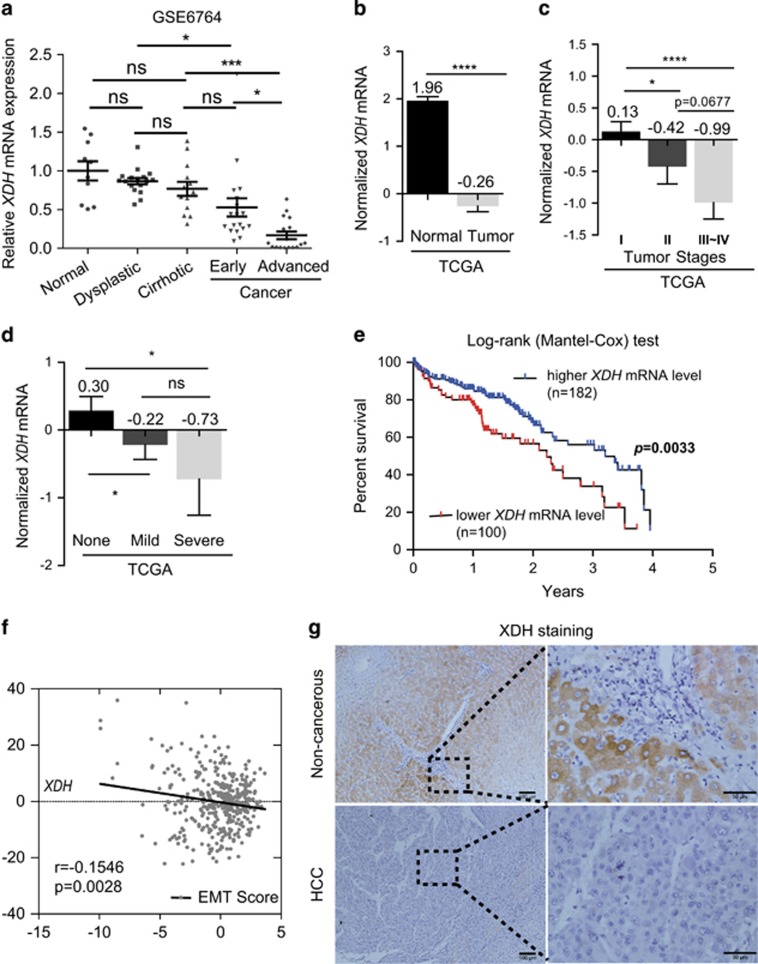
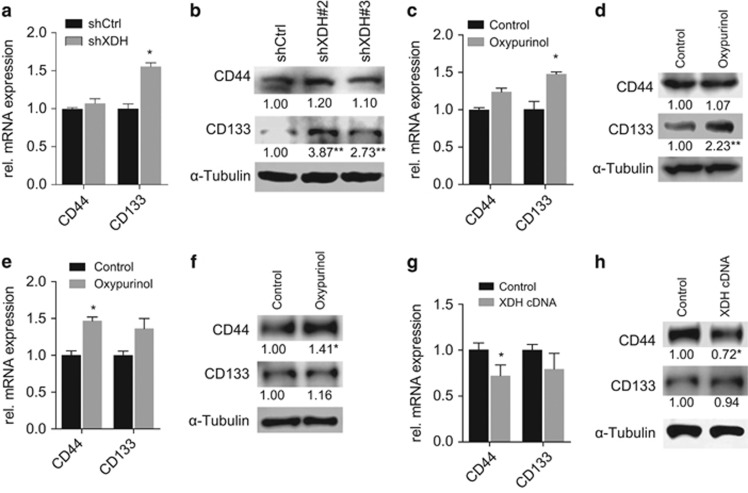
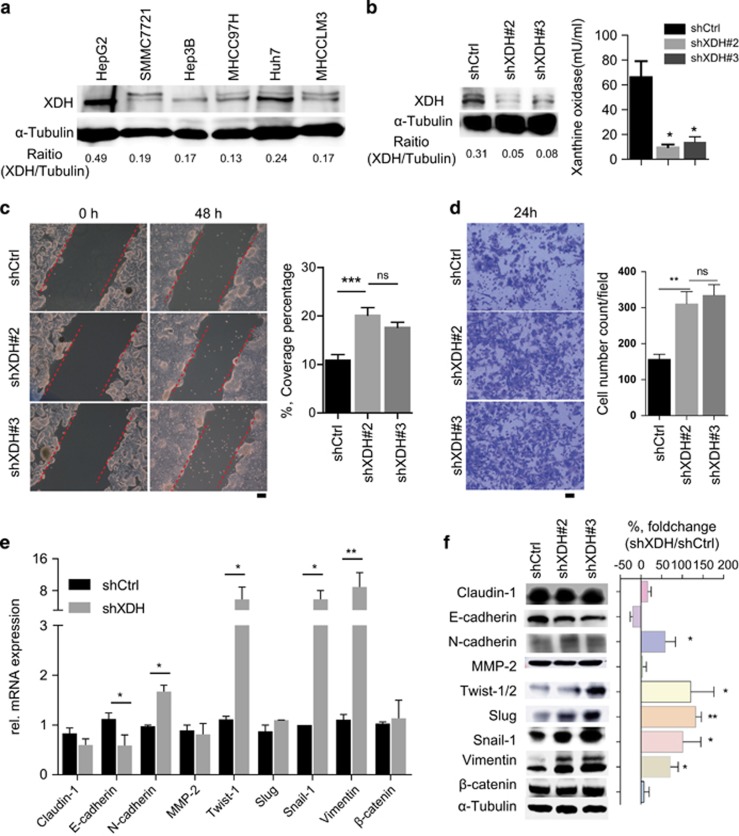
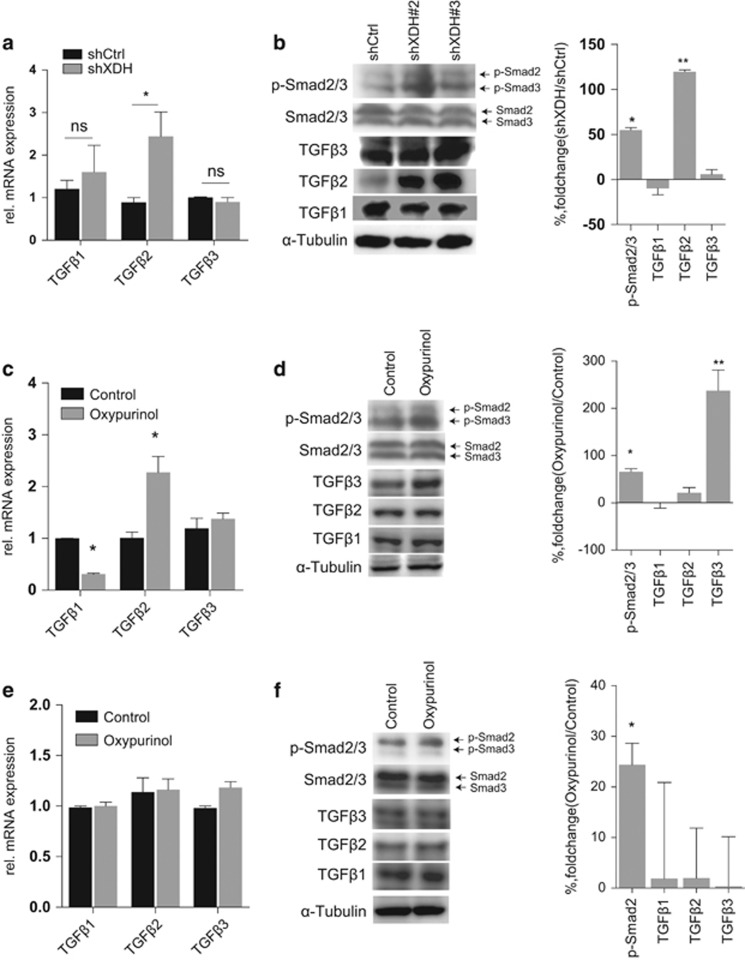
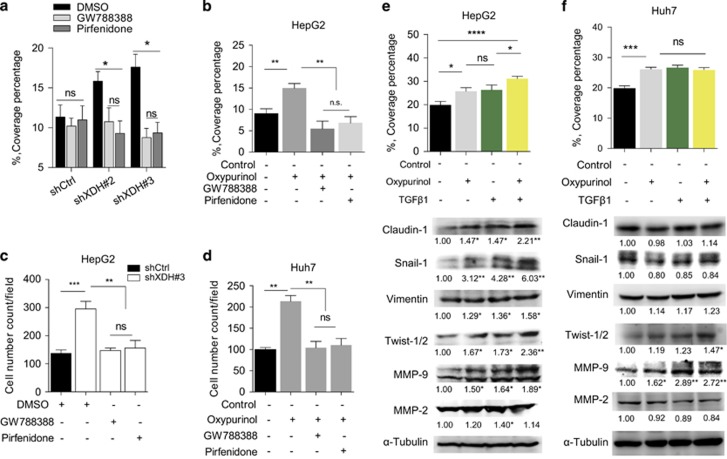
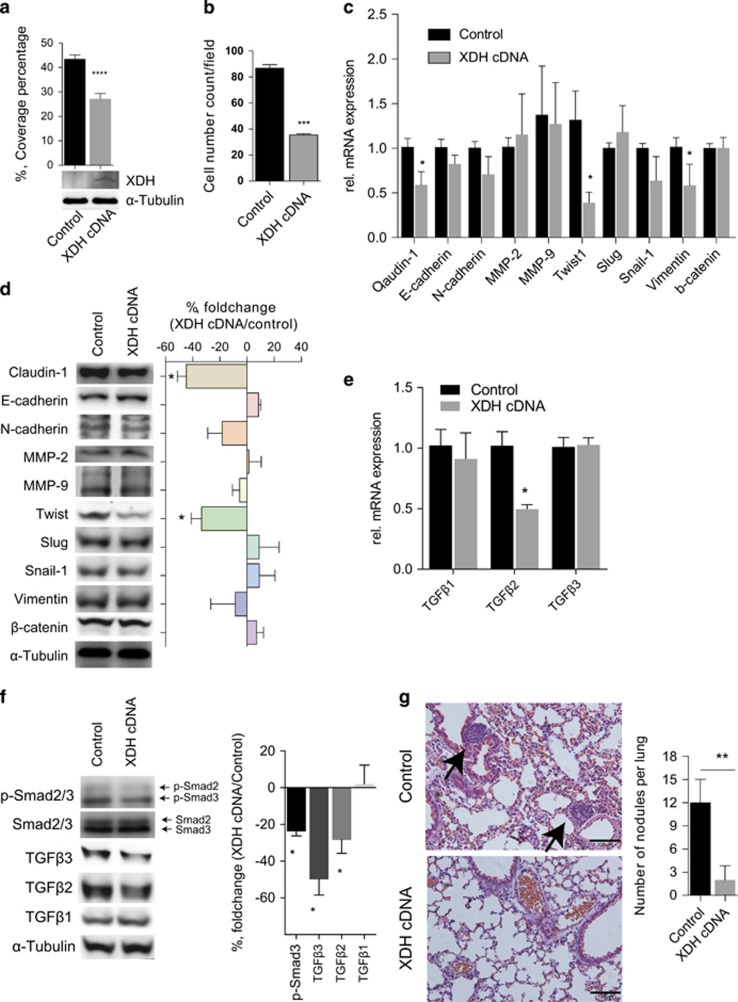
Xanthine dehydrogenase (XDH), a rate-limiting enzyme involved in purine metabolism, has an essential role in inflammatory cascades. Researchers have known for decades that XDH activity is decreased in some cancers, including hepatocellular carcinoma (HCC). However, the role of XDH in cancer pathogenesis has not been fully explored. In this study, we showed that low XDH mRNA levels were correlated with higher tumor stages and poorer prognoses in patients with HCC. Knocking down or inhibiting XDH promoted migration and invasion but not proliferation of HCC cells. The abovementioned phenotypic changes are dependent on increases in epithelial-mesenchymal transition marker gene expression and transforming growth factor-β-Smad2/3 signaling activity in HCC. XDH overexpression suppressed HCC cell invasion in vitro and in vivo. In addition, the expression and activity of XDH were associated with the expression of CSC-related genes, such as CD44 or CD133, in HCC cells. These data suggest that downregulated XDH expression may be a useful clinical indicator and contribute to the development and progression of HCC.
黄嘌呤脱氢酶(XDH)是参与嘌呤代谢的限速酶,在炎症级联反应中起重要作用。几十年来,研究人员已经知道在包括肝细胞癌(HCC)在内的一些癌症中XDH活性会降低。然而,XDH在癌症发病机制中的作用尚未得到充分探索。在本研究中,我们发现HCC患者中低XDH mRNA水平与更高的肿瘤分期和更差的预后相关。敲低或抑制XDH可促进HCC细胞的迁移和侵袭,但不促进其增殖。上述表型变化取决于HCC中上皮-间质转化标志物基因表达的增加和转化生长因子-β-Smad2/3信号活性的增加。XDH过表达在体外和体内均抑制HCC细胞侵袭。此外,XDH的表达和活性与HCC细胞中CSC相关基因(如CD44或CD133)的表达相关。这些数据表明,XDH表达下调可能是一个有用的临床指标,并有助于HCC的发生和发展。