Department of Microbiology, School of Medical Laboratory, Tianjin Medical University, Tianjin 300203, China.
Department of Clinical Laboratory, Tianjin Children's Hospital/Tianjin University Children's Hospital, Tianjin 300134, China.
Int J Med Sci. 2022 May 9;19(5):842-857. doi: 10.7150/ijms.71703. eCollection 2022.
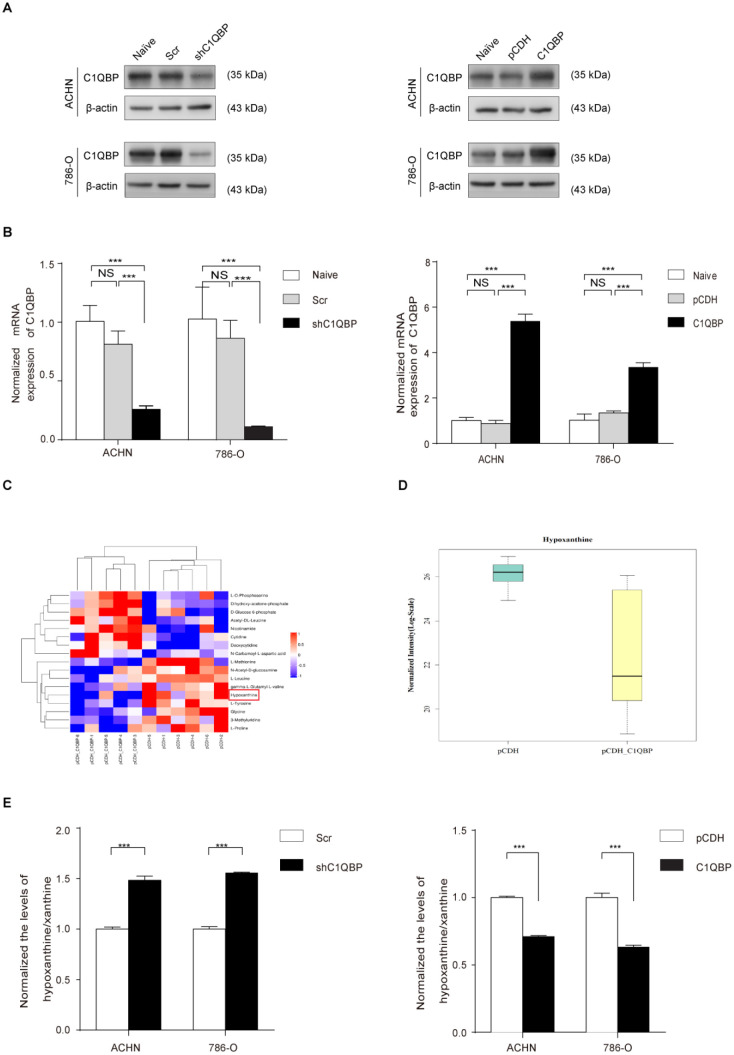
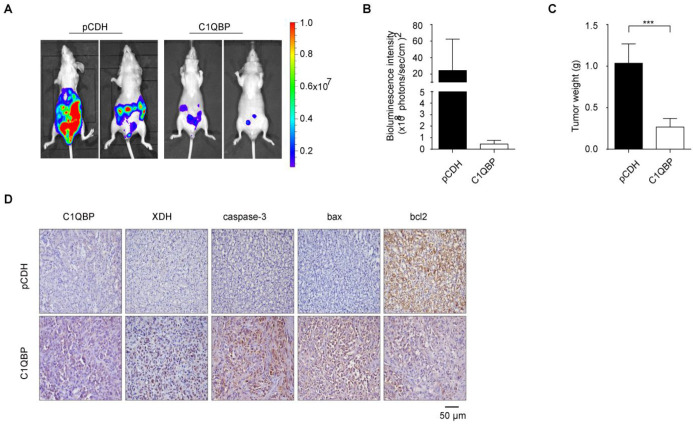
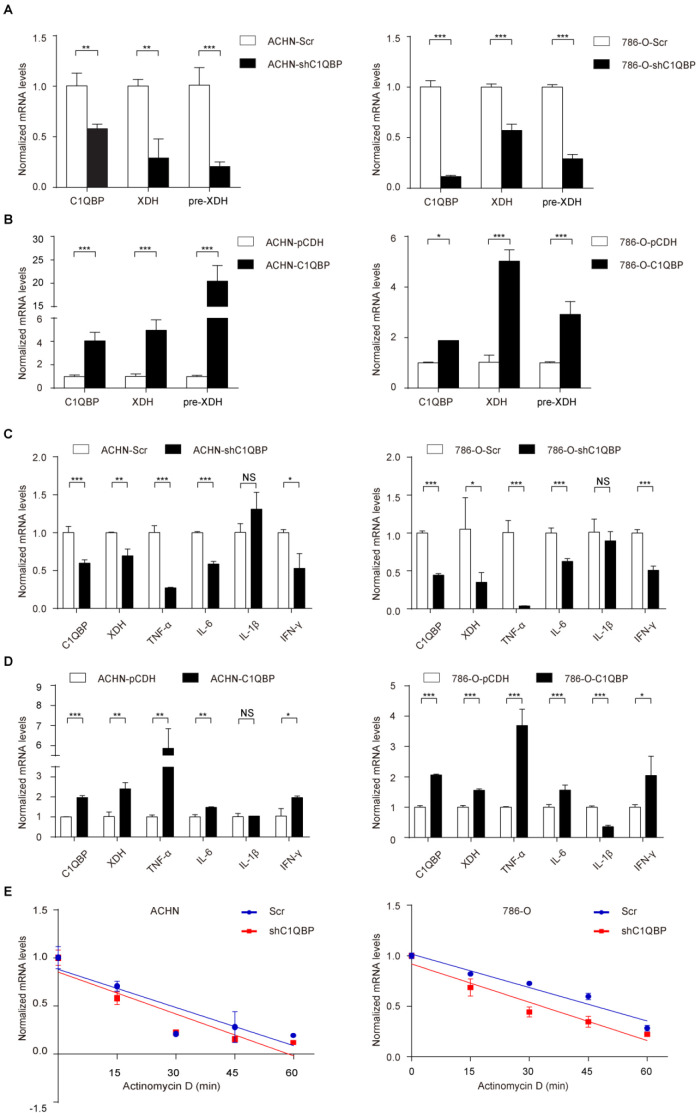
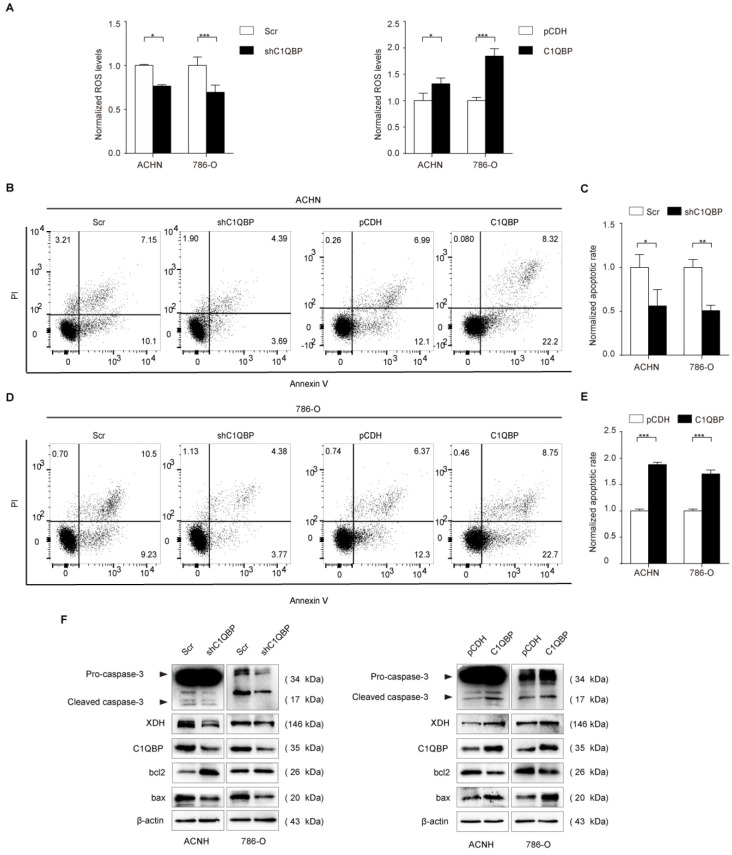
Complement component 1 Q subcomponent binding protein (C1QBP) plays a vital role in the progression and metabolism of cancer. Studies have shown that xanthine dehydrogenase (XDH)-derived reactive oxygen species (ROS) accelerates tumor growth, and also induces mutations or produces cytotoxic effects concurrently. However, the role of C1QBP in metabolism, oxidative stress, and apoptosis of renal cell carcinoma (RCC) cells have not yet been explored. Metabolomics assay was applied to investigate the role of C1QBP in RCC metabolism. C1QBP knockdown and overexpression cells were established via lentiviral infection and subjected to apoptosis and ROS assay . RNA stability assay was applied to characterize the mechanism of regulating transcription. , orthotopic tumor xenografts assay was performed to investigate the role of C1QBP in RCC progression. Metabolomics investigation revealed that C1QBP dramatically diminished the hypoxanthine content in RCC cells. C1QBP promoted the mRNA and protein expression of hypoxanthine catabolic enzyme XDH. Meanwhile, may affect transcription by regulating the mRNA level of transcriptional stimulators , , and . Moreover, the expression of C1QBP and XDH was lower in RCC tumors compared with the tumor-associated normal tissues, and their down-regulation was associated with higher Fuhrman grade. C1QBP significantly increased ROS level, apoptosis, and the expression of apoptotic proteins such as cleaved caspase-3 and bax/bcl2 via regulating XDH. C1QBP promotes the catabolism of hypoxanthine and elevates the apoptosis of RCC cells by modulating XDH-mediated ROS generation.
补体成分 1 Q 亚基结合蛋白(C1QBP)在癌症的进展和代谢中起着至关重要的作用。研究表明,黄嘌呤脱氢酶(XDH)衍生的活性氧(ROS)加速肿瘤生长,同时也诱导突变或产生细胞毒性作用。然而,C1QBP 在肾细胞癌(RCC)细胞代谢、氧化应激和细胞凋亡中的作用尚未被探索。代谢组学分析用于研究 C1QBP 在 RCC 代谢中的作用。通过慢病毒感染建立 C1QBP 敲低和过表达细胞,并进行细胞凋亡和 ROS 测定。应用 RNA 稳定性测定来表征调节转录的机制。进行原位肿瘤异种移植实验以研究 C1QBP 在 RCC 进展中的作用。代谢组学研究表明,C1QBP 显著降低了 RCC 细胞中的次黄嘌呤含量。C1QBP 促进了次黄嘌呤代谢酶 XDH 的 mRNA 和蛋白表达。同时,通过调节转录激活剂的 mRNA 水平,可能影响转录。此外,与肿瘤相关的正常组织相比,RCC 肿瘤中的 C1QBP 和 XDH 表达水平较低,其下调与更高的 Fuhrman 分级相关。C1QBP 通过调节 XDH 介导的 ROS 生成,显著增加了 ROS 水平、细胞凋亡以及 cleaved caspase-3 和 bax/bcl2 等凋亡蛋白的表达。C1QBP 通过调节 XDH 介导的 ROS 生成,促进次黄嘌呤的分解代谢,并增加 RCC 细胞的凋亡。