Al-Ramahi Rowa', Hmedat Bayan, Alnjajrah Eman, Manasrah Israa, Radwan Iqbal, Alkhatib Maram
Department of Pharmacy, Faculty of Medicine and Health Sciences, An-Najah National University, Palestine.
Saudi Pharm J. 2017 Sep;25(6):857-860. doi: 10.1016/j.jsps.2017.01.001. Epub 2017 Jan 25.
Medication dosing errors are a significant global concern and can cause serious medical consequences for patients. Pediatric patients are at increased risk of dosing errors due to differences in medication pharmacodynamics and pharmacokinetics.
The aims of this study were to find the rate of medication dosing errors in hospitalized pediatric patients and possible associated factors.
The study was an observational cohort study including pediatric inpatients less than 16 years from three governmental hospitals from the West Bank/Palestine during one month in 2014, and sample size was 400 pediatric inpatients from these three hospitals. Pediatric patients' medical records were reviewed. Patients' weight, age, medical conditions, all prescribed medications, their doses and frequency were documented. Then the doses of medications were evaluated.
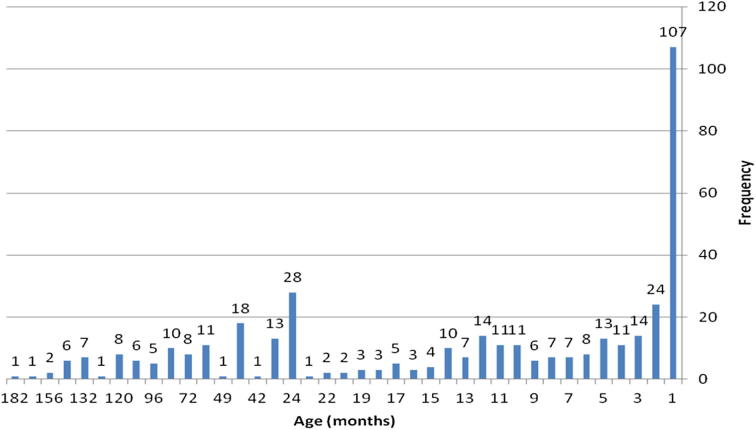
Among 400 patients, the medications prescribed were 949 medications, 213 of them (22.4%) were out of the recommended range, and 160 patients (40.0%) were prescribed one or more potentially inappropriate doses. The most common cause of hospital admission was sepsis which presented 14.3% of cases, followed by fever (13.5%) and meningitis (10.0%). The most commonly used medications were ampicillin in 194 cases (20.4%), ceftriaxone in 182 cases (19.2%), and cefotaxime in 144 cases (12.0%). No significant association was found between potentially inappropriate doses and gender or hospital (chi-square test -value > 0.05).The results showed that patients with lower body weight, who had a higher number of medications and stayed in hospital for a longer time, were more likely to have inappropriate doses.
Potential medication dosing errors were high among pediatric hospitalized patients in Palestine. Younger patients, patients with lower body weight, who were prescribed higher number of medications and stayed in hospital for a longer time were more likely to have inappropriate doses, so these populations require special care. Many children were hospitalized for infectious causes and antibiotics were widely used. Strategies to reduce pediatric medication dosing errors are recommended.
用药剂量错误是一个全球性的重大问题,可能给患者带来严重的医疗后果。由于药物的药效学和药代动力学存在差异,儿科患者发生用药剂量错误的风险更高。
本研究旨在找出住院儿科患者的用药剂量错误率及可能的相关因素。
本研究为一项观察性队列研究,纳入了2014年1个月期间来自约旦河西岸/巴勒斯坦三所政府医院的16岁以下儿科住院患者,样本量为这三所医院的400名儿科住院患者。对儿科患者的病历进行了回顾。记录了患者的体重、年龄、病情、所有处方药物、剂量及用药频率。然后对药物剂量进行评估。
在400名患者中,共开出949种药物,其中213种(22.4%)超出推荐范围,160名患者(40.0%)接受了一种或多种潜在不适当剂量的药物治疗。最常见的入院原因是败血症,占病例的14.3%,其次是发热(13.5%)和脑膜炎(10.0%)。最常用的药物是氨苄西林,共194例(20.4%);头孢曲松,182例(19.2%);头孢噻肟,144例(12.0%)。在潜在不适当剂量与性别或医院之间未发现显著关联(卡方检验P值>0.05)。结果显示,体重较低、用药种类较多且住院时间较长的患者更有可能接受不适当剂量的药物治疗。
巴勒斯坦儿科住院患者中潜在用药剂量错误发生率较高。年龄较小、体重较低、用药种类较多且住院时间较长的患者更有可能接受不适当剂量的药物治疗,因此这些人群需要特别护理。许多儿童因感染性病因住院,抗生素被广泛使用。建议采取策略减少儿科用药剂量错误。