Clark Erik
Laboratory for Development and Evolution, Department of Zoology, University of Cambridge, Cambridge, United Kingdom.
PLoS Biol. 2017 Sep 27;15(9):e2002439. doi: 10.1371/journal.pbio.2002439. eCollection 2017 Sep.
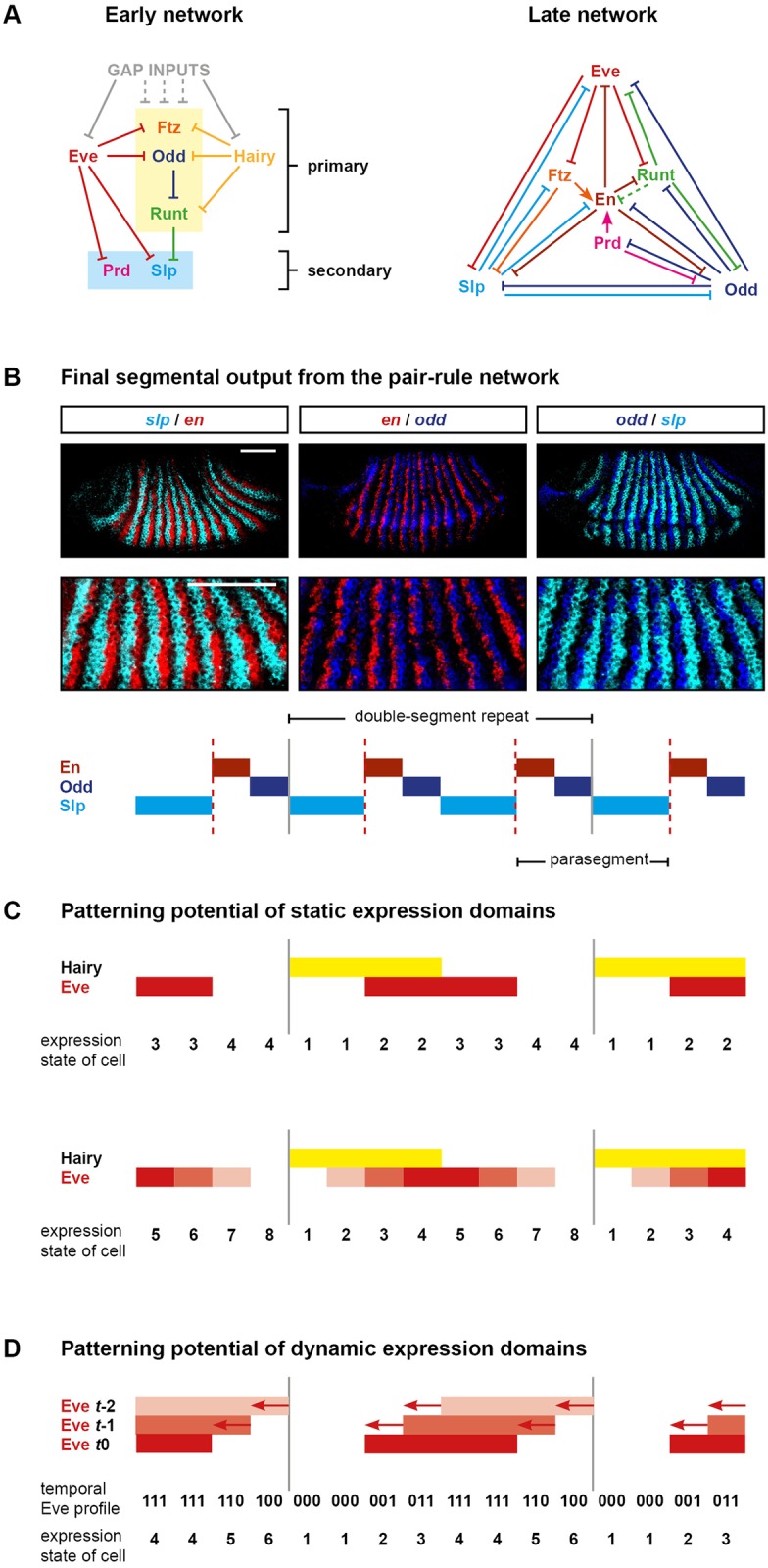
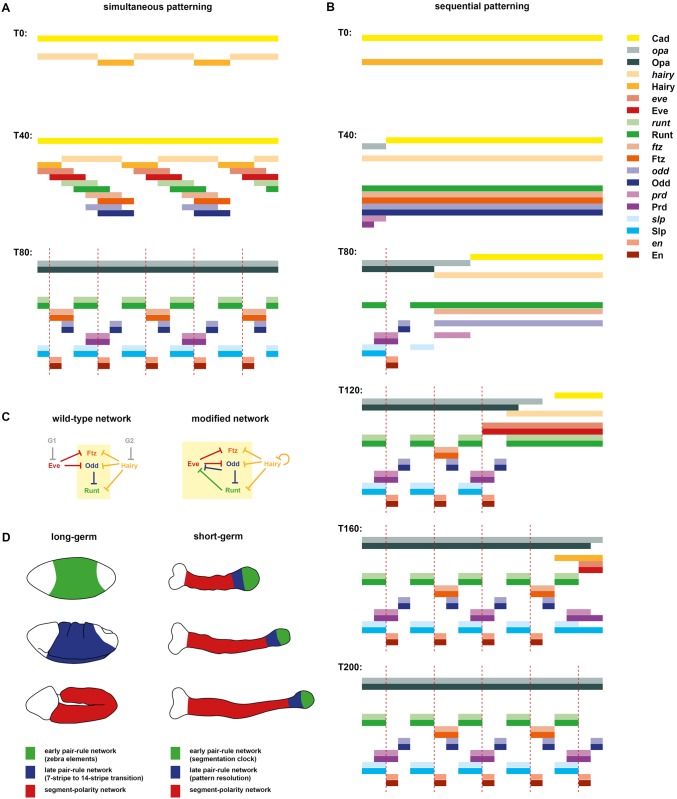
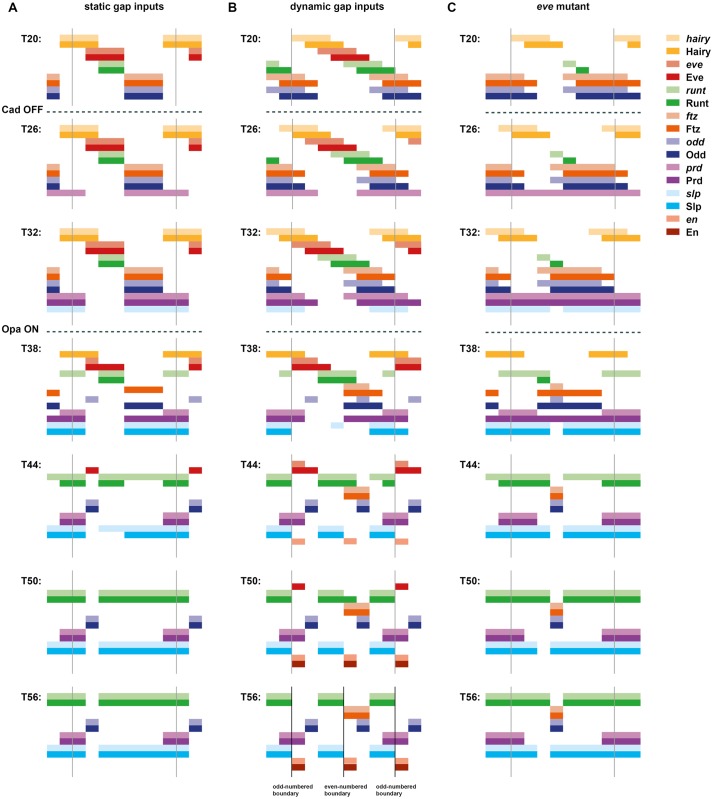
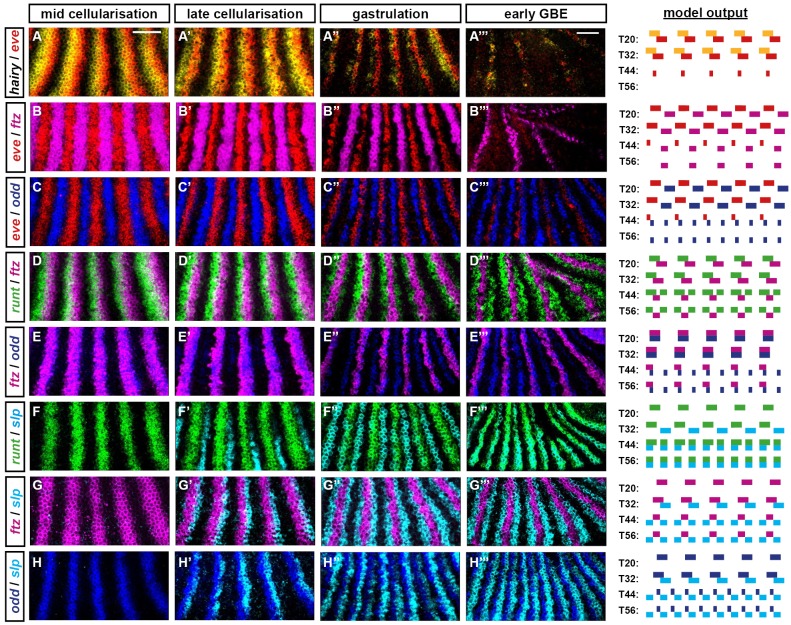
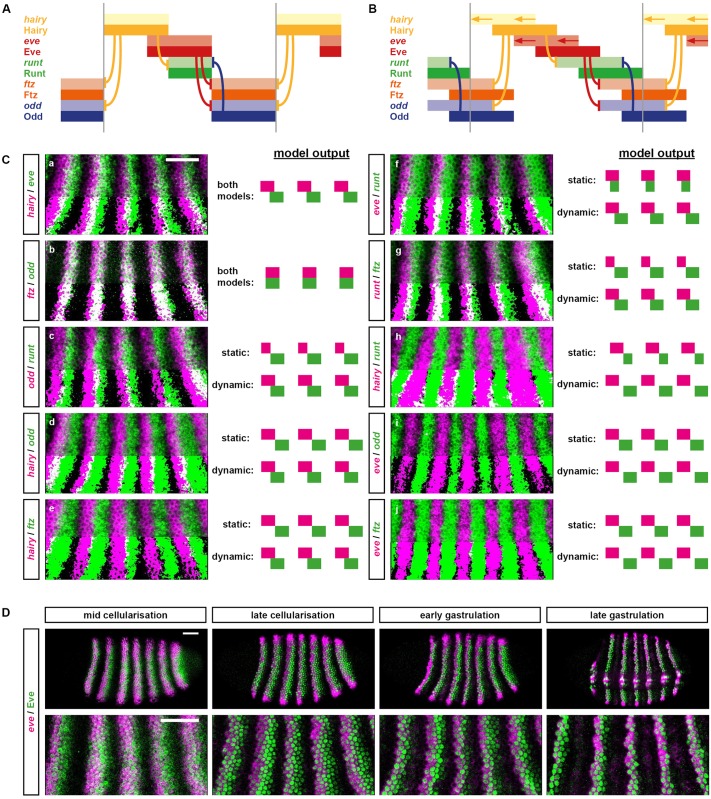
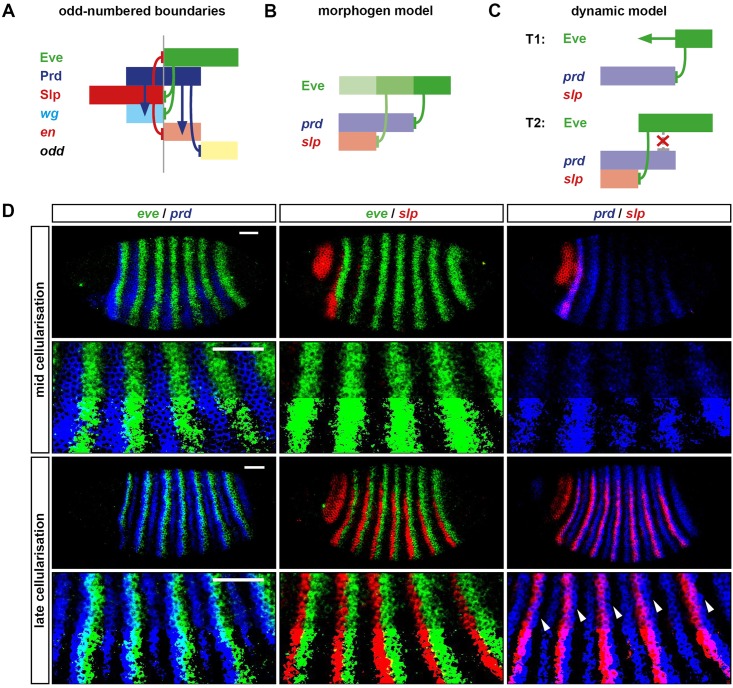
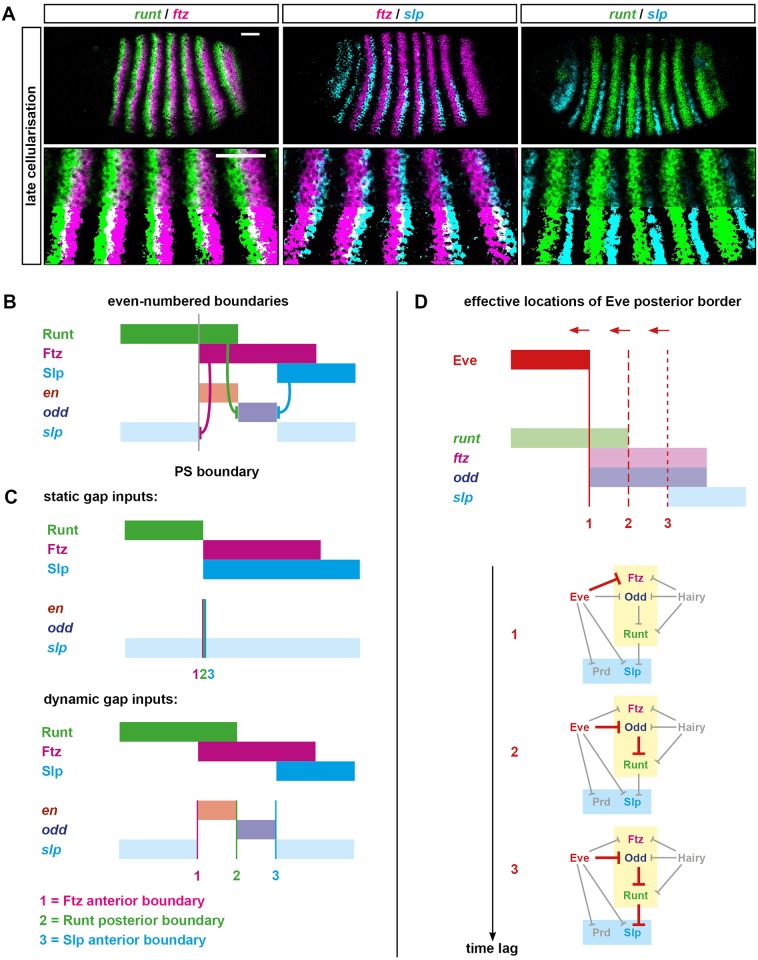
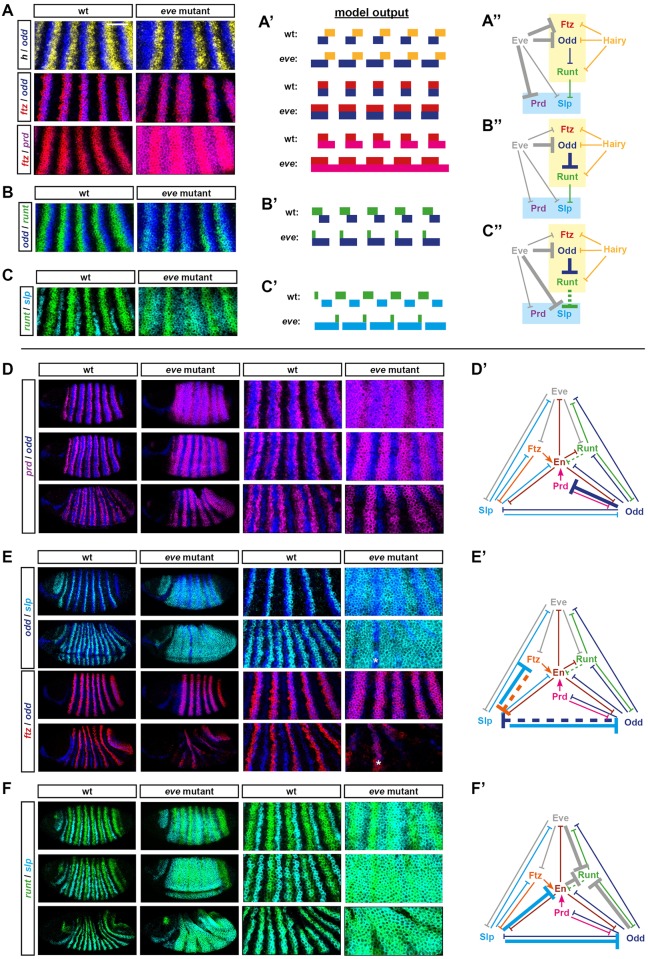
Drosophila segmentation is a well-established paradigm for developmental pattern formation. However, the later stages of segment patterning, regulated by the "pair-rule" genes, are still not well understood at the system level. Building on established genetic interactions, I construct a logical model of the Drosophila pair-rule system that takes into account the demonstrated stage-specific architecture of the pair-rule gene network. Simulation of this model can accurately recapitulate the observed spatiotemporal expression of the pair-rule genes, but only when the system is provided with dynamic "gap" inputs. This result suggests that dynamic shifts of pair-rule stripes are essential for segment patterning in the trunk and provides a functional role for observed posterior-to-anterior gap domain shifts that occur during cellularisation. The model also suggests revised patterning mechanisms for the parasegment boundaries and explains the aetiology of the even-skipped null mutant phenotype. Strikingly, a slightly modified version of the model is able to pattern segments in either simultaneous or sequential modes, depending only on initial conditions. This suggests that fundamentally similar mechanisms may underlie segmentation in short-germ and long-germ arthropods.
果蝇体节划分是发育模式形成中一个已确立的范例。然而,由“成对规则”基因调控的体节模式形成后期阶段,在系统层面上仍未得到很好的理解。基于已确立的遗传相互作用,我构建了一个果蝇成对规则系统的逻辑模型,该模型考虑了已证明的成对规则基因网络的阶段特异性结构。对该模型的模拟能够准确重现观察到的成对规则基因的时空表达,但前提是系统要提供动态的“间隙”输入。这一结果表明,成对规则条纹的动态移动对于躯干中的体节模式形成至关重要,并为细胞化过程中观察到的从后向前的间隙域移动提供了功能作用。该模型还提出了副体节边界的修正模式形成机制,并解释了偶数跳动无效突变体表型的病因。引人注目的是,该模型的一个稍微修改的版本能够根据初始条件以同时或顺序模式对体节进行模式化。这表明,从根本上来说,相似的机制可能是短胚和长胚节肢动物体节划分的基础。