Becerra López Jorge Luis, Esparza Estrada Citlalli Edith, Romero Méndez Ulises, Sigala Rodríguez José Jesús, Mayer Goyenechea Irene Goyenechea, Castillo Cerón Jesús Martín
Centro de Investigación en Sustentabilidad Energética y Ambiental del Noreste, Universidad Autónoma del Noreste, Tamaulipas, México.
Centro de Investigaciones Biológicas, Laboratorio de Sistemática Molecular, Universidad Autónoma del Estado de Hidalgo, Hidalgo, México.
PLoS One. 2017 Sep 27;12(9):e0185086. doi: 10.1371/journal.pone.0185086. eCollection 2017.
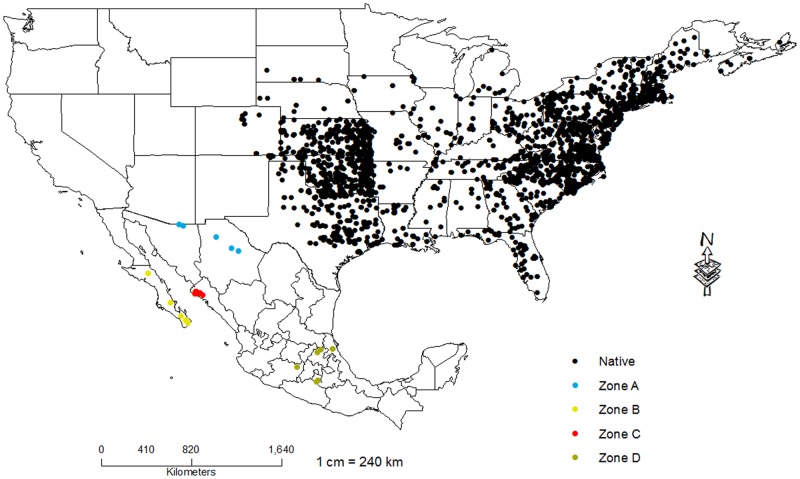
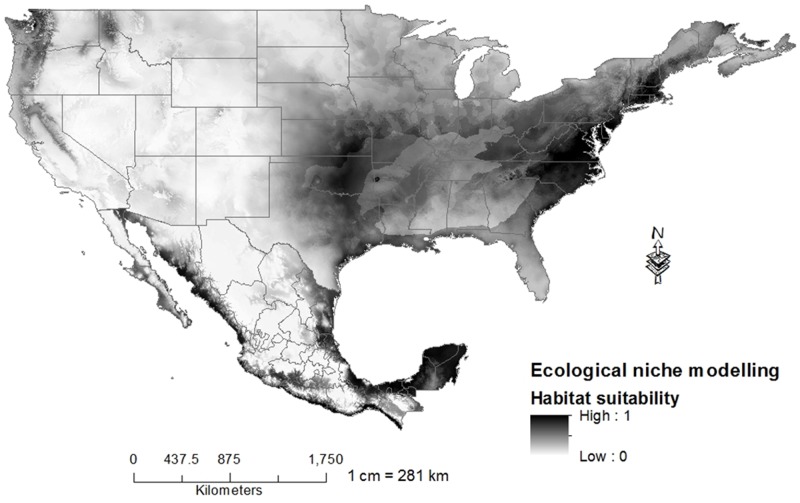
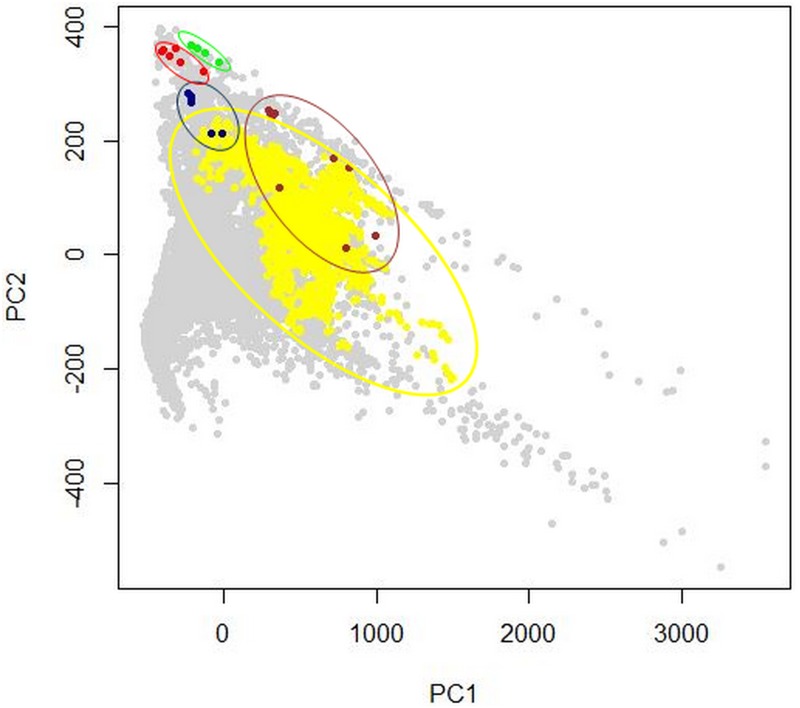
Invasive alien species are one of most severe threats to biodiversity and natural resources. These biological invasions have been studied from the niche conservatism and niche shifts perspective. Niche differentiation may result from changes in fundamental niche or realized niche or both; in biological invasions, niche differences between native and non-native ranges can appear through niche expansion, niche unfilling and niche stability. The American bullfrog Lithobates catesbeianus is an invasive species that can have negative impacts on native amphibian populations. This research examines the climate niche shifts of this frog, its potential range of expansion in Mexico and the risk of invasion by bullfrog in the habitats of 82 frog species endemic to Mexico, that based on their climatic niche similarity were divided in four ecological groups. The results indicate that species in two ecological groups were the most vulnerable to invasion by bullfrog. However, the climate niche shifts of L. catesbeianus may allow it to adapt to new environmental conditions, so species from the two remaining groups cannot be dismissed as not vulnerable. This information is valuable for decision making in prioritizing areas for conservation of Mexican endemic frogs.
外来入侵物种是对生物多样性和自然资源最严重的威胁之一。这些生物入侵已从生态位保守和生态位转移的角度进行了研究。生态位分化可能源于基础生态位或实际生态位或两者的变化;在生物入侵中,本地和非本地分布范围之间的生态位差异可通过生态位扩张、生态位未填充和生态位稳定性表现出来。美国牛蛙(Lithobates catesbeianus)是一种入侵物种,会对本地两栖动物种群产生负面影响。本研究考察了这种青蛙的气候生态位转移、其在墨西哥潜在的扩张范围以及牛蛙在墨西哥特有的82种青蛙栖息地的入侵风险,这些青蛙基于其气候生态位相似性被分为四个生态组。结果表明,两个生态组中的物种最容易受到牛蛙入侵的影响。然而,牛蛙的气候生态位转移可能使其能够适应新的环境条件,因此其余两个组的物种不能被视为不易受影响。这些信息对于确定墨西哥特有青蛙的优先保护区域的决策具有重要价值。