Trevisan Bruna, Primon Juliana F, Marques Fernando P L
Curso de Pós-graduação/Instituto de Biociências, Universidade de São Paulo, São Paulo, São Paulo, Brazil.
Departamento de Zoologia/Instituto de Biociências, Universidade de São Paulo, São Paulo, São Paulo, Brazil.
PLoS One. 2017 Sep 27;12(9):e0184632. doi: 10.1371/journal.pone.0184632. eCollection 2017.
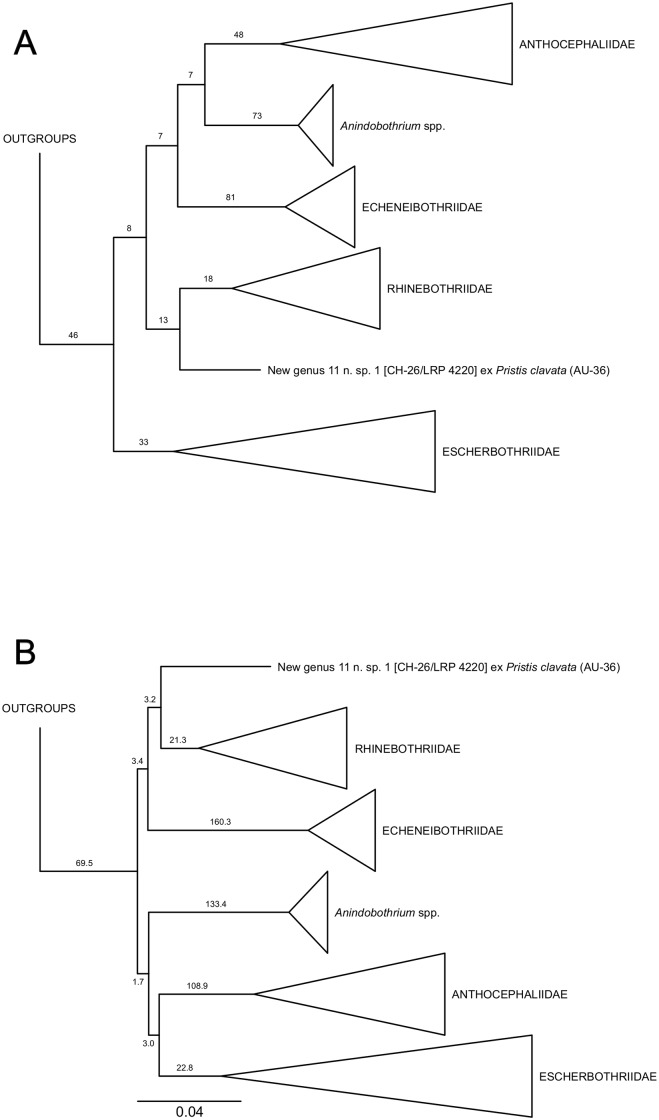
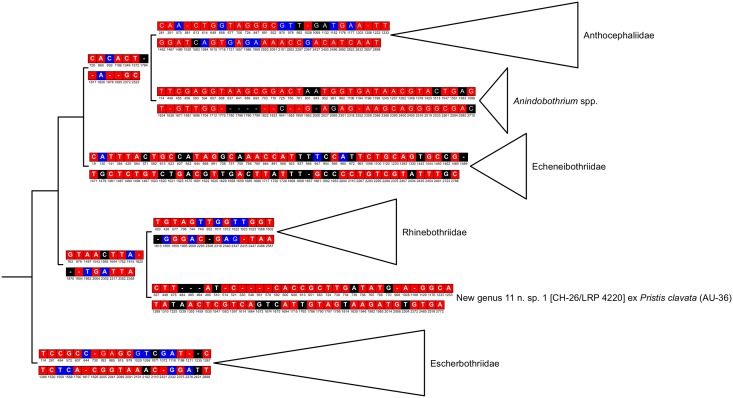
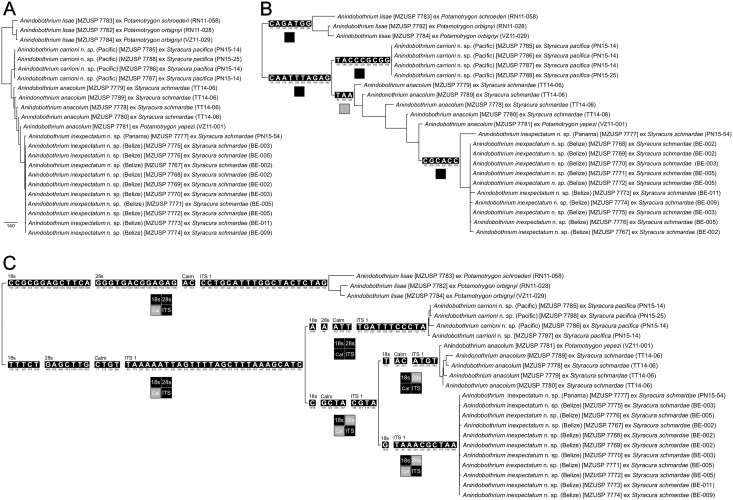
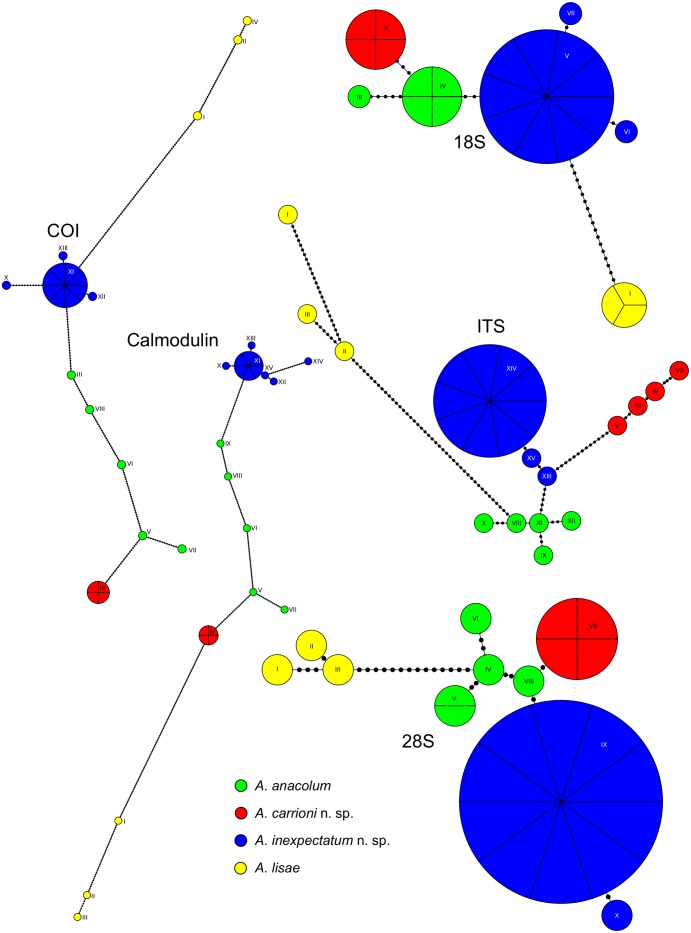
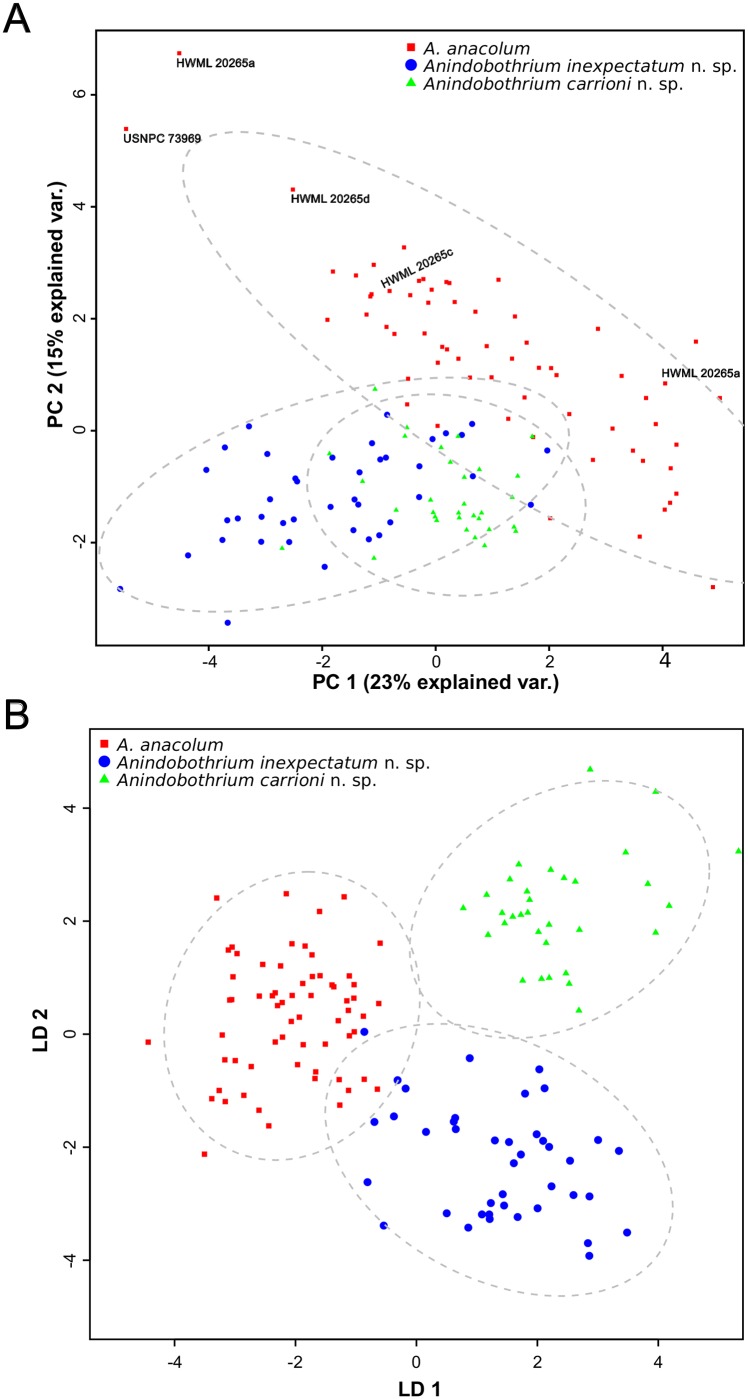
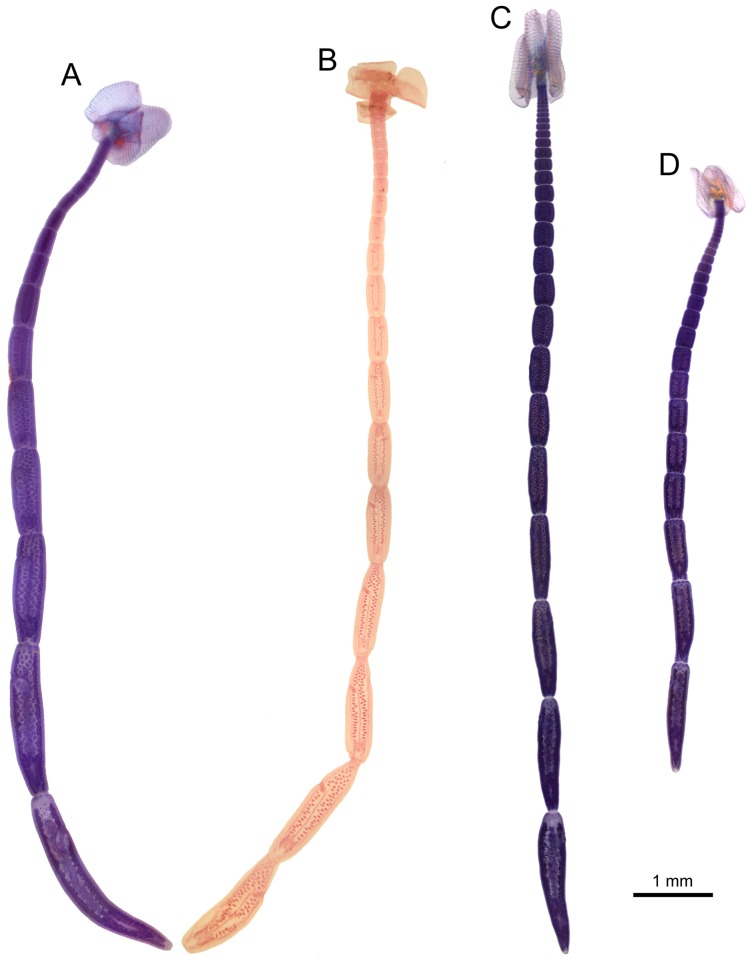
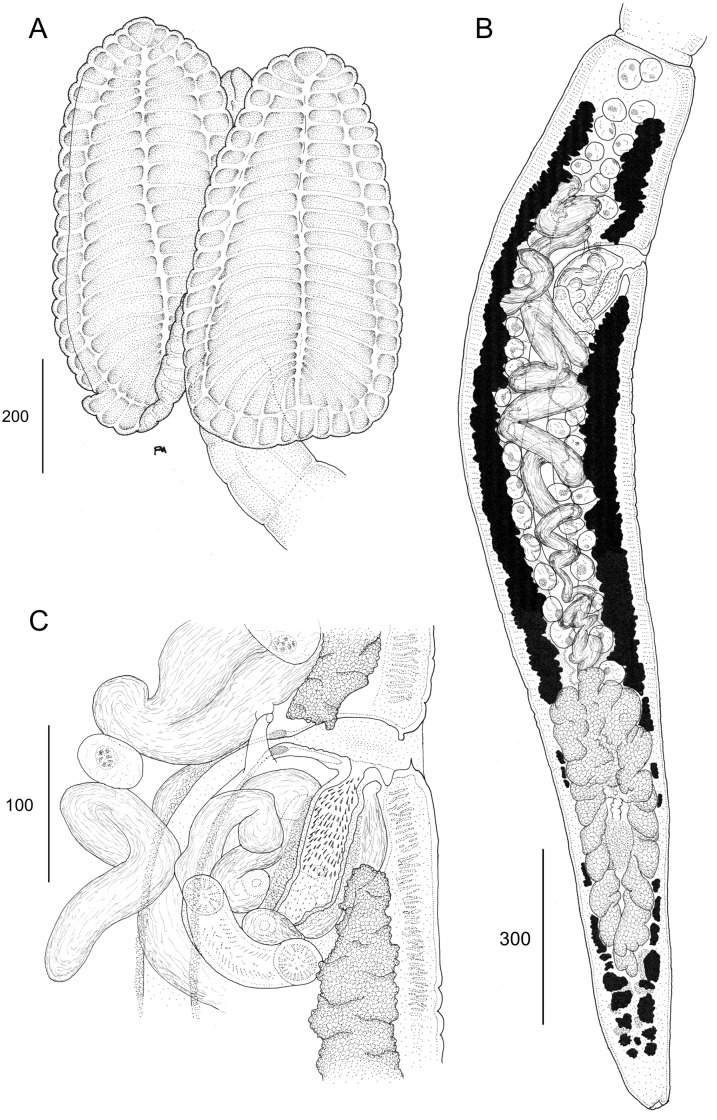
Tapeworms of the genus Anindobothrium Marques, Brooks & Lasso, 2001 are found in both marine and Neotropical freshwater stingrays of the family Potamotrygonidae. The patterns of host association within the genus support the most recent hypothesis about the history of diversification of potamotrygonids, which suggests that the ancestor of freshwater lineages of the Potamotrygonidae colonized South American river systems through marine incursion events. Despite the relevance of the genus Anindobothrium to understand the history of colonization and diversification of potamotrygonids, no additional efforts were done to better investigate the phylogenetic relationship of this taxon with other lineages of cestodes since its erection. This study is a result of recent collecting efforts to sample members of the genus in marine and freshwater potamotrygonids that enabled the most extensive documentation of the fauna of Anindobothrium parasitizing species of Styracura de Carvalho, Loboda & da Silva, Potamotrygon schroederi Fernández-Yépez, P. orbignyi (Castelnau) and P. yepezi Castex & Castello from six different countries, representing the eastern Pacific Ocean, Caribbean Sea, and river basins in South America (Rio Negro, Orinoco, and Maracaibo). The newly collected material provided additional specimens for morphological studies and molecular samples for subsequent phylogenetic analyses that allowed us to address the phylogenetic position of Anindobothrium and provide molecular and morphological evidence to recognize two additional species for the genus. The taxonomic actions that followed our analyses included the proposition of a new family, Anindobothriidae fam. n., to accommodate the genus Anindobothrium in the order Rhinebothriidea Healy, Caira, Jensen, Webster & Littlewood, 2009 and the description of two new species-one from the eastern Pacific Ocean, A. carrioni sp. n., and the other from the Caribbean Sea, A. inexpectatum sp. n. In addition, we also present a redescription of the type species of the genus, A. anacolum (Brooks, 1977) Marques, Brooks & Lasso, 2001, and of A. lisae Marques, Brooks & Lasso, 2001. Finally, we discuss the paleogeographical events mostly linked with the diversification of the genus and the protocols adopted to uncover cryptic diversity in Anindobothrium.
2001年,马克斯、布鲁克斯和拉索描述的Anindobothrium属绦虫,在淡水魟科的海洋和新热带淡水魟体内均有发现。该属内宿主关联模式支持了关于淡水魟科多样化历史的最新假说,即淡水魟科谱系的祖先通过海洋入侵事件,在南美洲河流系统中定殖。尽管Anindobothrium属对于理解淡水魟科的定殖和多样化历史具有重要意义,但自该属建立以来,并未有更多努力来更好地研究其与其他绦虫谱系的系统发育关系。本研究源于近期在海洋和淡水魟科中采集该属样本的工作,这些工作使得对寄生于斯氏魟属的卡瓦略魟、洛博达魟、席尔瓦魟、施罗德氏魟、奥比尼魟和耶佩兹魟的Anindobothrium属动物区系进行了最广泛的记录,这些魟分布于六个不同国家,代表了东太平洋、加勒比海以及南美洲的河流流域(内格罗河、奥里诺科河和马拉开波湖)。新采集的材料为形态学研究提供了更多标本,并为后续系统发育分析提供了分子样本,这使我们能够确定Anindobothrium属的系统发育位置,并提供分子和形态学证据以确认该属的另外两个新物种。基于我们分析后的分类学举措包括提出一个新科,即Anindobothriidae科,将Anindobothrium属归入2009年希利、凯拉、詹森、韦伯斯特和利特伍德建立的Rhinebothriidea目,并描述了两个新物种,一个来自东太平洋的卡里奥尼Anindobothrium carrioni新种,另一个来自加勒比海的意外Anindobothrium inexpectatum新种。此外,我们还重新描述了该属的模式种,即2001年马克斯、布鲁克斯和拉索描述的Anindobothrium anacolum(布鲁克斯,1977)以及Anindobothrium lisae马克斯、布鲁克斯和拉索,2001。最后,我们讨论了与该属多样化密切相关的古地理事件,以及为揭示Anindobothrium属隐藏多样性所采用的方法。