Department of Thoracic Surgery, Ruijin Hospital, Shanghai Jiao Tong University School of Medicine, 197 Ruijin 2nd Road, Shanghai, 200025, People's Republic of China.
State Key Laboratory of Oncogenes & Related Genes, Shanghai Cancer Institute, Renji Hospital, Shanghai Jiao Tong University School of Medicine, No.25/Ln2200, XieTu Road, Shanghai, 200032, People's Republic of China.
BMC Cancer. 2017 Sep 27;17(1):661. doi: 10.1186/s12885-017-3649-y.
Secreted clusterin (sCLU), a 75-80 kDa disulfide-linked heterodimeric protein, plays crucial roles in various pathophysiological processes, including lipid transport, tissue remodeling, cell apoptosis and reproduction. Our previous studies demonstrated that sCLU could influence cell apoptosis, proliferation, and invasion of non-small cell lung cancer (NSCLC) cells.
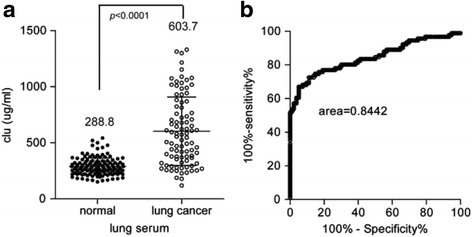
In this study, clusterin's function in regulating transdifferentiation of NSCLC cells was investigated. In addition, we examined the correlation between clusterin and clinicopathological features of lung cancer.
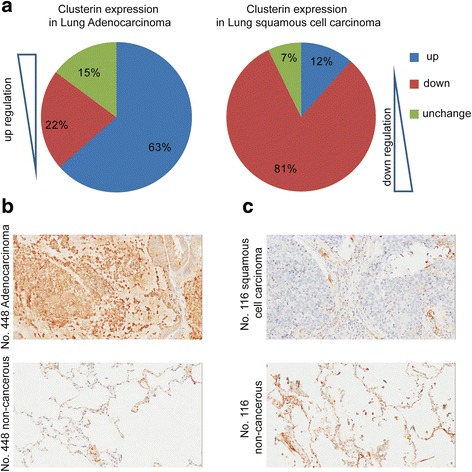
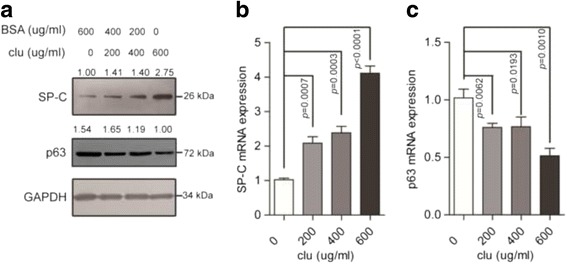
We found that clusterin was increased in lung adenocarcinoma tissues and decreased in lung squamous cell carcinoma tissues through immunohistochemical technique. In cultured lung adenocarcinoma cell lines, clusterin addition could increase SP-C protein expression in 2.75-fold, and decrease p63 protein expression in 0.65-fold (1.54 to 1). And also clusterin addition could increase SP-C mRNA expression in 4.05-fold, decreased p63 mRNA expression in 0.51-fold.
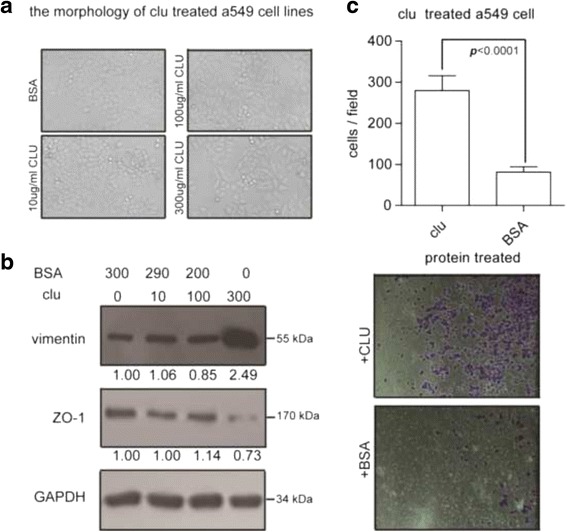
Our study demonstrated that clusterin could promote EMT and influence transdifferentiation from lung squamous cell carcinoma to lung adenocarcinoma. However, we found that clusterin expression have no correlation with malignance associate clinicopathological data. Our study may help to further elucidate the development and progression of NSCLC, also it may contribute to the research of therapies targeting sCLU.
分泌型簇蛋白(sCLU)是一种 75-80kDa 的二硫键连接的异二聚体蛋白,在多种病理生理过程中发挥着重要作用,包括脂质转运、组织重塑、细胞凋亡和生殖。我们之前的研究表明,sCLU 可以影响非小细胞肺癌(NSCLC)细胞的细胞凋亡、增殖和侵袭。
在本研究中,研究了簇蛋白在调节 NSCLC 细胞转分化中的作用。此外,我们还研究了簇蛋白与肺癌临床病理特征之间的相关性。
通过免疫组织化学技术发现,簇蛋白在肺腺癌组织中增加,在肺鳞癌组织中减少。在培养的肺腺癌细胞系中,添加簇蛋白可使 SP-C 蛋白表达增加 2.75 倍,p63 蛋白表达减少 0.65 倍(1.54 至 1)。添加簇蛋白还可使 SP-CmRNA 表达增加 4.05 倍,p63mRNA 表达减少 0.51 倍。
我们的研究表明,簇蛋白可以促进 EMT,并影响从肺鳞癌向肺腺癌的转化。然而,我们发现簇蛋白的表达与恶性相关的临床病理数据无关。我们的研究可能有助于进一步阐明 NSCLC 的发生和发展,也可能有助于针对 sCLU 的治疗研究。