Ivanov Yu D, Malsagova K A, Izotov A A, Pleshakova T O, Tatur V Yu, Vesnin S G, Ivanova N D, Usanov S A, Archakov A I
Institute of Biomedical Chemistry, ul. Pogodinskaya 10, Moscow 119121, Russia.
Foundation of Perspective Technologies and Novations, Moscow, Russia.
Biochem Biophys Rep. 2015 Dec 31;5:285-289. doi: 10.1016/j.bbrep.2015.12.013. eCollection 2016 Mar.
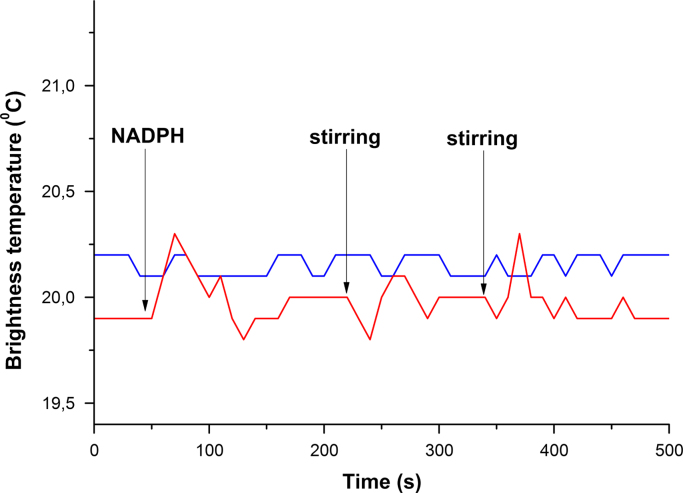
Microwave radiation at 3.4-4.2 GHz frequency of the cytochrome P450 CYP102 A1 (BM3) solution was registered during the lauric acid hydroxylation reaction. The microwave radiation generation was shown to occur following the addition of electron donor NADPH to a system containing an enzyme and a substrate. The radiation occurs for the enzyme solutions with enzyme concentrations of 10 and 10 М. The microwave radiation effect elicited by the aqueous enzyme solution was observed for the first time. The results obtained can be used to elaborate a new approach to enzyme systems research, including studying of the mechanism of interaction of a functioning enzyme system with microenvironment.
在月桂酸羟基化反应过程中,记录到细胞色素P450 CYP102 A1(BM3)溶液在3.4 - 4.2吉赫兹频率的微波辐射。结果表明,向含有酶和底物的体系中加入电子供体NADPH后会产生微波辐射。对于酶浓度为10和10М的酶溶液会出现这种辐射。首次观察到了水性酶溶液引发的微波辐射效应。所得结果可用于阐述一种研究酶系统的新方法,包括研究功能酶系统与微环境的相互作用机制。