Martínez Rebeca, de Villavicencio-Díaz Teresa Núñez, Sánchez Aniel, Ramos Yassel, Ferro Jesús Noda, González Lázaro Gil, Méndez Milagros, Rodríguez Elsa, Marcos Ernesto, Sánchez Belinda, Masforrol Yordanka, Garay Hilda, Albericio Fernando, Hermida Lisset, González Luis Javier, Vonasek Eva, Estrada Mario P, Besada Vladimir
Animal Biotechnology Division, Center for Genetic Engineering and Biotechnology, P.O. Box 6162, Havana 10600, Cuba.
Department of Systems Biology, Center for Genetic Engineering and Biotechnology, Havana, Cuba.
Biochem Biophys Rep. 2016 Jan 14;5:379-387. doi: 10.1016/j.bbrep.2016.01.008. eCollection 2016 Mar.
Growth hormone secretagogues (GHS), among other factors, regulate the release of GH. The biological activity of the secretagogue peptide A233 as a promoter of growth and innate immunity in teleost fish has previously been demonstrated, but its role in the immune system of mammals is not well understood.
The effect of the peptide was investigated in J774A.2 macrophage cells using a comparative proteomics approach after 6 and 12 h of peptide stimulation.
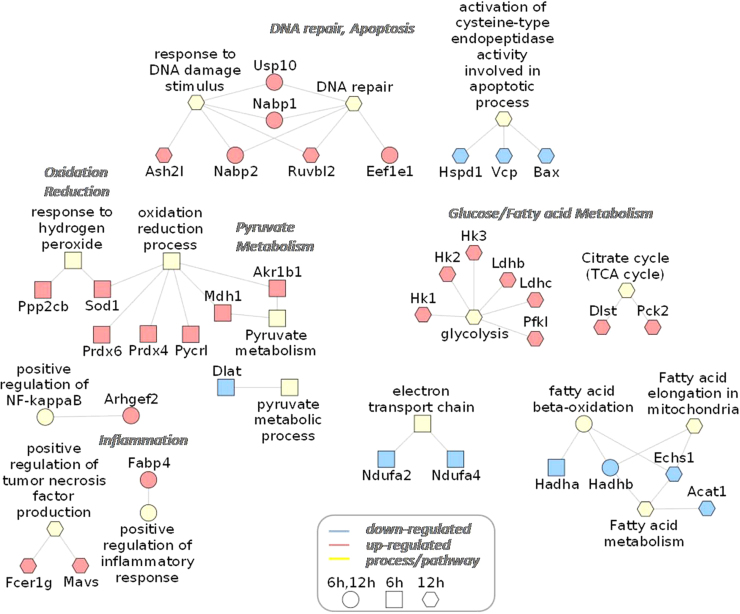
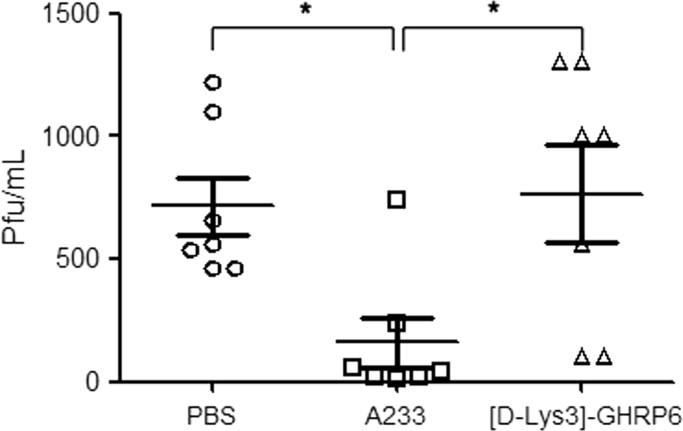
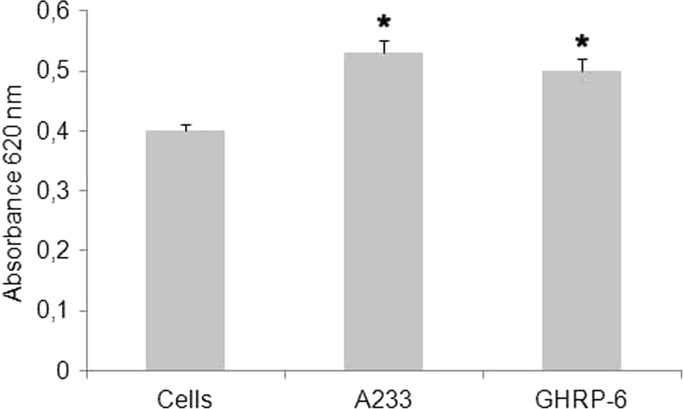
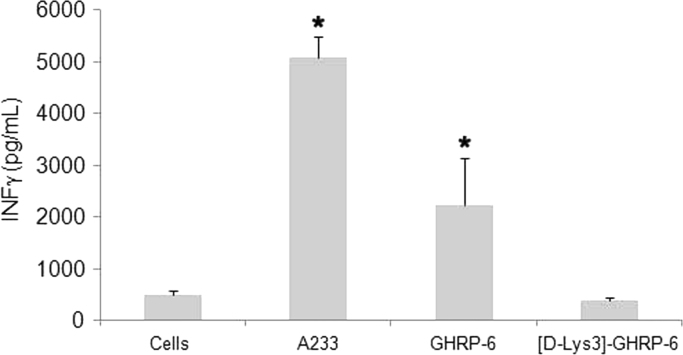
The functional analysis of differentially modulated proteins showed that A233 peptide treatment appears to promote activation and ROS-dependent cytotoxic functions in macrophages and enhanced expression of antiviral protein complexes such as MAVS. In accordance with this hypothesis, we found that A233 treatment enhanced superoxide anion production and the IFN-γ level in J774A.2 cells and mouse splenocytes, respectively, and reduced viral load in a dengue virus mouse model of infection.
The growth hormone secretagogue A233 peptide promotes activation of ROS-dependent cytotoxic functions and exerts immunomodulatory effects that enable an antiviral state in a dengue virus mouse model.
The increase of IFN-γ level and the differential modulation of antiviral proteins by the A233 peptide suggest that the molecule could activate an innate immune response with a possible further impact in the treatment of acute and chronic diseases.
生长激素促分泌素(GHS)与其他因素一起调节生长激素的释放。此前已证明促分泌素肽A233在硬骨鱼中作为生长和先天免疫促进剂的生物活性,但其在哺乳动物免疫系统中的作用尚不清楚。
在肽刺激6小时和12小时后,使用比较蛋白质组学方法在J774A.2巨噬细胞中研究该肽的作用。
对差异调节蛋白的功能分析表明,A233肽处理似乎促进巨噬细胞的激活和ROS依赖性细胞毒性功能,并增强抗病毒蛋白复合物(如MAVS)的表达。根据这一假设,我们发现A233处理分别增强了J774A.2细胞和小鼠脾细胞中超氧阴离子的产生和IFN-γ水平,并降低了登革热病毒小鼠感染模型中的病毒载量。
生长激素促分泌素A233肽促进ROS依赖性细胞毒性功能的激活,并发挥免疫调节作用,使登革热病毒小鼠模型进入抗病毒状态。
A233肽使IFN-γ水平升高并对抗病毒蛋白进行差异调节,这表明该分子可能激活先天免疫反应,可能对急慢性疾病的治疗产生进一步影响。