Institute of Medicinal Plant Development (IMPLAD), Chinese Academy of Medical Sciences (CAMS), Peking Union Medical College (PUMC), Beijing 100193, China.
Institute of Chinese Materia Medica, China Academy of Chinese Medical Sciences, Beijing 100700, China.
Molecules. 2017 Sep 28;22(10):1630. doi: 10.3390/molecules22101630.
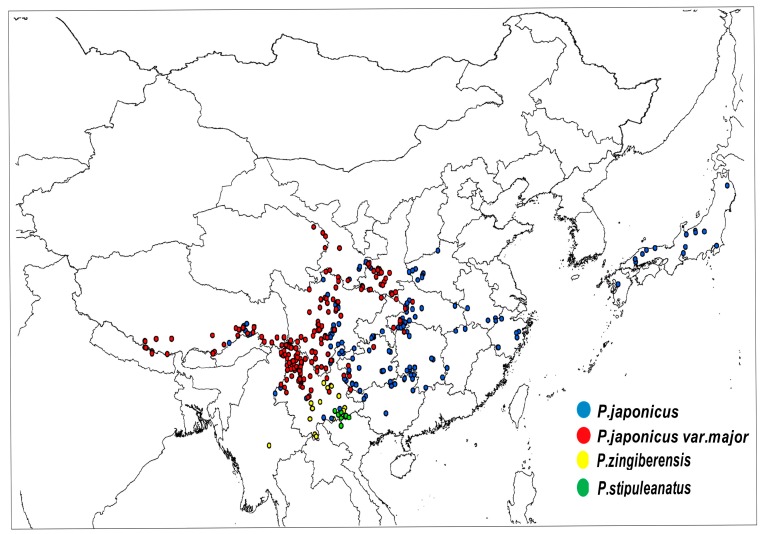
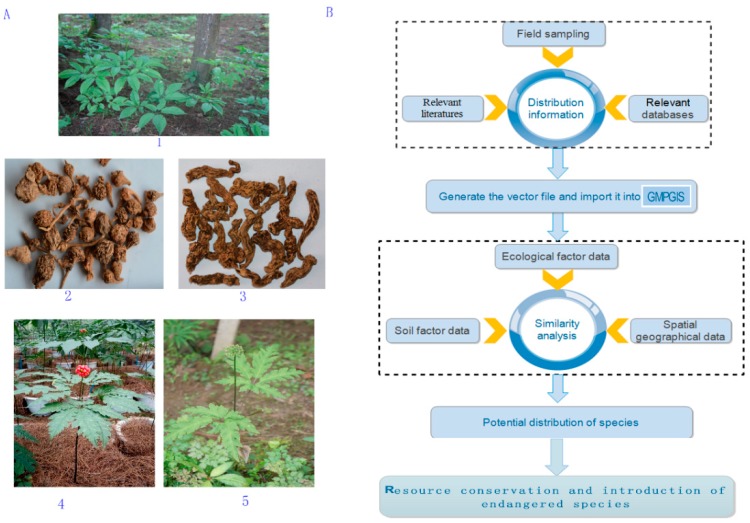
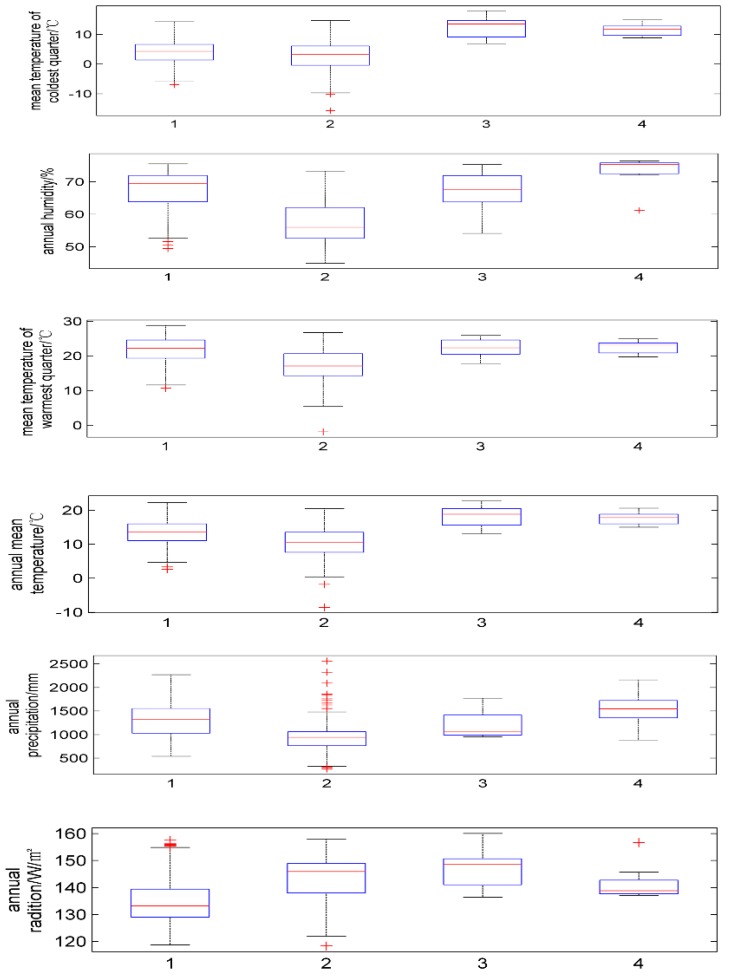
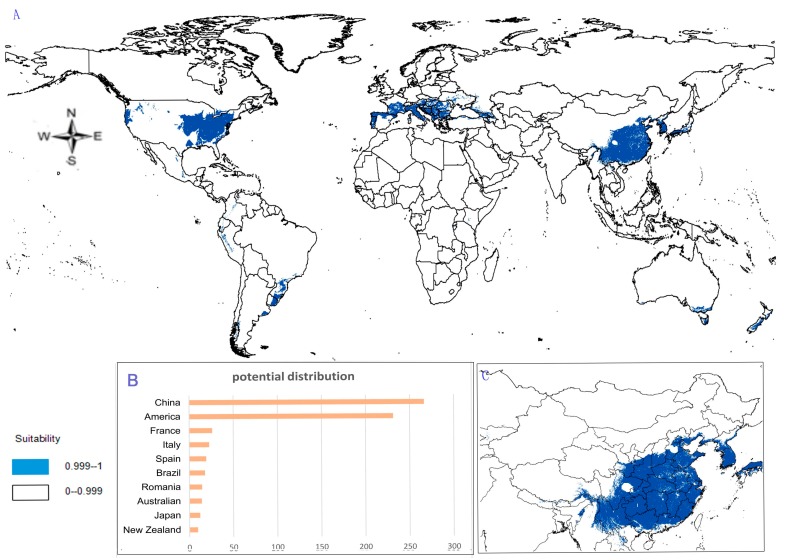
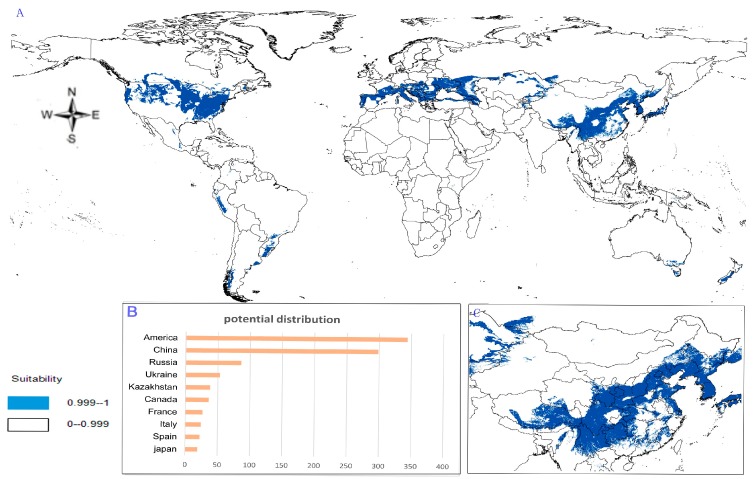
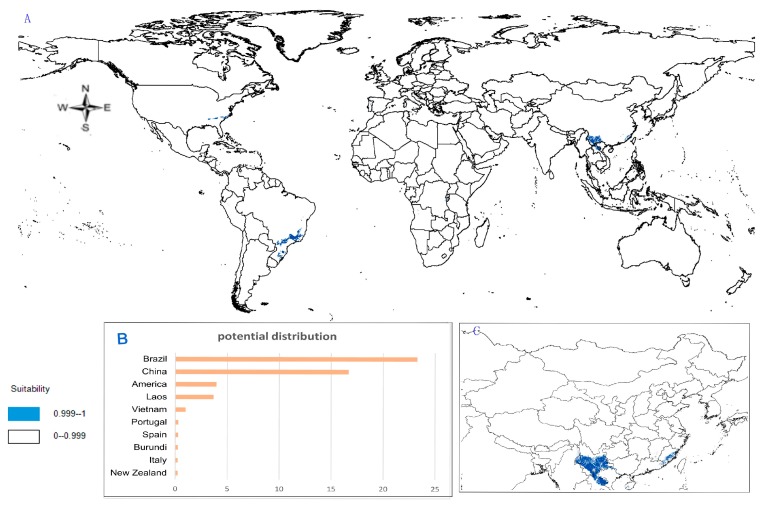
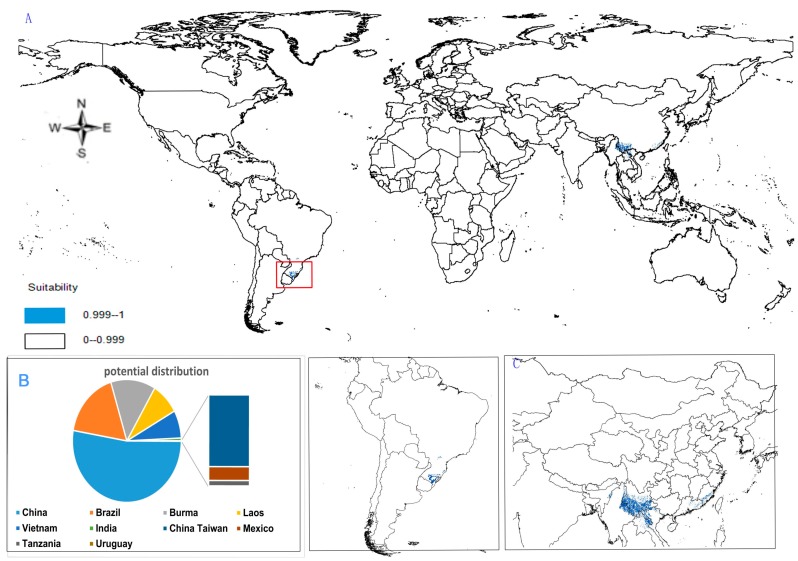
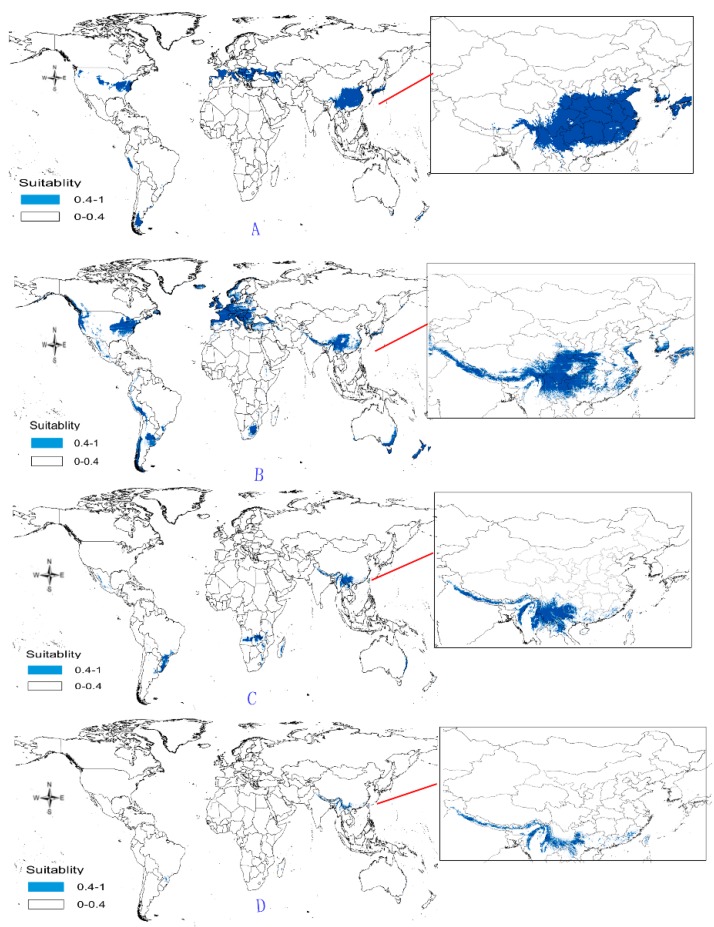
Global biodiversity is strongly influenced by the decrease in endangered biological species. Predicting the distribution of endangered medicinal plants is necessary for resource conservation. A spatial distribution model-geographic information system for global medicinal plants (GMPGIS)-is used to predict the global potential suitable distribution of four endangered species, including and distributed in low- and middle-latitude, and in low-latitude regions of China based on seven bioclimatic variables and 600 occurrence points. Results indicate that areas of and are 266.29 × 10⁵ and 77.5 × 10⁵ km², respectively, which are mainly distributed in China and America. By contrast, the areas of and are 5.09 × 10⁵ and 2.05 × 10⁵ km², respectively, which are mainly distributed in Brazil and China. has the widest distribution among the four species. The data also indicate that the mean temperature of coldest quarter is the most critical factor. This scientific prediction can be used as reference for resource conservation of endangered plants and as a guide to search for endangered species in previously unknown areas.
全球生物多样性受到濒危生物物种减少的强烈影响。预测濒危药用植物的分布对于资源保护是必要的。利用地理信息系统(GIS)的全球药用植物空间分布模型(GMPGIS),基于 7 个生物气候变量和 600 个出现点,预测了分布于低、中纬度的四种濒危物种,包括 和 ,以及分布于中国低纬度地区的 和 的全球潜在适宜分布。结果表明, 和 的分布面积分别为 266.29×10⁵和 77.5×10⁵km²,主要分布在中国和美洲。相比之下, 和 的分布面积分别为 5.09×10⁵和 2.05×10⁵km²,主要分布在巴西和中国。四种物种中, 的分布最广。数据还表明,最冷月平均温度是最关键的因素。这项科学预测可作为濒危植物资源保护的参考,并为在以前未知的地区寻找濒危物种提供指导。