Department of Chemistry and Biochemistry, Mendel University in Brno, Zemedelska 1, Brno CZ-613 00, Czech Republic.
Central European Institute of Technology, Brno University of Technology, Technicka 3058/10, Brno CZ-616 00, Czech Republic.
Molecules. 2017 Sep 28;22(10):1626. doi: 10.3390/molecules22101626.
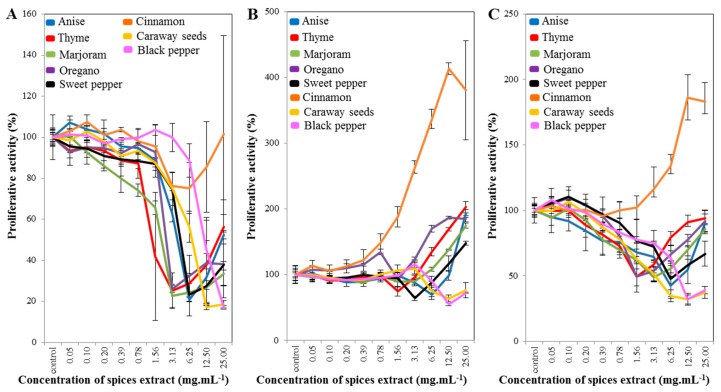
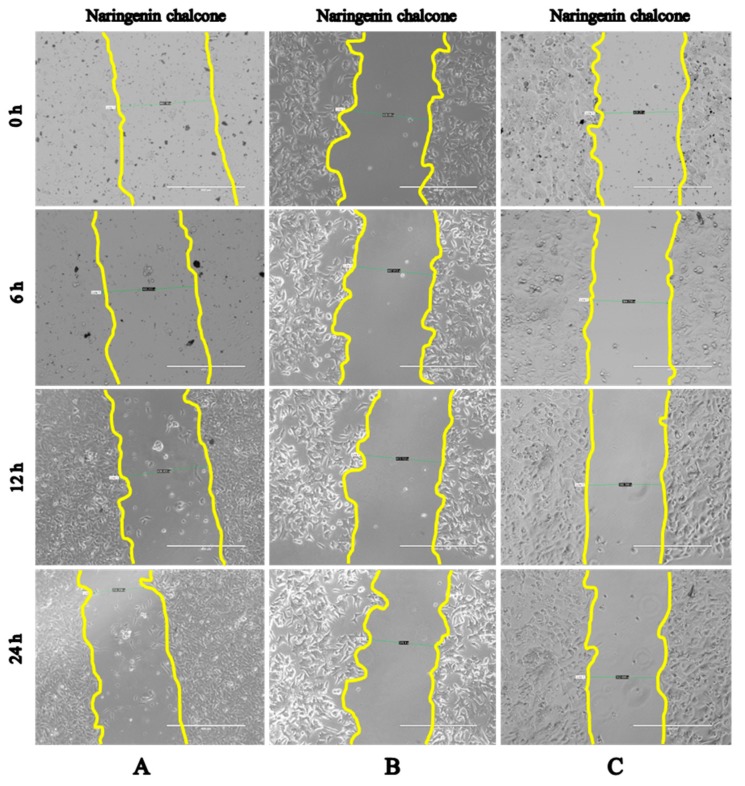
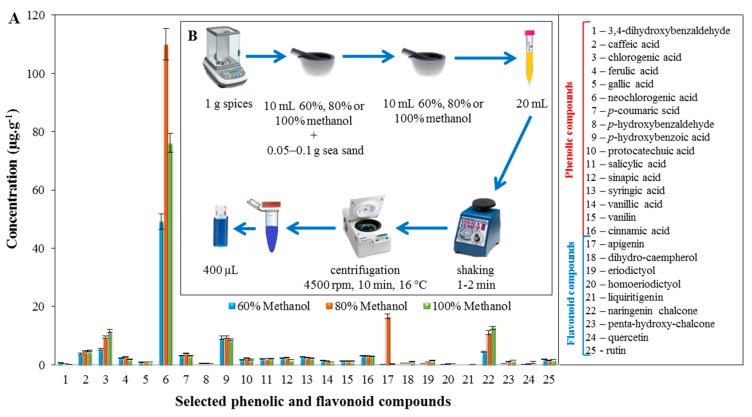
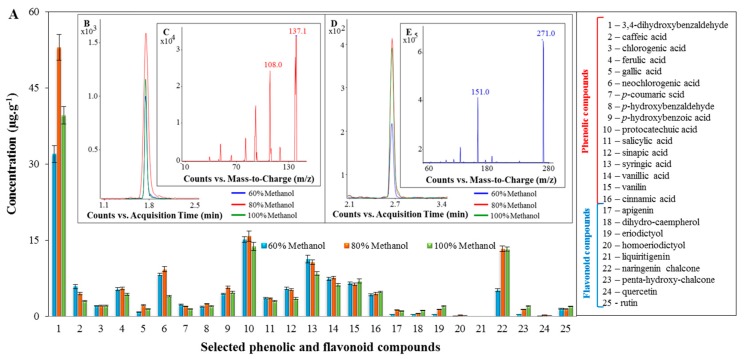
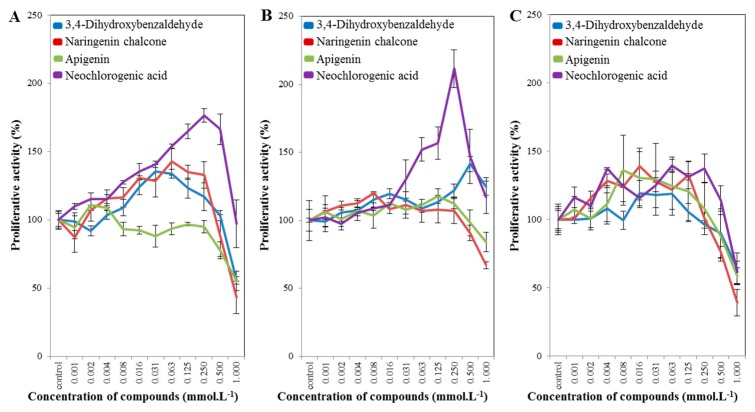
This study shows the effects of spices, and their phenolic and flavonoid compounds, on prostate cell lines (PNT1A, 22RV1 and PC3). The results of an MTT assay on extracts from eight spices revealed the strongest inhibitory effects were from black pepper and caraway seed extracts. The strongest inhibitory effect on prostatic cells was observed after the application of extracts of spices in concentration of 12.5 mg·mL. An LC/MS analysis identified that the most abundant phenolic and flavonoid compounds in black pepper are 3,4-dihydroxybenzaldehyde and naringenin chalcone, while the most abundant phenolic and flavonoid compounds in caraway seeds are neochlorogenic acid and apigenin. Using an MTT assay for the phenolic and flavonoid compounds from spices, we identified the IC value of ~1 mmol·L PNT1A. The scratch test demonstrated that the most potent inhibitory effect on PNT1A, 22RV1 and PC3 cells is from the naringenin chalcone contained in black pepper. From the spectrum of compounds assessed, the naringenin chalcone contained in black pepper was identified as the most potent inhibitor of the growth of prostate cells.
本研究探讨了香料及其酚类和类黄酮化合物对前列腺细胞系(PNT1A、22RV1 和 PC3)的影响。对 8 种香料提取物进行 MTT 检测的结果表明,黑胡椒和葛缕子籽提取物具有最强的抑制作用。在应用浓度为 12.5mg·mL 的香料提取物后,对前列腺细胞的抑制作用最强。LC/MS 分析鉴定出黑胡椒中含量最丰富的酚类和类黄酮化合物为 3,4-二羟基苯甲醛和柚皮素查尔酮,而葛缕子籽中含量最丰富的酚类和类黄酮化合物为新绿原酸和芹菜素。使用 MTT 法检测香料中的酚类和类黄酮化合物,我们确定了对 PNT1A 的 IC 值约为 1mmol·L。划痕试验表明,黑胡椒中所含的柚皮素查尔酮对 PNT1A、22RV1 和 PC3 细胞的抑制作用最强。在所评估的化合物谱中,黑胡椒中所含的柚皮素查尔酮被鉴定为抑制前列腺细胞生长的最有效抑制剂。