Kuo Ting-Yu, Tsai Chung-Che, Fu Hua-Wen
Institute of Molecular and Cellular Biology, National Tsing Hua University, Hsinchu, 30013 Taiwan, Republic of China.
Department of Life Science, National Tsing Hua University, Hsinchu, 30013 Taiwan, Republic of China.
Biol Proced Online. 2017 Sep 26;19:12. doi: 10.1186/s12575-017-0062-5. eCollection 2017.
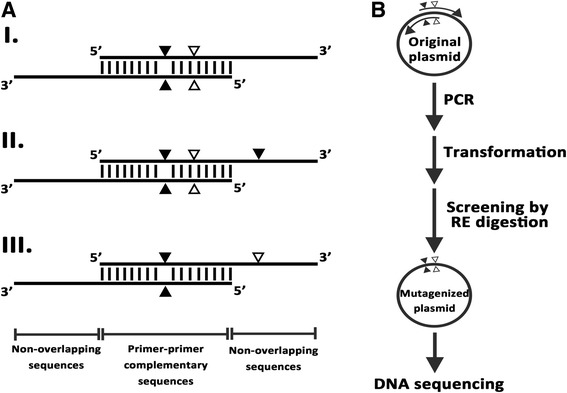
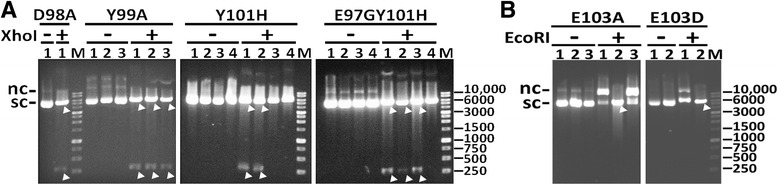
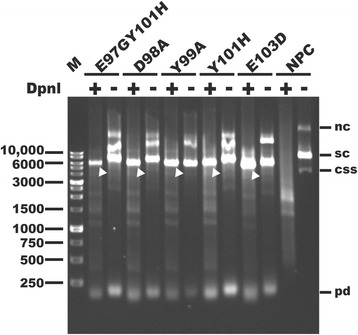
Site-directed mutagenesis (SDM) has been widely used for studying the structure and function of proteins. A one-step polymerase chain reaction (PCR)-based multiple site-directed plasmid mutagenesis method with extended non-overlapping sequence at the 3' end of the primer increases the PCR amplification efficiency and the capacity of multi-site mutagenesis. Here, we introduced silent restriction sites in the primers used in this PCR-based SDM method by utilizing SDM-Assist software to generate mutants of neutrophil-activating protein (HP-NAP), whose gene has low GC content. The HP-NAP mutants were efficiently generated by this modified mutagenesis method and quickly identified by a simple restriction digest due to the presence of the silent restriction site. This modified PCR-based SDM method with the introduction of a silent restriction site on the primer is efficient for generation and identification of mutations in the gene of interest.
定点诱变(SDM)已被广泛用于研究蛋白质的结构和功能。一种基于一步聚合酶链反应(PCR)的多位点定向质粒诱变方法,该方法在引物的3'端具有延伸的非重叠序列,提高了PCR扩增效率和多位点诱变的能力。在此,我们利用SDM-Assist软件在这种基于PCR的SDM方法中使用的引物中引入沉默限制位点,以生成基因GC含量低的嗜中性粒细胞活化蛋白(HP-NAP)的突变体。通过这种改良的诱变方法有效地生成了HP-NAP突变体,并由于存在沉默限制位点而通过简单的限制性消化快速鉴定。这种在引物上引入沉默限制位点的基于PCR的改良SDM方法对于在感兴趣的基因中产生和鉴定突变是有效的。