Kumar Aman, Garg Monika, Kaur Navneet, Chunduri Venkatesh, Sharma Saloni, Misser Swati, Kumar Ashish, Tsujimoto Hisashi, Dou Quan-Wen, Gupta Raj K
National Agri-Food Biotechnology InstituteMohali, India.
United Graduate School of Agriculture, Tottori UniversityTottori, Japan.
Front Plant Sci. 2017 Sep 14;8:1593. doi: 10.3389/fpls.2017.01593. eCollection 2017.
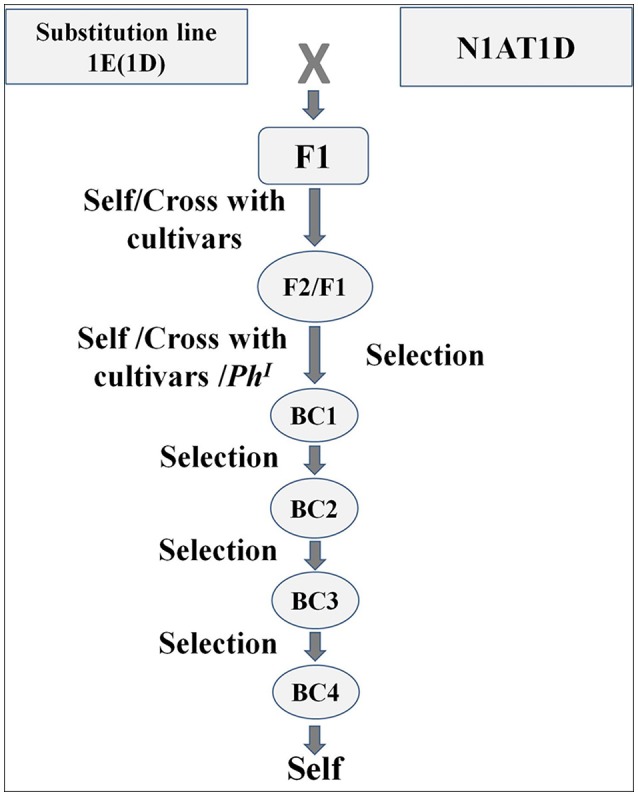
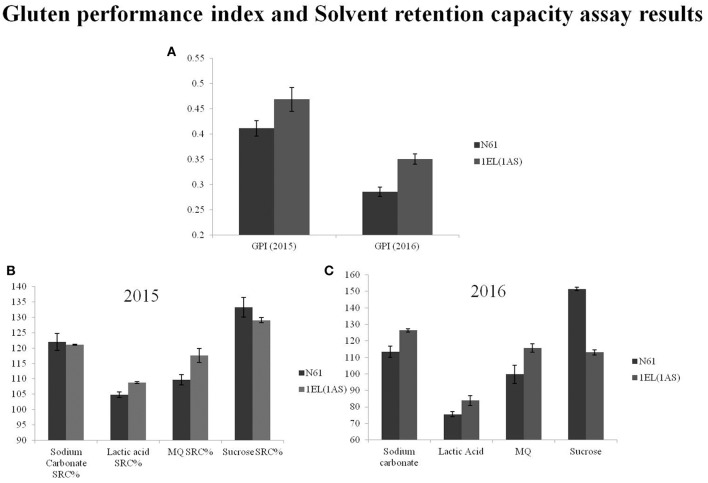
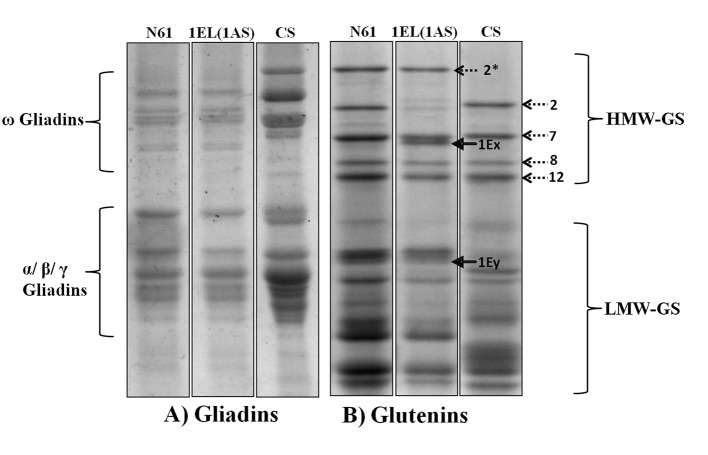
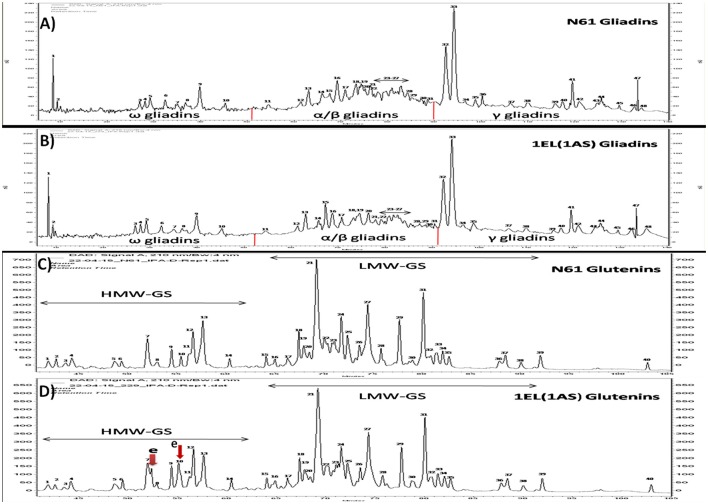
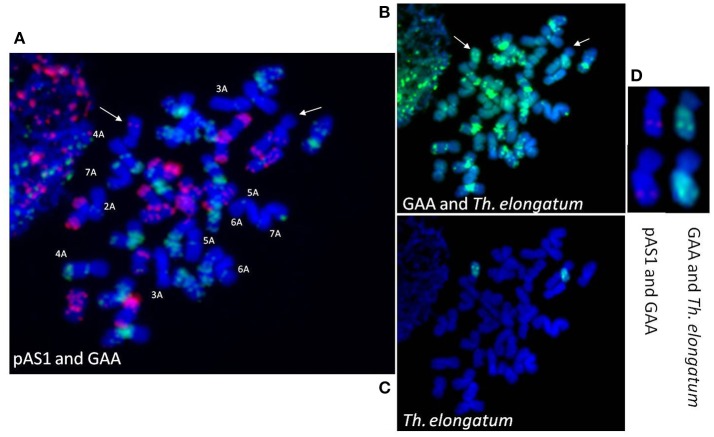
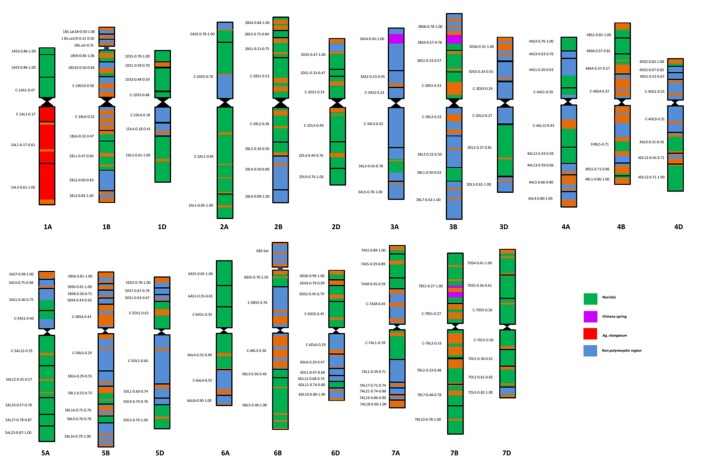
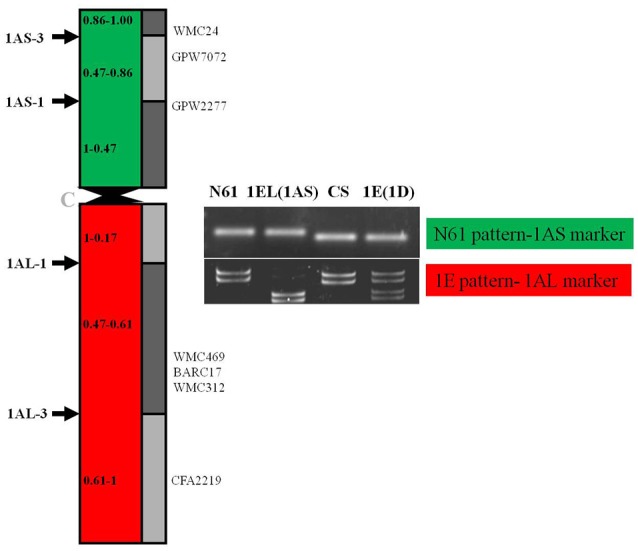
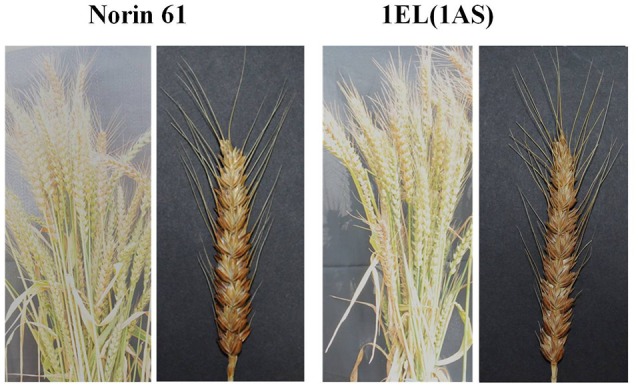
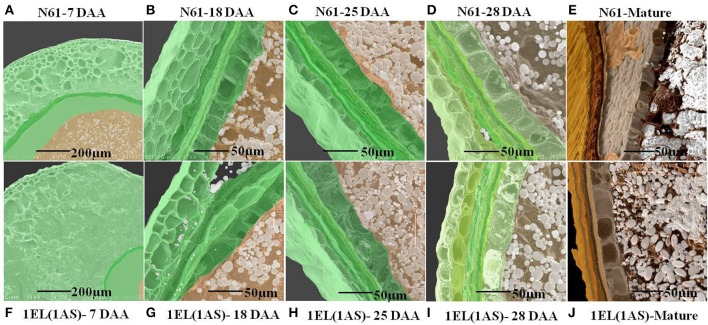
The protein content and its type are principal factors affecting wheat () end product quality. Among the wheat proteins, glutenin proteins, especially, high molecular weight glutenin subunits (HMW-GS) are major determinants of processing quality. Wheat and its primary gene pool have limited variation in terms of HMW-GS alleles. Wild relatives of wheat are an important source of genetic variation. For improvement of wheat processing quality its wild relative with significant potential was utilized. An attempt was made to replace chromosome long arm (1EL) carrying HMW-GS genes related to high dough strength with chromosome 1AL of wheat with least or negative effect on dough strength while retaining the chromosomes 1DL and 1BL with a positive effect on bread making quality. To create chromosome specific translocation line [1EL(1AS)], double monosomic of chromosomes 1E and 1A were created and further crossed with different cultivars and homoeologous pairing suppressor mutant line . The primary selection was based upon glutenin and gliadin protein profiles, followed by sequential genomic hybridization (GISH) and fluorescent hybridization (FISH). These steps significantly reduced time, efforts, and economic cost in the generation of translocation line. In order to assess the effect of translocation on wheat quality, background recovery was carried out by backcrossing with recurrent parent for several generations and then selfing while selecting in each generation. Good recovery of parent background indicated the development of almost near isogenic line (NIL). Morphologically also translocation line was similar to recipient cultivar N61 that was further confirmed by seed storage protein profiles, RP-HPLC and scanning electron microscopy. The processing quality characteristics of translocation line (BCF) indicated significant improvement in the gluten performance index (GPI), dough mixing properties, dough strength, and extensibility. Our work aims to address the challenge of limited genetic diversity especially at chromosome 1A HMW-GS locus. We report successful development of chromosome 1A specific translocation line of in wheat with improved dough strength.
蛋白质含量及其类型是影响小麦最终产品品质的主要因素。在小麦蛋白质中,麦谷蛋白,尤其是高分子量麦谷蛋白亚基(HMW-GS)是加工品质的主要决定因素。小麦及其初级基因库在HMW-GS等位基因方面的变异有限。小麦的野生近缘种是遗传变异的重要来源。为了提高小麦加工品质,利用了具有显著潜力的野生近缘种。尝试用对面团强度影响最小或为负面效应的小麦1AL染色体替换携带与高面团强度相关HMW-GS基因的1EL染色体长臂,同时保留对面团制作品质有积极影响的1DL和1BL染色体。为了创建染色体特异性易位系[1EL(1AS)],创建了1E和1A染色体的双单体,并进一步与不同品种和同源配对抑制突变系杂交。初步筛选基于麦谷蛋白和醇溶蛋白谱,随后进行顺序基因组原位杂交(GISH)和荧光原位杂交(FISH)。这些步骤显著减少了易位系产生过程中的时间、精力和经济成本。为了评估易位对小麦品质的影响通过与轮回亲本回交几代然后自交并在每一代进行选择来进行背景恢复。亲本背景的良好恢复表明几乎近等基因系(NIL)的发育。在形态上,易位系也与受体品种N61相似,这通过种子贮藏蛋白谱、反相高效液相色谱(RP-HPLC)和扫描电子显微镜进一步得到证实。易位系(BCF)的加工品质特性表明面筋性能指数(GPI)、面团混合特性、面团强度和延展性有显著改善。我们的工作旨在应对遗传多样性有限的挑战,尤其是在1A染色体HMW-GS位点。我们报告了在小麦中成功开发出具有改良面团强度的1A染色体特异性易位系。