Hirayama Tasuku, Tsuboi Hitomi, Niwa Masato, Miki Ayaji, Kadota Satoki, Ikeshita Yukie, Okuda Kensuke, Nagasawa Hideko
Laboratory of Pharmaceutical and Medicinal Chemistry , Gifu Pharmaceutical University , 1-25-4, Daigaku-nishi, Gifu-shi , Gifu , 501-1196 , Japan . Email:
Chem Sci. 2017 Jul 1;8(7):4858-4866. doi: 10.1039/c6sc05457a. Epub 2017 Apr 24.
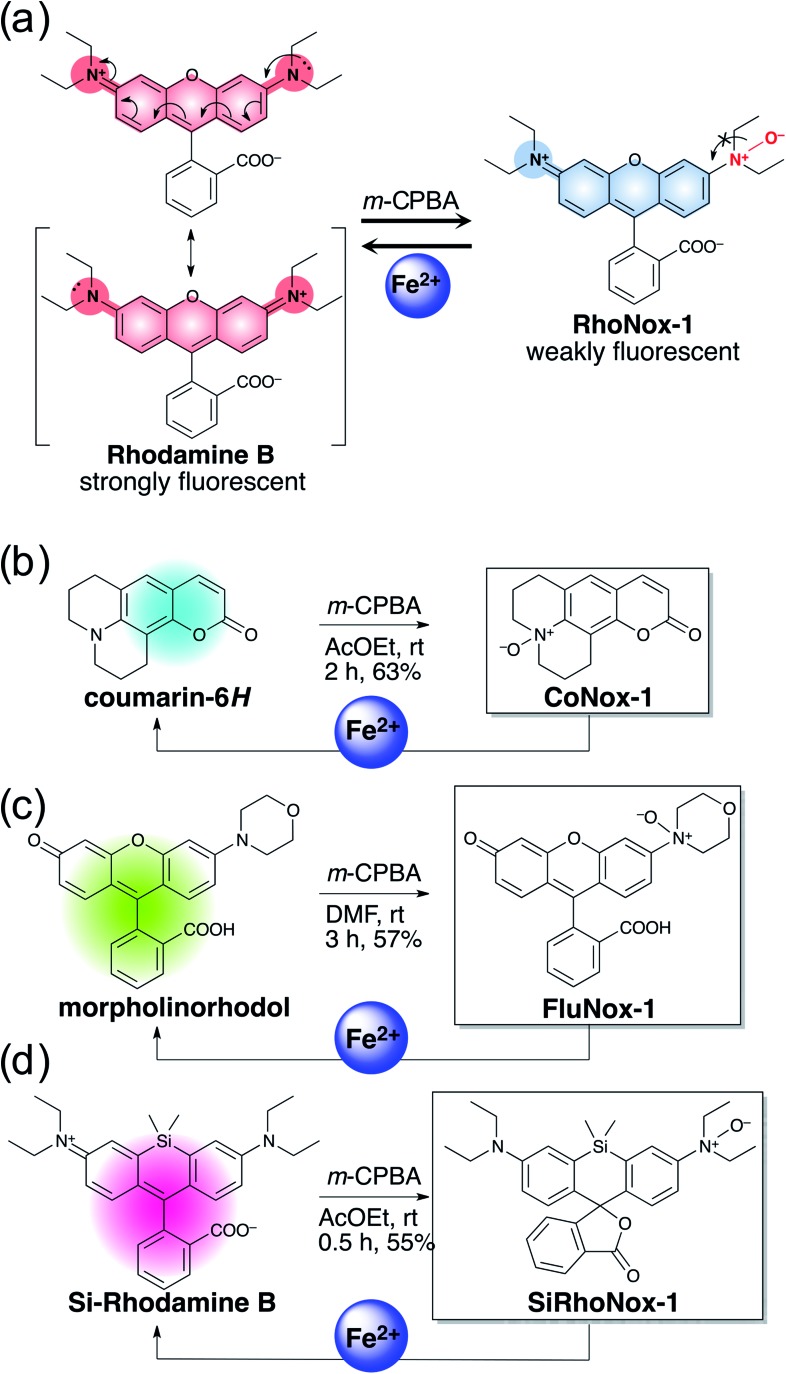
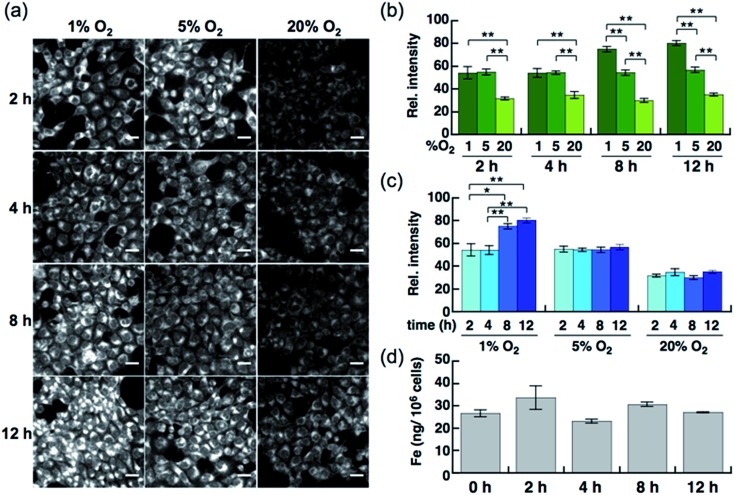
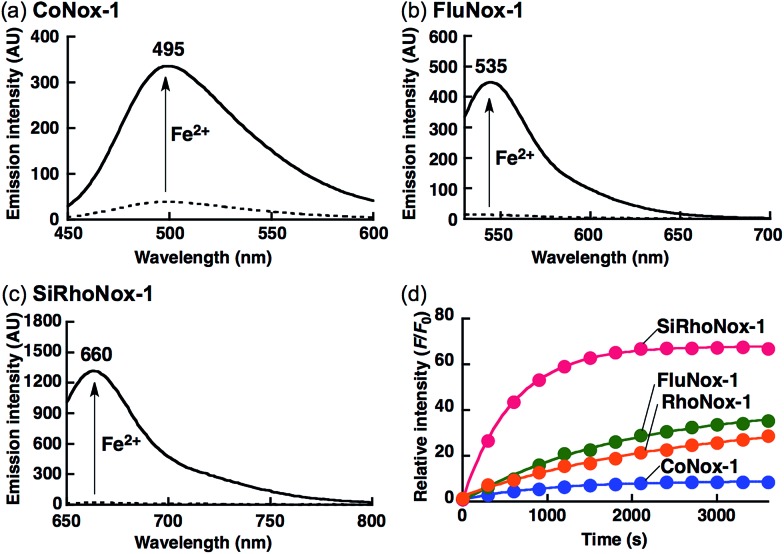
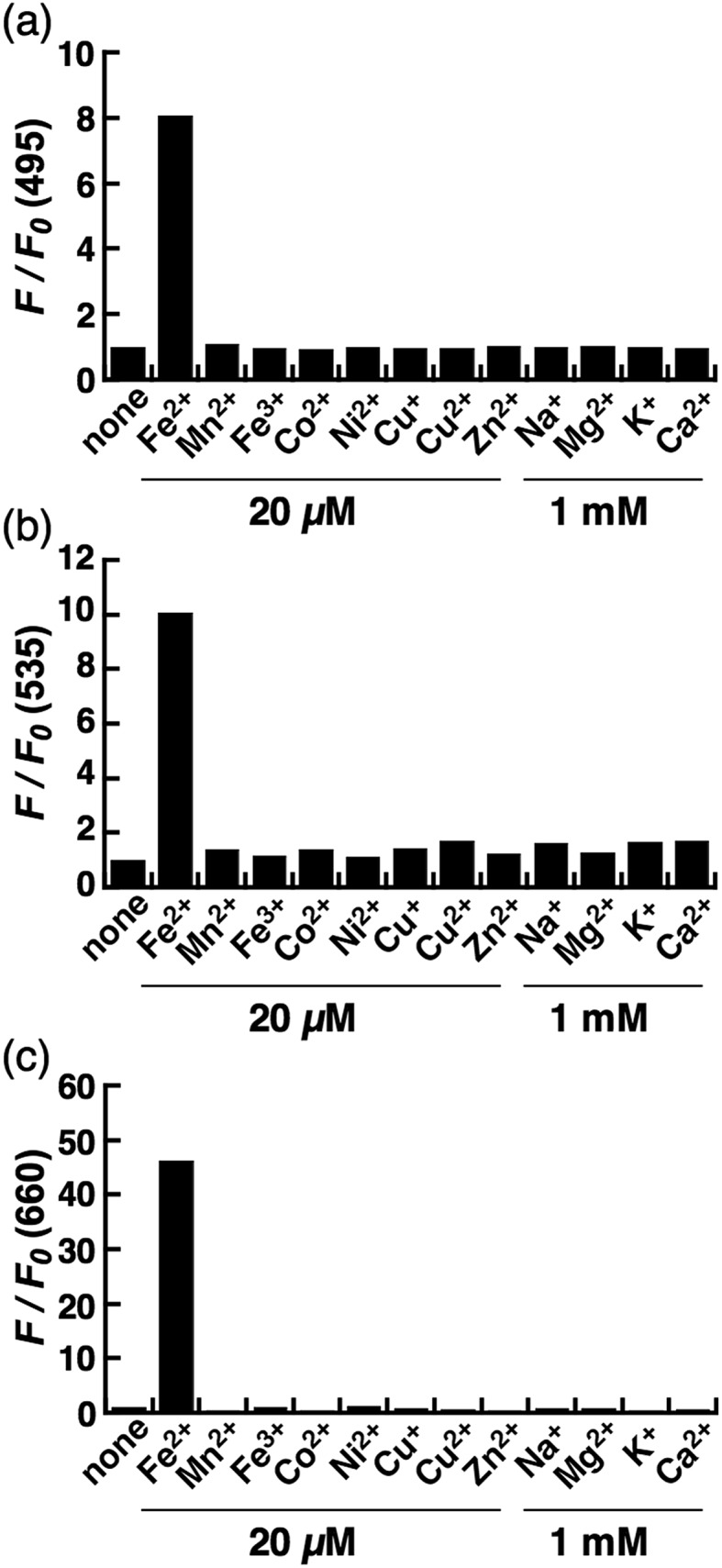
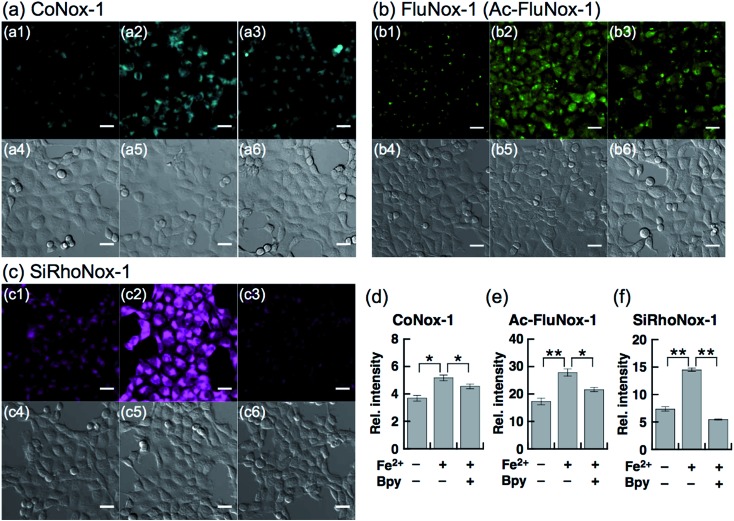
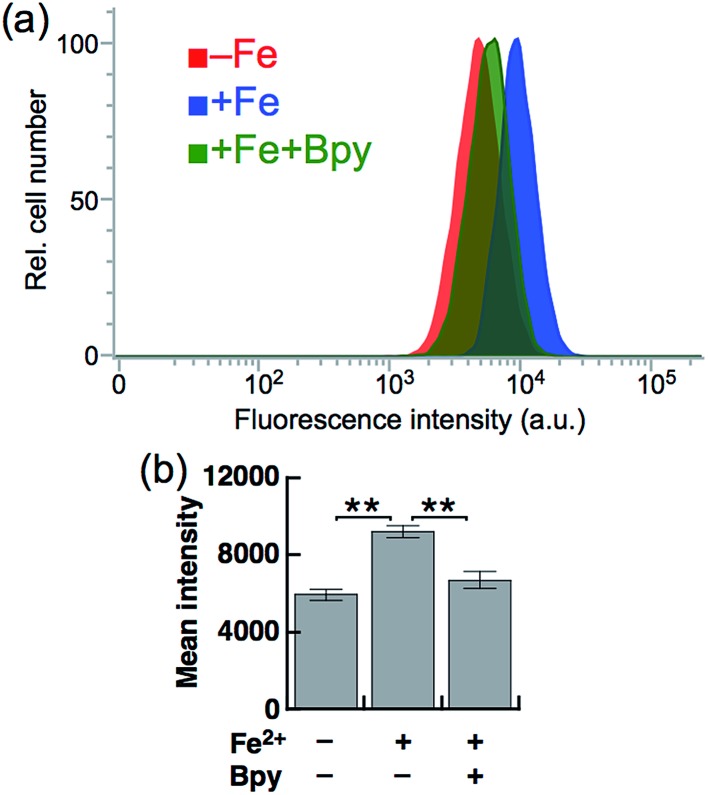
Iron (Fe) species play a number of biologically and pathologically important roles. In particular, iron is a key element in oxygen sensing in living tissue where its metabolism is intimately linked with oxygen metabolism. Regulation of redox balance of labile iron species to prevent the generation of iron-catalyzed reactive oxygen species (ROS) is critical to survival. However, studies on the redox homeostasis of iron species are challenging because of a lack of a redox-state-specific detection method for iron, in particular, labile Fe. In this study, a universal fluorogenic switching system is established, which is responsive to Fe ion based on a unique N-oxide chemistry in which dialkylarylamine N-oxide is selectively deoxygenized by Fe to generate various fluorescent probes of Fe-CoNox-1 (blue), FluNox-1 (green), and SiRhoNox-1 (red). All the probes exhibited fluorescence enhancement against Fe with high selectivity both in cuvette and in living cells. Among the probes, SiRhoNox-1 showed an excellent fluorescence response with respect to both reaction rate and off/on signal contrast. Imaging studies were performed showing the intracellular redox equilibrium shift towards labile iron in response to reduced oxygen tension in living cells and 3D tumor spheroids using SiRhoNox-1, and it was found that the hypoxia induction of labile Fe is independent of iron uptake, hypoxia-induced signaling, and hypoxia-activated enzymes. The present studies demonstrate the feasibility of developing sensitive and specific fluorescent probes for Fe with refined photophysical characteristics that enable their broad application in the study of iron in various physiological and pathological conditions.
铁(Fe)物种发挥着许多生物学和病理学上的重要作用。特别是,铁是活组织中氧传感的关键元素,其代谢与氧代谢密切相关。调节不稳定铁物种的氧化还原平衡以防止铁催化的活性氧(ROS)的产生对于生存至关重要。然而,由于缺乏针对铁,特别是不稳定铁的氧化还原状态特异性检测方法,关于铁物种氧化还原稳态的研究具有挑战性。在本研究中,建立了一种通用的荧光开关系统,该系统基于独特的N-氧化物化学对Fe离子有响应,其中二烷基芳基胺N-氧化物被Fe选择性脱氧以产生各种Fe的荧光探针,即Fe-CoNox-1(蓝色)、FluNox-1(绿色)和SiRhoNox-1(红色)。所有探针在比色皿和活细胞中均对Fe表现出高选择性的荧光增强。在这些探针中,SiRhoNox-1在反应速率和开/关信号对比度方面均表现出出色的荧光响应。使用SiRhoNox-1进行了成像研究,结果表明在活细胞和3D肿瘤球体中,响应于降低的氧张力,细胞内氧化还原平衡向不稳定铁转移,并且发现不稳定Fe的缺氧诱导与铁摄取、缺氧诱导信号传导和缺氧激活酶无关。本研究证明了开发具有精细光物理特性的用于Fe的灵敏且特异性荧光探针的可行性,这使得它们能够广泛应用于各种生理和病理条件下铁的研究。