Ohishi Akihiro, Nishida Kentaro, Miyamoto Karin, Imai Mizuka, Nakanishi Ryoko, Kobayashi Kyoko, Hayashi Akiko, Nagasawa Kazuki
Department of Environmental Biochemistry, Kyoto Pharmaceutical University 5 Nakauchi-cho, Misasagi, Yamashina-ku, Kyoto 607-8414, Japan.
Toxicol Rep. 2017 Mar 10;4:172-180. doi: 10.1016/j.toxrep.2017.03.003. eCollection 2017.
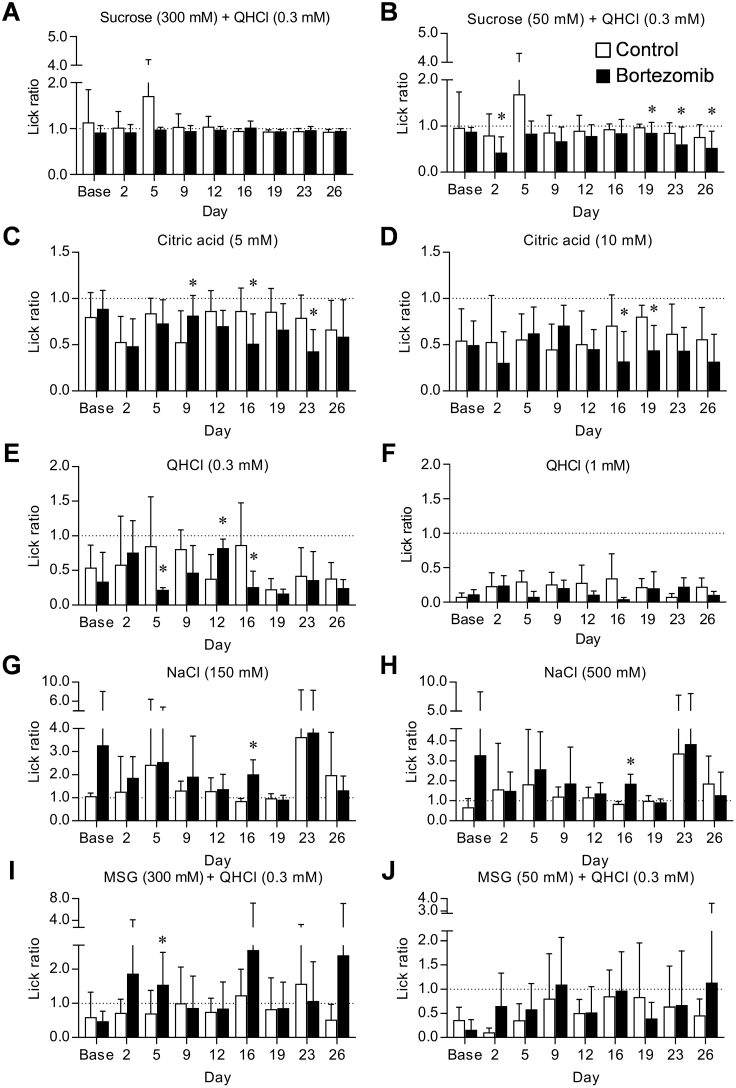
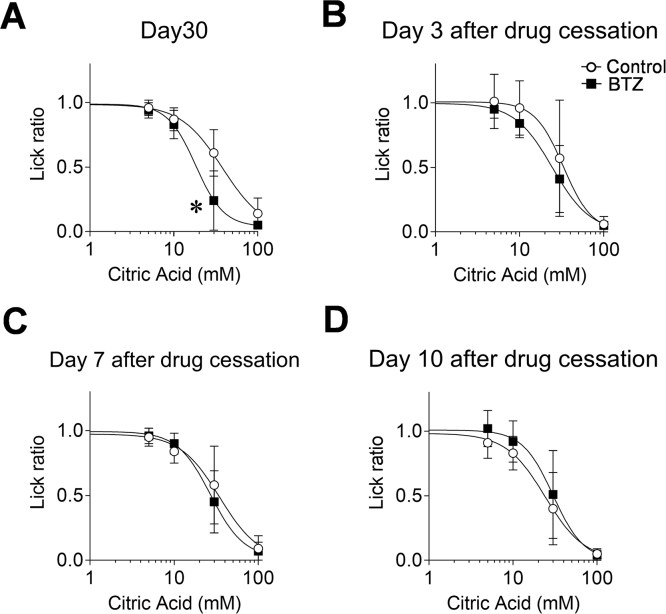
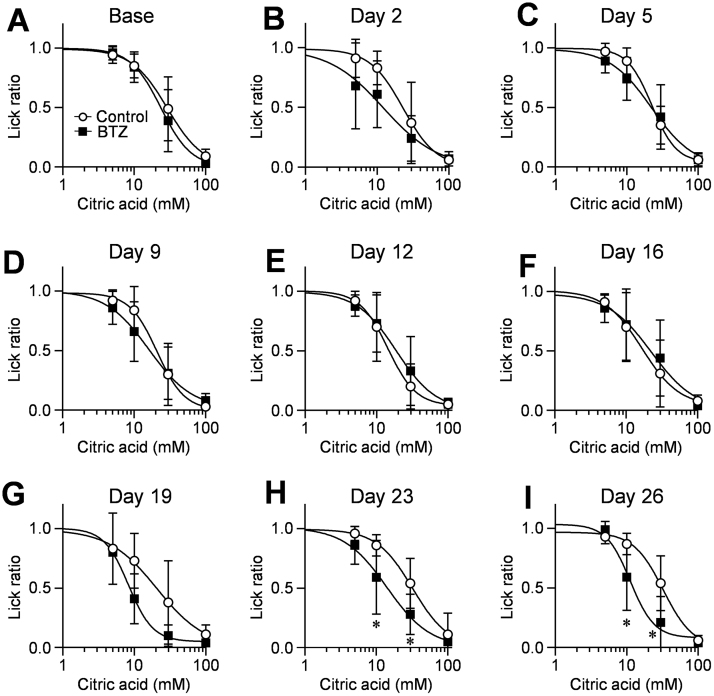
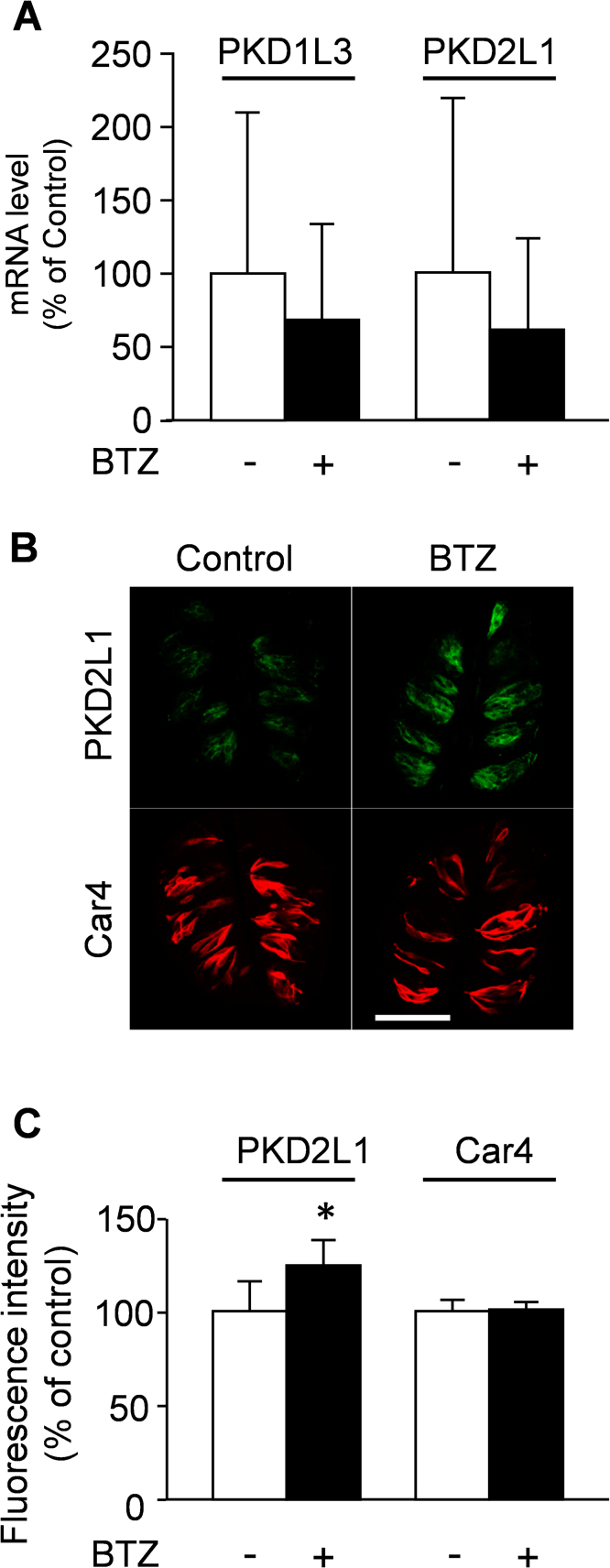
Chemotherapy-induced taste disorder is one of the critical issues in cancer therapy. Bortezomib, a proteasome inhibitor, is a key agent in multiple myeloma therapy, but it induces a taste disorder. In this study, we investigated the characteristics of bortezomib-induced taste disorder and the underlying mechanism in mice. Among the five basic tastes, the sour taste sensitivity of mice was significantly increased by bortezomib administration. In bortezomib-administered mice, protein expression of PKD2L1 was increased. The increased sour taste sensitivity induced by bortezomib returned to the control level on cessation of its administration. These results suggest that an increase in protein expression of PKD2L1 enhances the sour taste sensitivity in bortezomib-administered mice, and this alteration is reversed on cessation of its administration.
化疗引起的味觉障碍是癌症治疗中的关键问题之一。硼替佐米,一种蛋白酶体抑制剂,是多发性骨髓瘤治疗中的关键药物,但它会引发味觉障碍。在本研究中,我们调查了硼替佐米引起的味觉障碍的特征及其在小鼠体内的潜在机制。在五种基本味觉中,硼替佐米给药显著提高了小鼠的酸味敏感性。在接受硼替佐米治疗的小鼠中,PKD2L1的蛋白表达增加。硼替佐米引起的酸味敏感性增加在停药后恢复到对照水平。这些结果表明,PKD2L1蛋白表达的增加增强了接受硼替佐米治疗的小鼠的酸味敏感性,并且这种改变在停药后会逆转。