Hin Remco C, Coath Christopher D, Carter Philip J, Nimmo Francis, Lai Yi-Jen, Pogge von Strandmann Philip A E, Willbold Matthias, Leinhardt Zoë M, Walter Michael J, Elliott Tim
School of Earth Sciences, University of Bristol, Wills Memorial Building, Queens Road, Bristol BS8 1RJ, UK.
School of Physics, University of Bristol, H. H. Wills Physics Laboratory, Tyndall Avenue, Bristol BS8 1TL, UK.
Nature. 2017 Sep 27;549(7673):511-515. doi: 10.1038/nature23899.
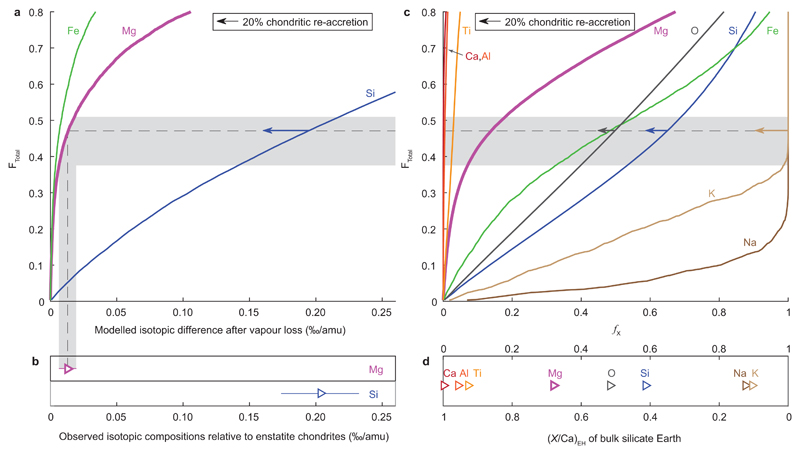
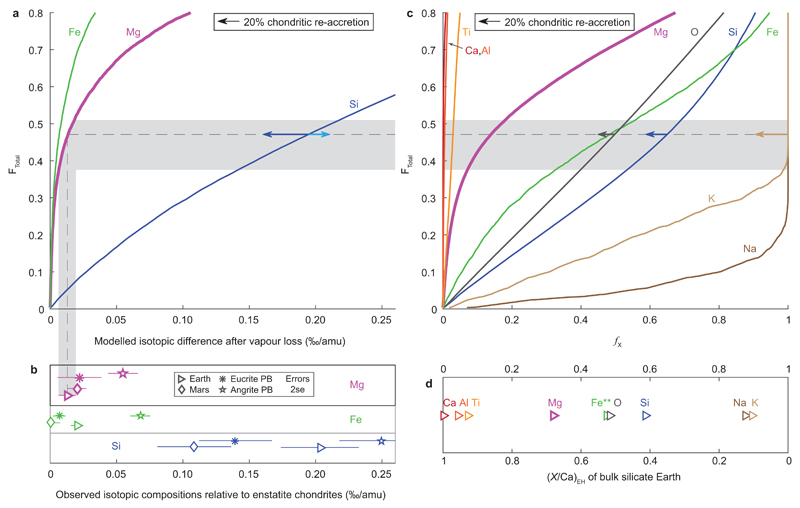
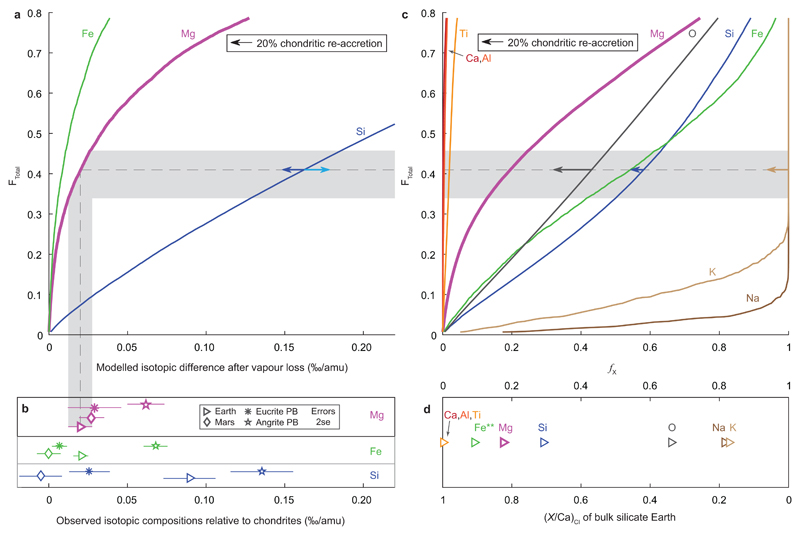
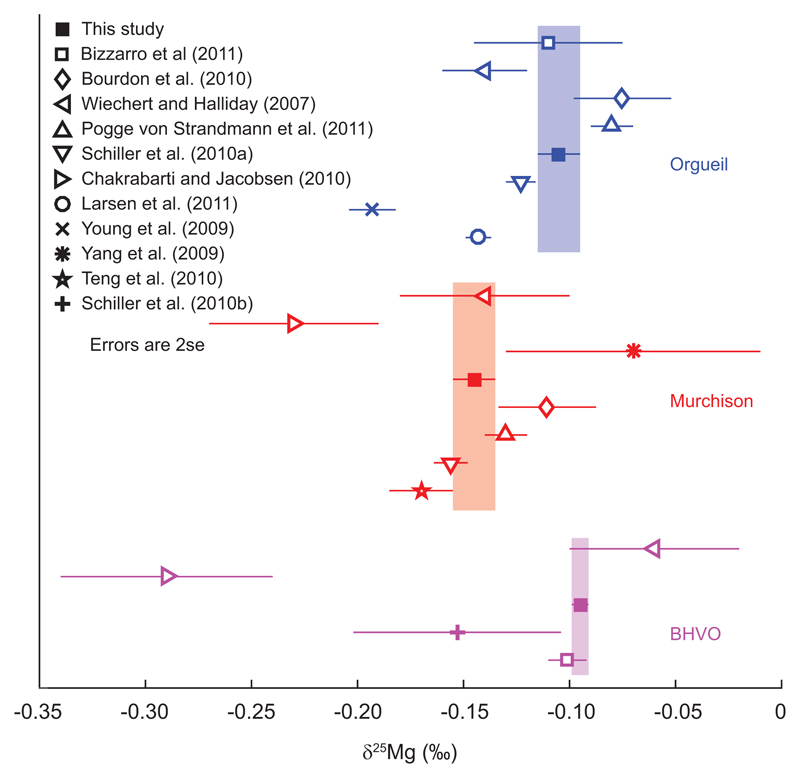
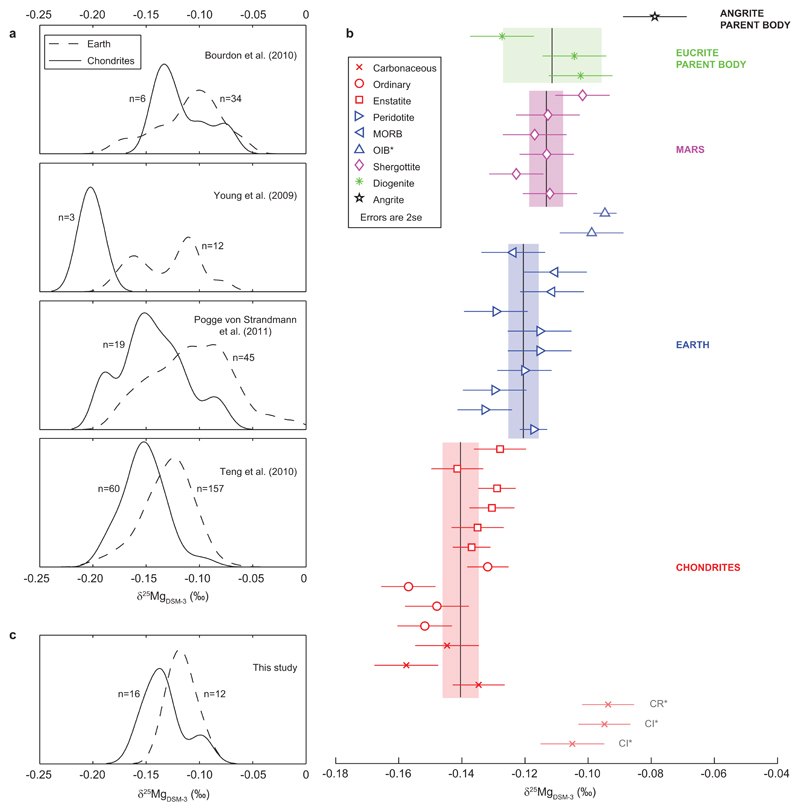
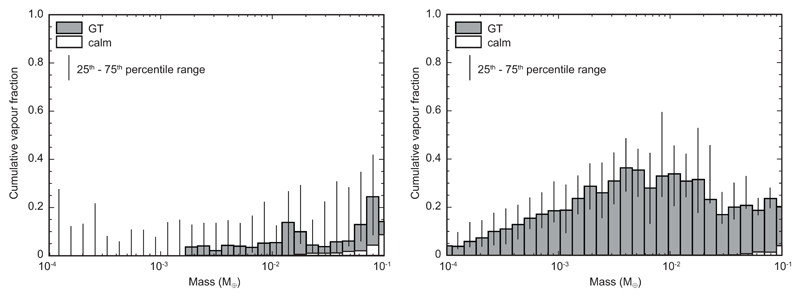
It has long been recognized that Earth and other differentiated planetary bodies are chemically fractionated compared to primitive, chondritic meteorites and, by inference, the primordial disk from which they formed. However, it is not known whether the notable volatile depletions of planetary bodies are a consequence of accretion or inherited from prior nebular fractionation. The isotopic compositions of the main constituents of planetary bodies can contribute to this debate. Here we develop an analytical approach that corrects a major cause of measurement inaccuracy inherent in conventional methods, and show that all differentiated bodies have isotopically heavier magnesium compositions than chondritic meteorites. We argue that possible magnesium isotope fractionation during condensation of the solar nebula, core formation and silicate differentiation cannot explain these observations. However, isotopic fractionation between liquid and vapour, followed by vapour escape during accretionary growth of planetesimals, generates appropriate residual compositions. Our modelling implies that the isotopic compositions of magnesium, silicon and iron, and the relative abundances of the major elements of Earth and other planetary bodies, are a natural consequence of substantial (about 40 per cent by mass) vapour loss from growing planetesimals by this mechanism.
长期以来,人们已经认识到,与原始的球粒陨石相比,地球和其他分异的行星天体在化学上是分馏的,由此推断,它们形成于原始星云盘。然而,尚不清楚行星天体显著的挥发性元素亏损是吸积的结果,还是继承自先前的星云分馏。行星天体主要成分的同位素组成有助于这场辩论。在此,我们开发了一种分析方法,校正了传统方法中固有的测量误差的一个主要原因,并表明所有分异天体的镁同位素组成比球粒陨石的同位素组成更重。我们认为,在太阳星云凝聚、地核形成和硅酸盐分异过程中可能发生的镁同位素分馏无法解释这些观测结果。然而,在液态和气态之间的同位素分馏,随后在小行星吸积生长过程中气态逃逸,产生了合适的残余组成。我们的模型表明,镁、硅和铁的同位素组成,以及地球和其他行星天体主要元素的相对丰度,是通过这种机制从小行星生长过程中大量(约占质量的40%)气态损失的自然结果。