Han Yuan-Yuan, Wang Li-Jie, Zhang Liang, Zhang Wen-Wen, Ma Ke-Tao, Li Li, Si Jun-Qiang
Department of Physiology, Medical College of Shihezi University, Shihezi, Xinjiang 832002, P.R. China.
The Key Laboratory of Xinjiang Endemic and Ethnic Diseases, Medical College of Shihezi University, Shihezi, Xinjiang 832002, P.R. China.
Exp Ther Med. 2017 Sep;14(3):1999-2006. doi: 10.3892/etm.2017.4734. Epub 2017 Jul 9.
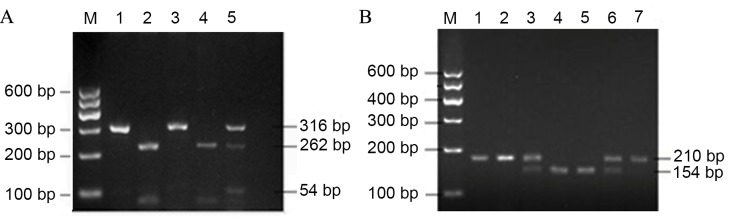
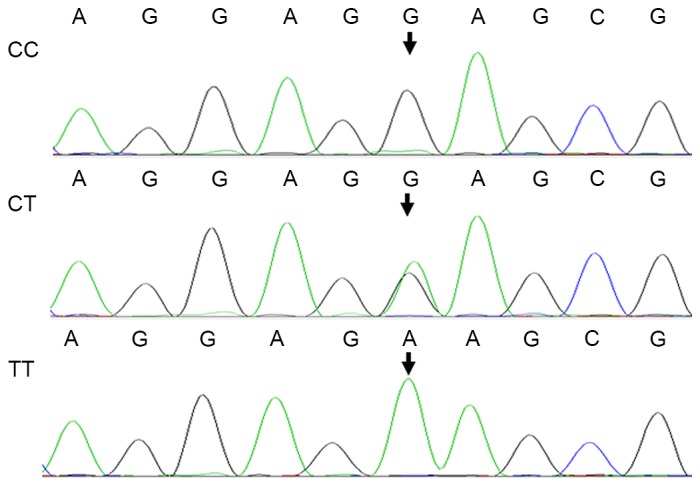
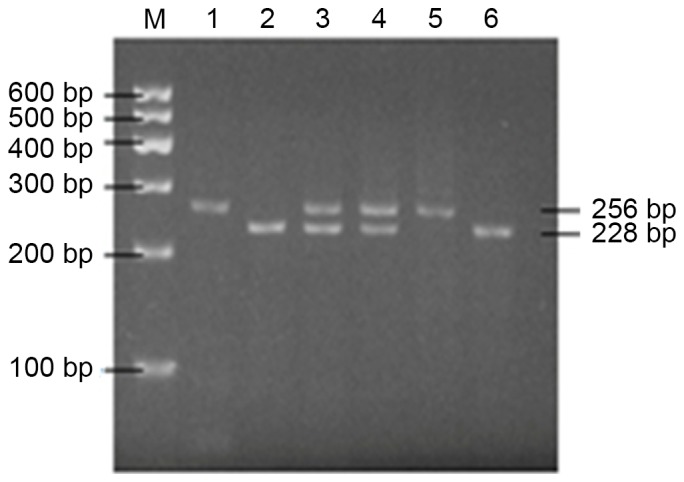
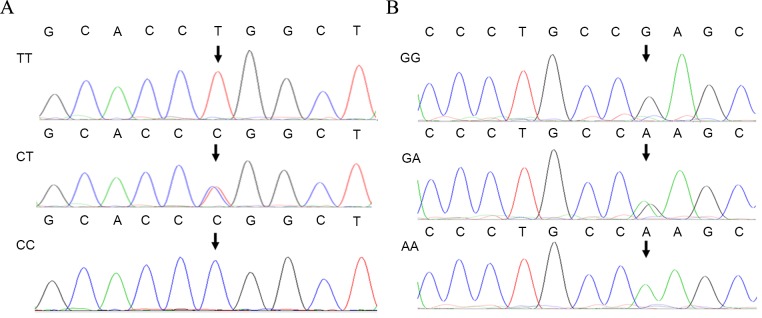
The aim of the present study was to examine whether single-nucleotide polymorphisms (SNPs) of β1 subunit of large-conductance Ca-activated K channel (KCNMB1) and inwardly rectifying K channel, subfamily J, member-11 (KCNJ11) are associated with essential hypertension (EH) in Xinjiang Kazak Chinese patients. A polymerase chain reaction-restriction fragment length polymorphism technique was applied to detect the distribution of selected alleles and genotype frequencies in a cohort of Xinjiang Kazak Chinese patients. Samples from 267 patients with EH and 259 normotensive (NT) controls were analyzed. An unconditional logistic regression analysis was used to estimate the odds ratio and 95% confidence interval of the risk factors that are associated with the development of EH. Genotype and allele frequency analyses revealed that the frequency of genotypes KCNJ11-rs2285676 and KCNMB1-rs11739136 was not significantly different between the EH and NT groups. Individuals carrying the GG genotype of KCNJ11-rs5219 had a 2.08 times higher risk of having EH than individuals carrying the GA+AA genotype of KCNJ11-rs5219. Furthermore, the G allele frequency of KCNJ11-rs5219 in the EH group was significantly higher than that of the NT group (P=0.048). Additionally, logistic regression analysis revealed that the body weight and GG genotype of KCNJ11-rs5219 were positively associated with EH in Xinjiang Kazak Chinese patients (P<0.01).
本研究旨在探讨大电导钙激活钾通道(KCNMB1)β1亚基和内向整流钾通道J亚家族成员11(KCNJ11)的单核苷酸多态性(SNP)与新疆哈萨克族中国患者原发性高血压(EH)是否相关。采用聚合酶链反应-限制性片段长度多态性技术检测新疆哈萨克族中国患者队列中所选等位基因的分布和基因型频率。分析了267例EH患者和259例血压正常(NT)对照的样本。采用非条件逻辑回归分析来估计与EH发生相关的危险因素的比值比和95%置信区间。基因型和等位基因频率分析显示,KCNJ11-rs2285676和KCNMB1-rs11739136基因型频率在EH组和NT组之间无显著差异。携带KCNJ11-rs5219的GG基因型个体患EH的风险是携带KCNJ11-rs5219的GA+AA基因型个体的2.08倍。此外,EH组中KCNJ11-rs5219的G等位基因频率显著高于NT组(P=0.048)。此外,逻辑回归分析显示,体重和KCNJ11-rs5219的GG基因型与新疆哈萨克族中国患者的EH呈正相关(P<0.01)。