Kapoor Radhika, Kakkar Poonam
CSIR-Indian Institute of Toxicology Research, M.G. Marg, Lucknow 226001, India.
Toxicol Rep. 2014 Aug 13;1:569-581. doi: 10.1016/j.toxrep.2014.08.002. eCollection 2014.
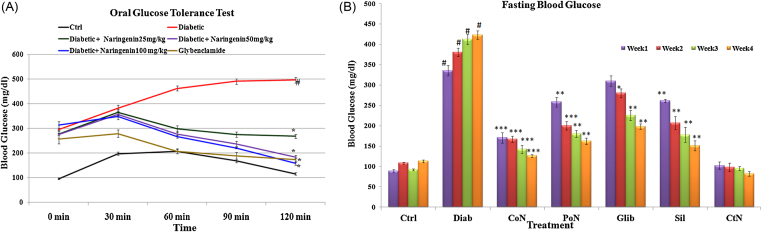
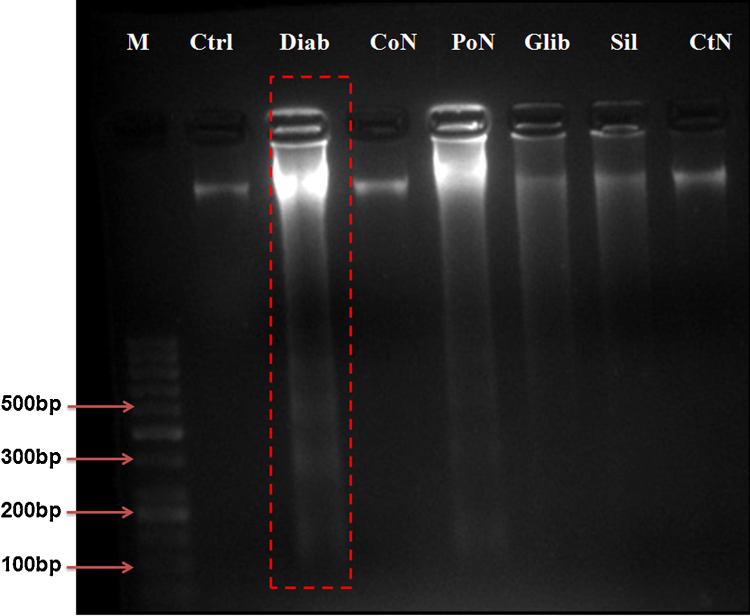
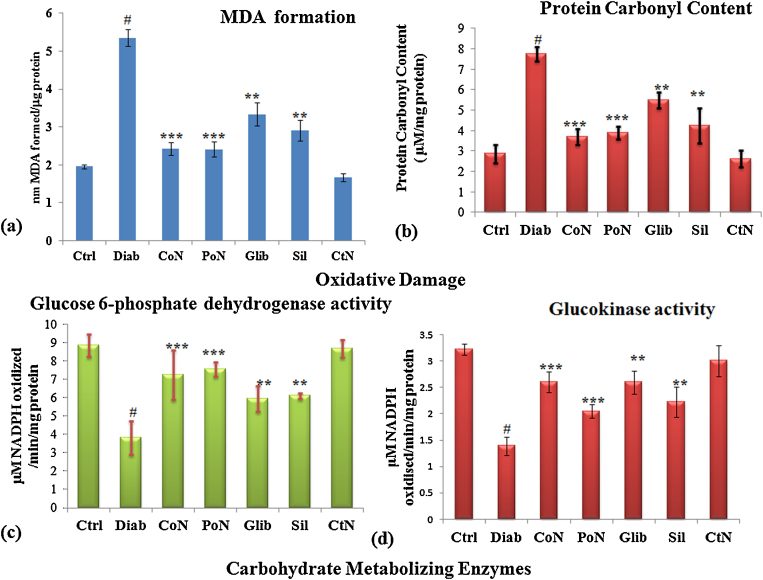
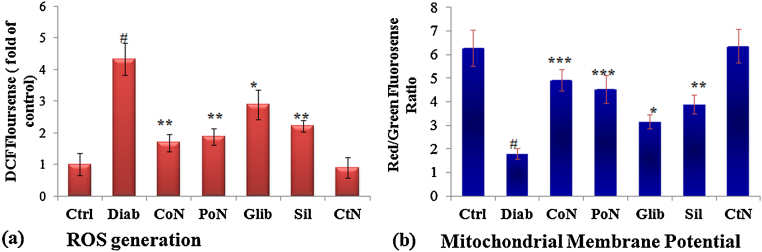
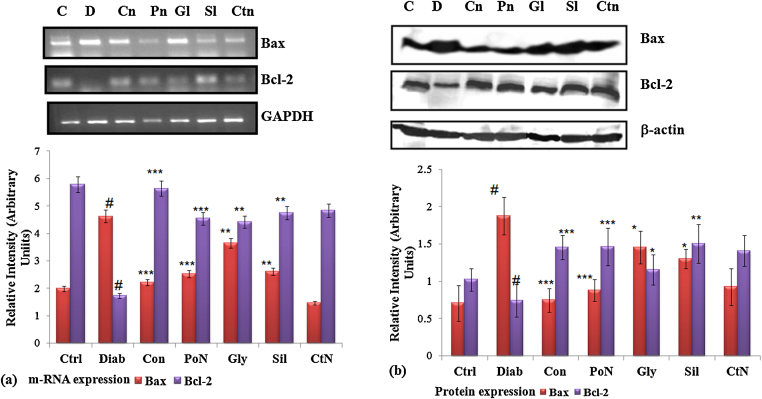
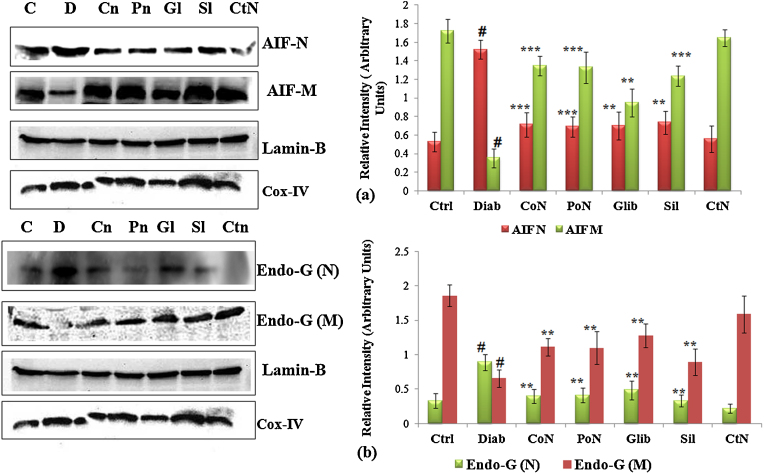
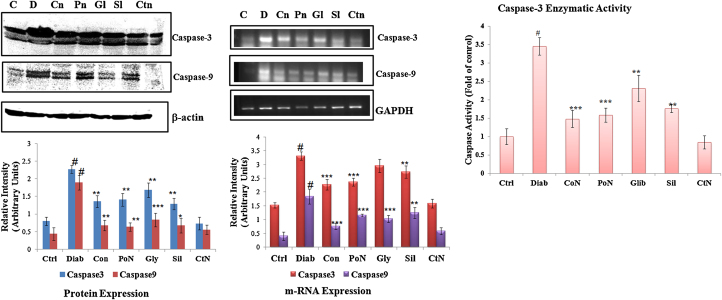
Diabetic complications cause noticeable liver damage, which finally progresses to diabetic hepatopathy. Nutritive antioxidants not only reduce the liver damage, but also prevent it by modulating the release of various proteins involved in apoptotic signaling cascades. This study explores the molecular mechanisms underlying diabetes-induced liver damage and its modulation by naringenin. Antioxidant status, liver & kidney biomarker enzymes, reactive oxygen species (ROS) generation, mitochondrial membrane potential, expression of apoptotic proteins like Bax (bcl-2 associated X), Bcl-2 (b-cell Lymhoma-2), Caspase-3, Caspase-9, AIF (Apoptosis inducing factor) and Endo-G (Endonuclease-G) were studied in streptozotocin induced diabetic rats. Significant hyperglycemia, disturbed antioxidant status, altered carbohydrate metabolizing enzymes, increased ROS and lipid peroxidation; decreased mitochondrial membrane potential and enhanced release of AIF and Endo-G were observed. Hyperglycemia also affected apoptosis and its related genes at both transcriptional and translational level (Caspase-3 & 9, Bax and Bcl-2) in the liver of diabetic rats. Naringenin, a flavonone, exerted anti-hyperglycemic effect and was able to prevent oxidative stress and resultant apoptotic events caused due to diabetes-induced hepatotoxicity. Thus, our study shows, a protective effect of naringenin against diabetes induced liver damage and redox imbalance, which could further be exploited for the management of diabetic hepatopathy.
糖尿病并发症会导致明显的肝脏损伤,最终发展为糖尿病性肝病。营养性抗氧化剂不仅能减轻肝脏损伤,还能通过调节参与凋亡信号级联反应的各种蛋白质的释放来预防损伤。本研究探讨了糖尿病诱导的肝脏损伤及其被柚皮素调节的分子机制。在链脲佐菌素诱导的糖尿病大鼠中研究了抗氧化状态、肝肾生物标志物酶、活性氧(ROS)生成、线粒体膜电位、凋亡蛋白如Bax(bcl-2相关X蛋白)、Bcl-2(b细胞淋巴瘤-2蛋白)、半胱天冬酶-3、半胱天冬酶-9、凋亡诱导因子(AIF)和核酸内切酶G(Endo-G)的表达。观察到显著的高血糖、抗氧化状态紊乱、碳水化合物代谢酶改变、ROS和脂质过氧化增加;线粒体膜电位降低以及AIF和Endo-G的释放增加。高血糖还在转录和翻译水平上影响糖尿病大鼠肝脏中的细胞凋亡及其相关基因(半胱天冬酶-3和-9、Bax和Bcl-2)。柚皮素是一种黄酮类化合物,具有抗高血糖作用,能够预防糖尿病诱导的肝毒性所导致的氧化应激和由此产生的凋亡事件。因此,我们的研究表明,柚皮素对糖尿病诱导的肝脏损伤和氧化还原失衡具有保护作用,这可进一步用于糖尿病性肝病的管理。