Department of Community Healthcare & Geriatrics, Nagoya University Graduate School of Medicine, Nagoya, Japan.
Cardiology and ICU, Yanbian University Hospital, Yanji, Jilin Province, China.
J Am Heart Assoc. 2017 Sep 28;6(10):e006421. doi: 10.1161/JAHA.117.006421.
Exposure to psychosocial stress is a risk factor for cardiovascular disease, including vascular aging and regeneration. Given that dipeptidyl peptidase-4 (DPP4) regulates several intracellular signaling pathways associated with the glucagon-like peptide-1 (GLP-1) metabolism, we investigated the role of DPP4/GLP-1 axis in vascular senescence and ischemia-induced neovascularization in mice under chronic stress, with a special focus on adiponectin -mediated peroxisome proliferator activated receptor-γ/its co-activator 1α (PGC-1α) activation.
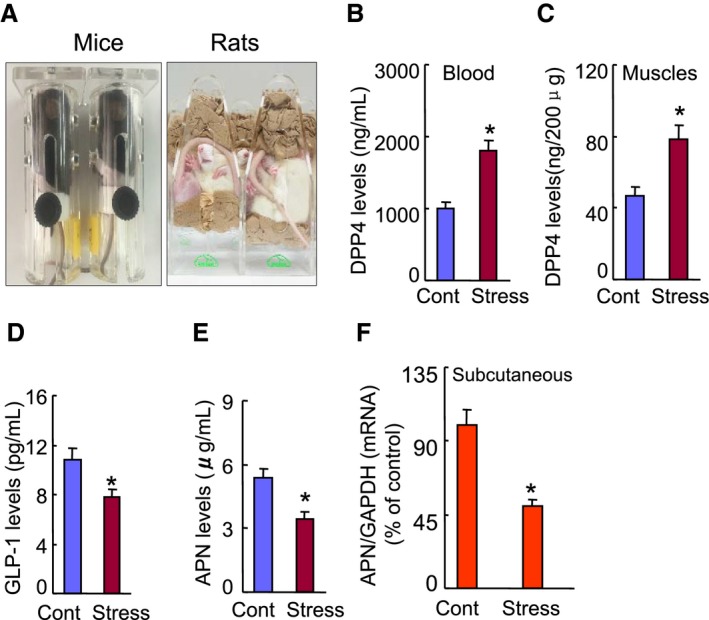
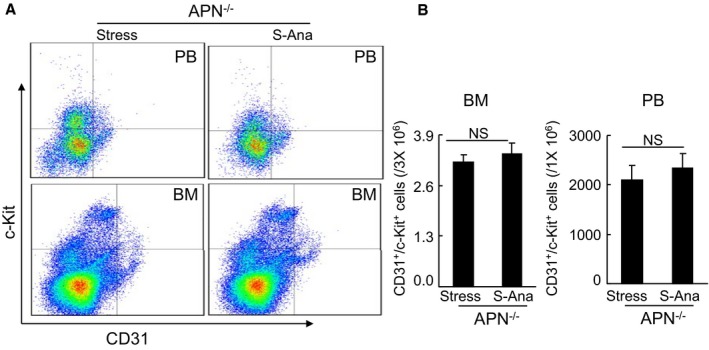
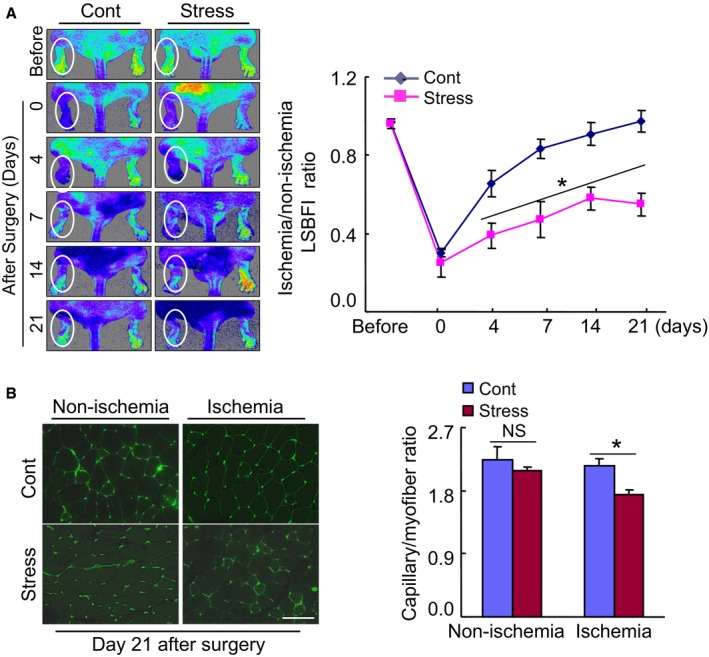
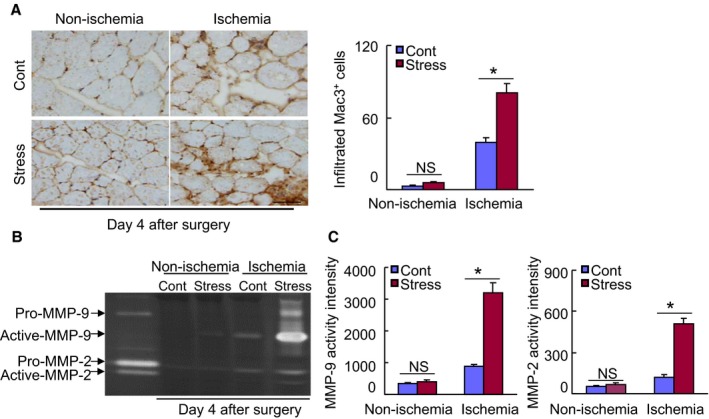
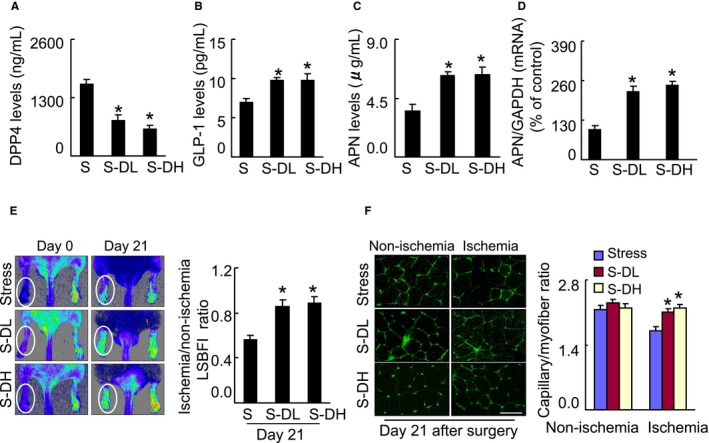
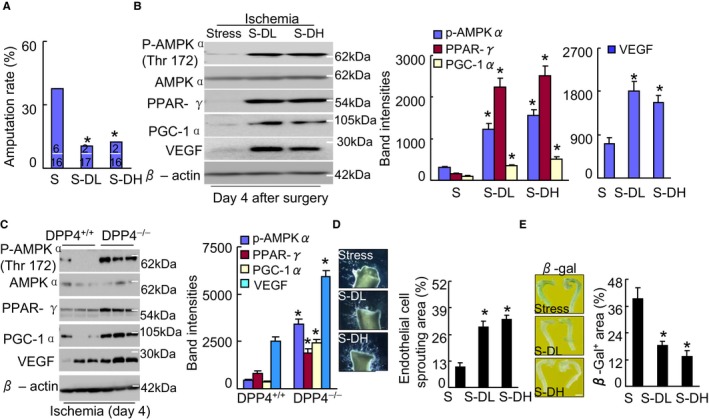
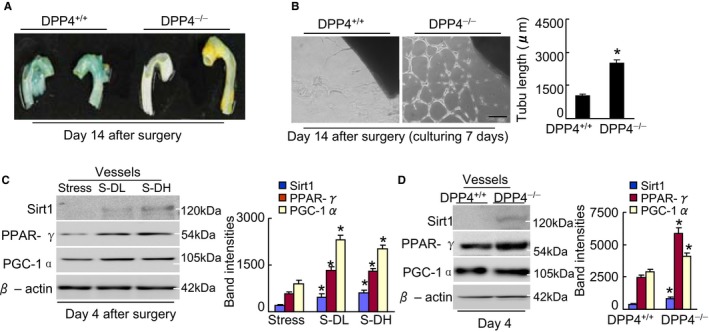
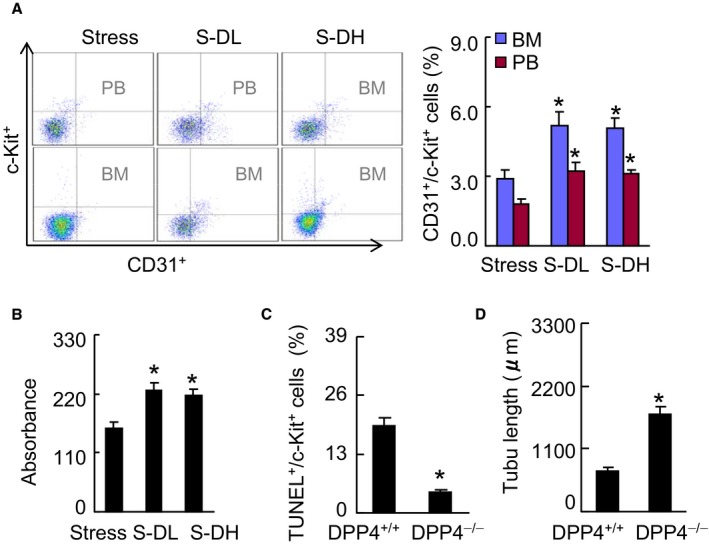
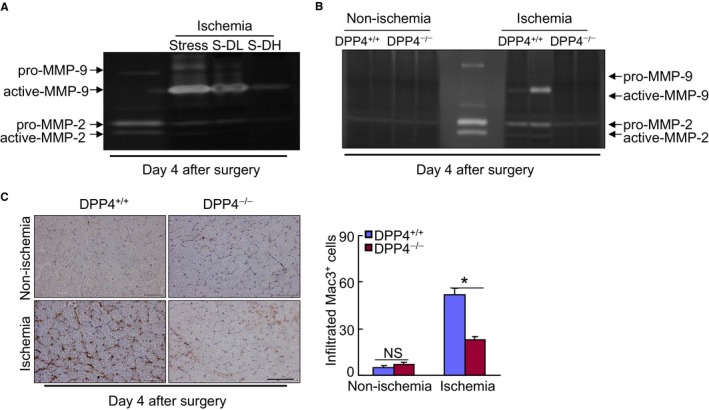
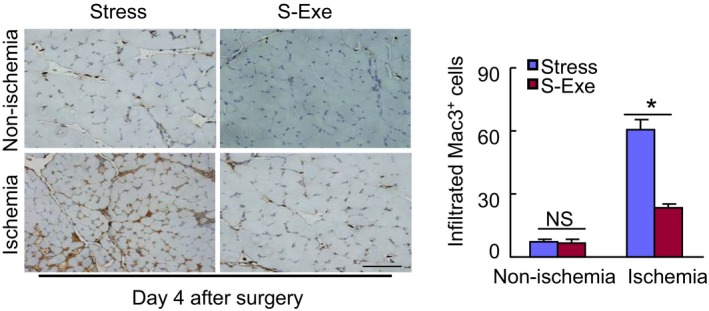
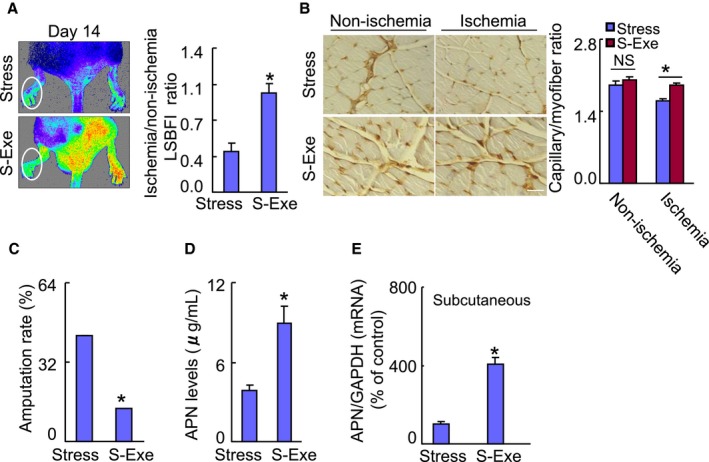
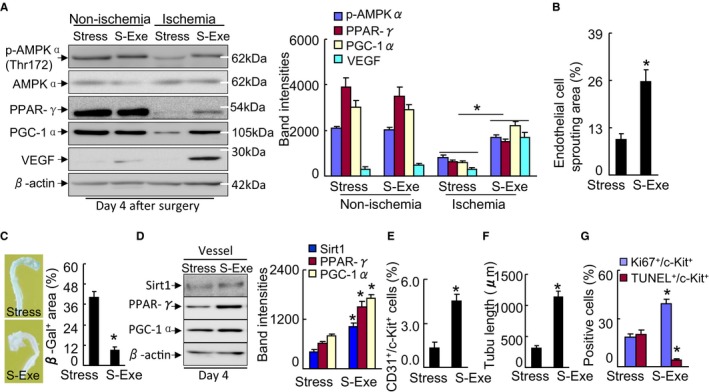
Seven-week-old mice subjected to restraint stress for 4 weeks underwent ischemic surgery and were kept under immobilization stress conditions. Mice that underwent ischemic surgery alone served as controls. We demonstrated that stress impaired the recovery of the ischemic/normal blood-flow ratio throughout the follow-up period and capillary formation. On postoperative day 4, stressed mice showed the following: increased levels of plasma and ischemic muscle DPP4 and decreased levels of GLP-1 and adiponectin in plasma and phospho-AMP-activated protein kinase α (p-AMPKα), vascular endothelial growth factor, peroxisome proliferator activated receptor-γ, PGC-1α, and Sirt1 proteins and insulin receptor 1 and glucose transporter 4 genes in the ischemic tissues, vessels, and/or adipose tissues and numbers of circulating endothelial CD31/c-Kit progenitor cells. Chronic stress accelerated aortic senescence and impaired aortic endothelial sprouting. DPP4 inhibition and GLP-1 receptor activation improved these changes; these benefits were abrogated by adiponectin blocking and genetic depletion.
These results indicate that the DPP4/GLP-1-adiponectin axis is a novel therapeutic target for the treatment of vascular aging and cardiovascular disease under chronic stress conditions.
暴露于心理社会应激是心血管疾病的一个风险因素,包括血管老化和再生。鉴于二肽基肽酶-4(DPP4)调节与胰高血糖素样肽-1(GLP-1)代谢相关的几种细胞内信号通路,我们研究了 DPP4/GLP-1 轴在慢性应激下小鼠血管衰老和缺血诱导的新生血管形成中的作用,特别关注脂联素介导的过氧化物酶体增殖物激活受体-γ/其共激活因子 1α(PGC-1α)激活。
7 周龄的小鼠接受 4 周的束缚应激后进行缺血手术,并保持在固定应激条件下。单独进行缺血手术的小鼠作为对照组。我们证明应激会损害缺血/正常血流比在整个随访期间的恢复和毛细血管形成。在术后第 4 天,应激小鼠表现出以下特征:血浆和缺血肌肉 DPP4 水平升高,血浆和磷酸化 AMP 激活蛋白激酶 α(p-AMPKα)、血管内皮生长因子、过氧化物酶体增殖物激活受体-γ、PGC-1α 和 Sirt1 蛋白以及胰岛素受体 1 和葡萄糖转运蛋白 4 基因的水平降低缺血组织、血管和/或脂肪组织中的基因和循环内皮 CD31/c-Kit 祖细胞的数量。慢性应激加速了主动脉衰老并损害了主动脉内皮发芽。DPP4 抑制和 GLP-1 受体激活改善了这些变化;这些益处被脂联素阻断和基因耗竭所消除。
这些结果表明,DPP4/GLP-1-脂联素轴是治疗慢性应激条件下血管老化和心血管疾病的新治疗靶点。