Huang Xiawei, Fejes Tóth Katalin, Aravin Alexei A
California Institute of Technology, Division of Biology and Biological Engineering, 147-75, 1200 E. California Boulevard, Pasadena, CA 91125, USA.
California Institute of Technology, Division of Biology and Biological Engineering, 147-75, 1200 E. California Boulevard, Pasadena, CA 91125, USA.
Trends Genet. 2017 Nov;33(11):882-894. doi: 10.1016/j.tig.2017.09.002. Epub 2017 Sep 27.
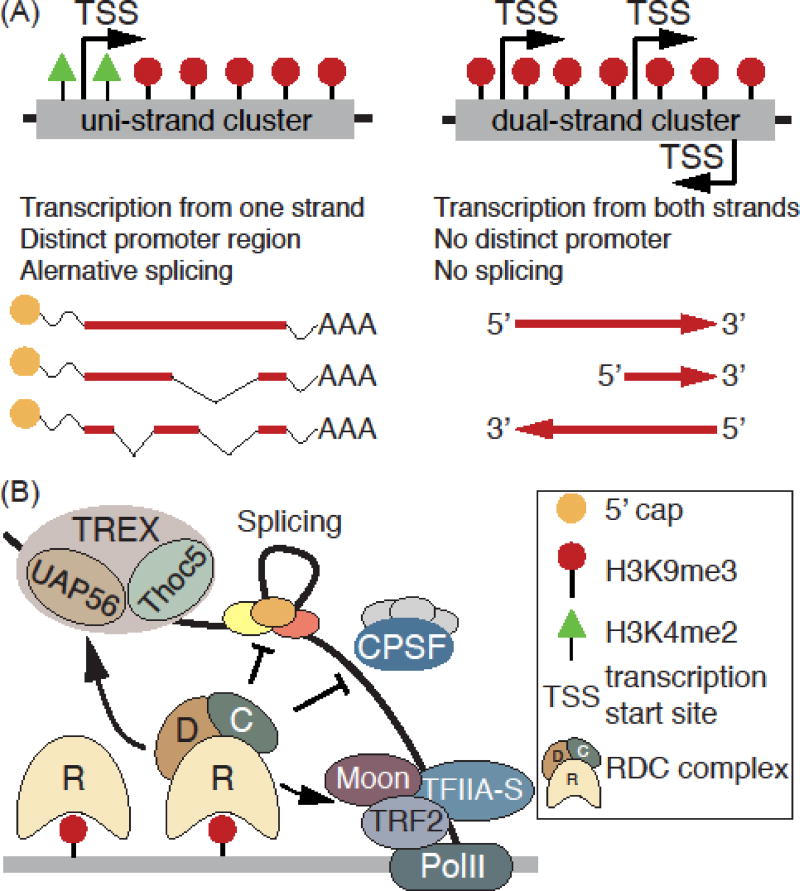
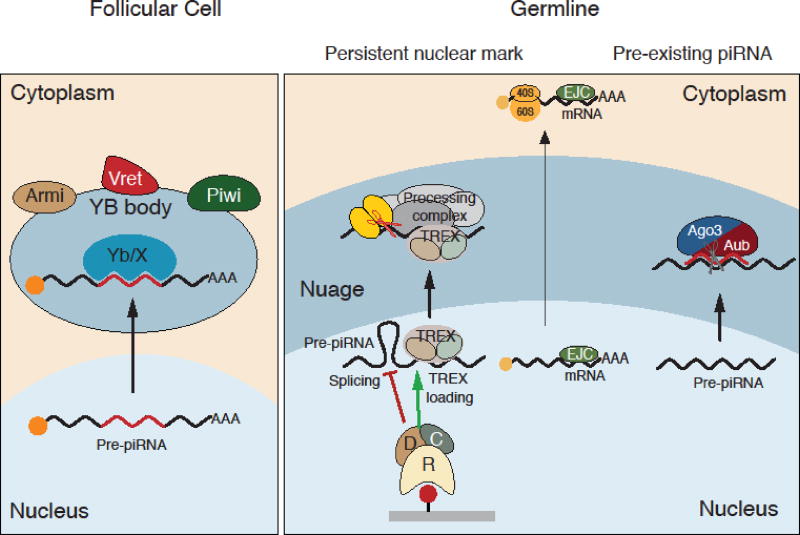
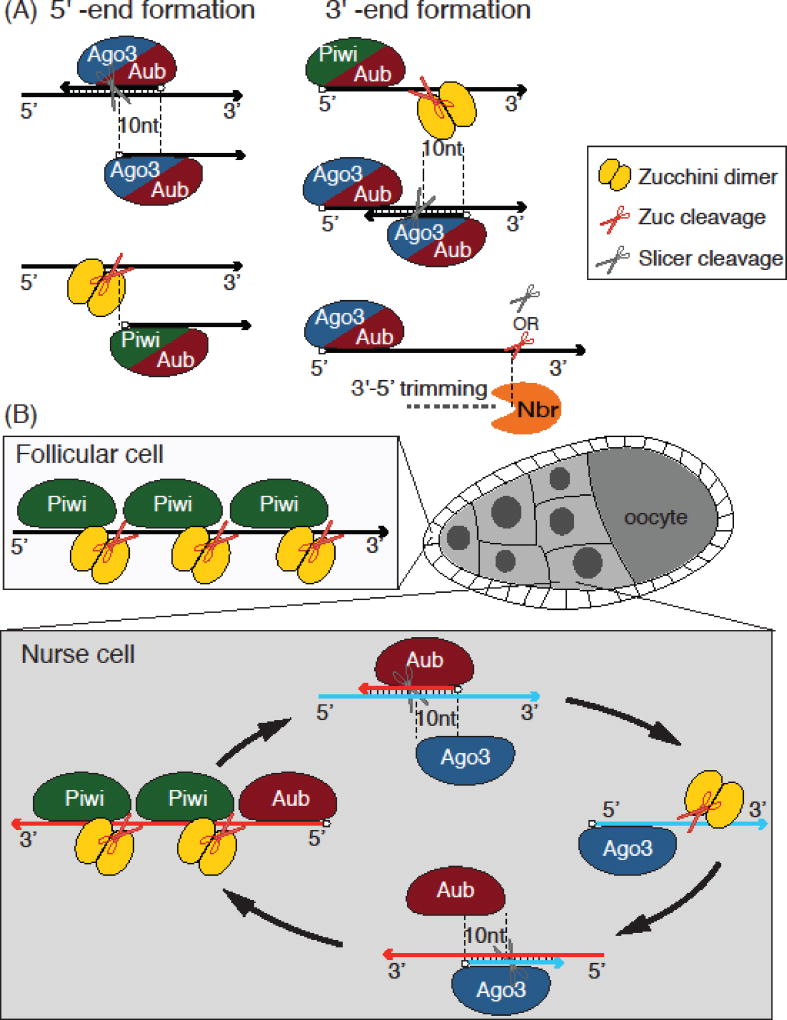
The PIWI-interacting RNA (piRNA) pathway is a conserved defense system that protects the genome integrity of the animal germline from deleterious transposable elements. Targets of silencing are recognized by small noncoding piRNAs that are processed from long precursor molecules. Although piRNAs and other classes of small noncoding RNAs, such as miRNAs and small interfering (si)RNAs, interact with members of the same family of Argonaute (Ago) proteins and their function in target repression is similar, the biogenesis of piRNAs differs from those of the other two small RNAs. Recently, many aspects of piRNA biogenesis have been revealed in Drosophila melanogaster. In this review, we elaborate on piRNA biogenesis in Drosophila somatic and germline cells. We focus on the mechanisms by which piRNA precursor transcription is regulated and highlight recent work that has advanced our understanding of piRNA precursor processing to mature piRNAs. We finish by discussing current models to the still unresolved question of how piRNA precursors are selected and channeled into the processing machinery.
PIWI相互作用RNA(piRNA)通路是一种保守的防御系统,可保护动物生殖系的基因组完整性免受有害转座元件的影响。沉默靶点由从长前体分子加工而来的小非编码piRNA识别。尽管piRNA和其他类别的小非编码RNA,如微小RNA(miRNA)和小干扰RNA(siRNA),与同一家族的AGO蛋白成员相互作用,且它们在靶标抑制中的功能相似,但piRNA的生物合成与其他两种小RNA不同。最近,黑腹果蝇中piRNA生物合成的许多方面已被揭示。在本综述中,我们阐述了果蝇体细胞和生殖系细胞中的piRNA生物合成。我们重点关注piRNA前体转录的调控机制,并强调最近的研究工作,这些工作推进了我们对piRNA前体加工成成熟piRNA的理解。最后,我们讨论了当前关于piRNA前体如何被选择并导入加工机制这一尚未解决问题的模型。