Worldwide Medicinal Chemistry, La Jolla Laboratories, Pfizer Worldwide Research and Development, 10770 Science Center Drive, San Diego, CA 92121, USA; Oncology RU, La Jolla Laboratories, Pfizer Worldwide Research and Development, 10770 Science Center Drive, San Diego, CA 92121, USA.
Department of Molecular Medicine, The Scripps Research Institute, 10550 N. Torrey Pines Road, La Jolla, CA 92037, USA.
Cell Chem Biol. 2017 Nov 16;24(11):1388-1400.e7. doi: 10.1016/j.chembiol.2017.08.017. Epub 2017 Sep 28.
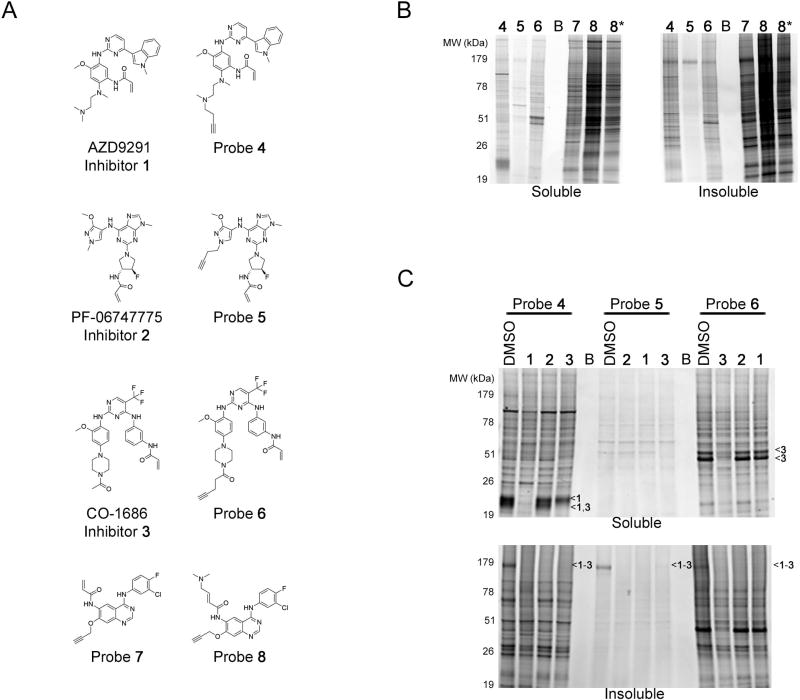
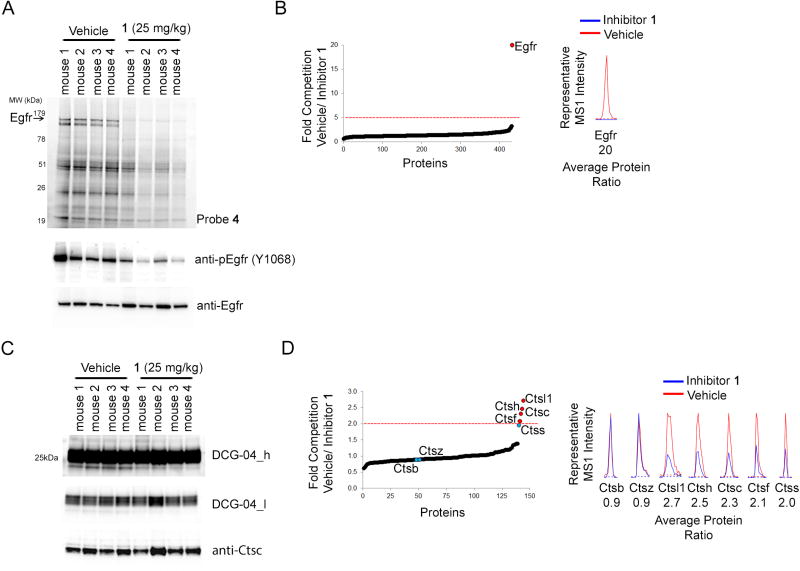
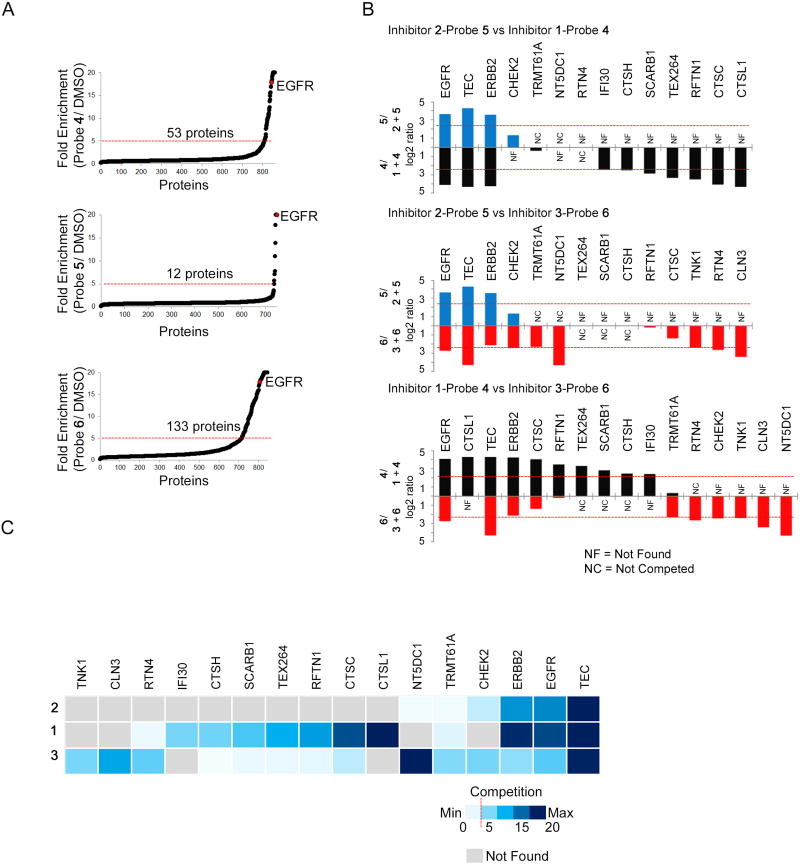
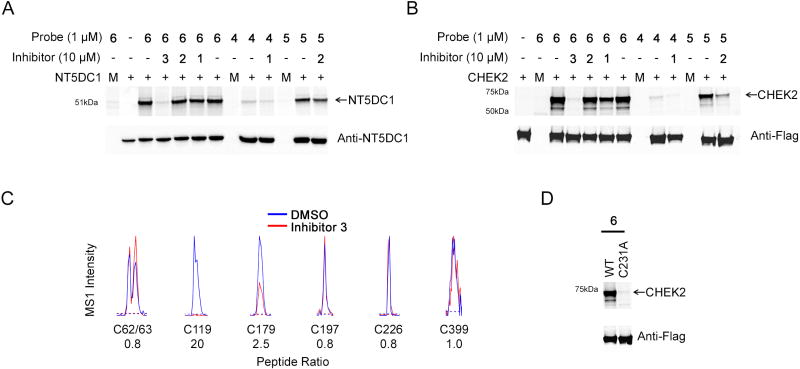
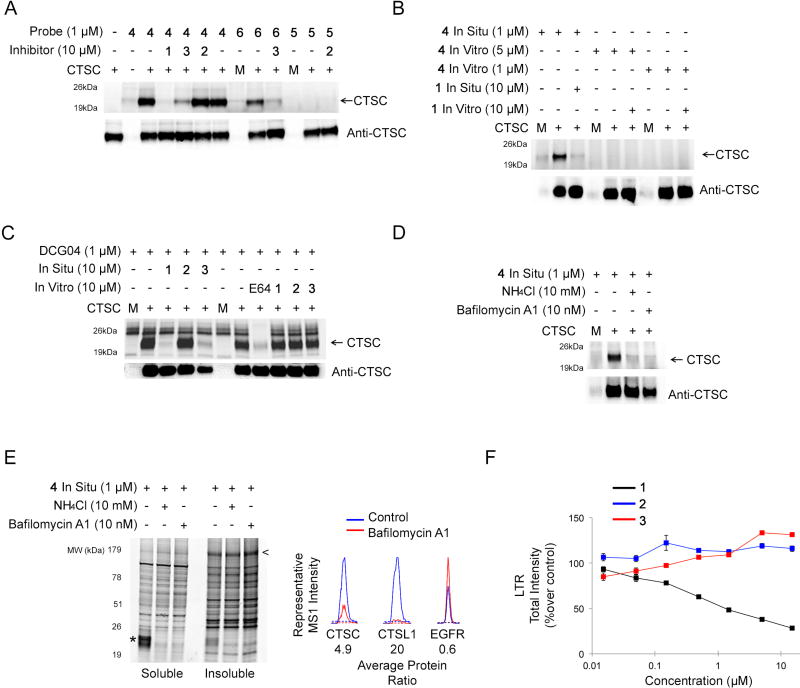
Patients with non-small cell lung cancers that have kinase-activating epidermal growth factor receptor (EGFR) mutations are highly responsive to first- and second-generation EGFR inhibitors. However, these patients often relapse due to a secondary, drug-resistant mutation in EGFR whereby the gatekeeper threonine is converted to methionine (T790M). Several third-generation EGFR inhibitors have been developed that irreversibly inactivate T790M-EGFR while sparing wild-type EGFR, thus reducing epithelium-based toxicities. Using chemical proteomics, we show here that individual T790M-EGFR inhibitors exhibit strikingly distinct off-target profiles in human cells. The FDA-approved drug osimertinib (AZD9291), in particular, was found to covalently modify cathepsins in cell and animal models, which correlated with lysosomal accumulation of the drug. Our findings thus show how chemical proteomics can be used to differentiate covalent kinase inhibitors based on global selectivity profiles in living systems and identify specific off-targets of these inhibitors that may affect drug activity and safety.
具有激酶激活表皮生长因子受体 (EGFR) 突变的非小细胞肺癌患者对第一代和第二代 EGFR 抑制剂高度敏感。然而,这些患者经常因 EGFR 中的继发、耐药性突变而复发,该突变使看门氨酸转化为蛋氨酸 (T790M)。已经开发了几种第三代 EGFR 抑制剂,这些抑制剂可不可逆地使 T790M-EGFR 失活,同时保留野生型 EGFR,从而减少基于上皮的毒性。在这里,我们使用化学蛋白质组学表明,个别 T790M-EGFR 抑制剂在人类细胞中表现出截然不同的非靶点特征。特别是,已批准用于临床的药物奥希替尼(AZD9291)被发现可在细胞和动物模型中使组织蛋白酶发生共价修饰,这与药物的溶酶体积累有关。我们的研究结果表明,化学蛋白质组学如何可用于基于活系统中的全局选择性特征来区分共价激酶抑制剂,并确定这些抑制剂的特定非靶点,这些非靶点可能影响药物活性和安全性。