Yoon Ki-Jun, Ringeling Francisca Rojas, Vissers Caroline, Jacob Fadi, Pokrass Michael, Jimenez-Cyrus Dennisse, Su Yijing, Kim Nam-Shik, Zhu Yunhua, Zheng Lily, Kim Sunghan, Wang Xinyuan, Doré Louis C, Jin Peng, Regot Sergi, Zhuang Xiaoxi, Canzar Stefan, He Chuan, Ming Guo-Li, Song Hongjun
Department of Neuroscience and Mahoney Institute for Neurosciences, University of Pennsylvania, Philadelphia, PA 19104, USA; Institute for Cell Engineering, Johns Hopkins University School of Medicine, Baltimore, MD 21205, USA; Department of Neurology, Johns Hopkins University School of Medicine, Baltimore, MD 21205, USA.
The Pre-doctoral Human Genetic Training Program, Johns Hopkins University School of Medicine, Baltimore, MD 21205, USA.
Cell. 2017 Nov 2;171(4):877-889.e17. doi: 10.1016/j.cell.2017.09.003. Epub 2017 Sep 28.
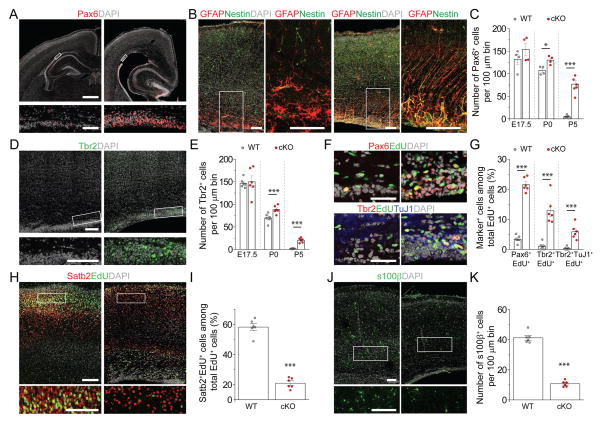
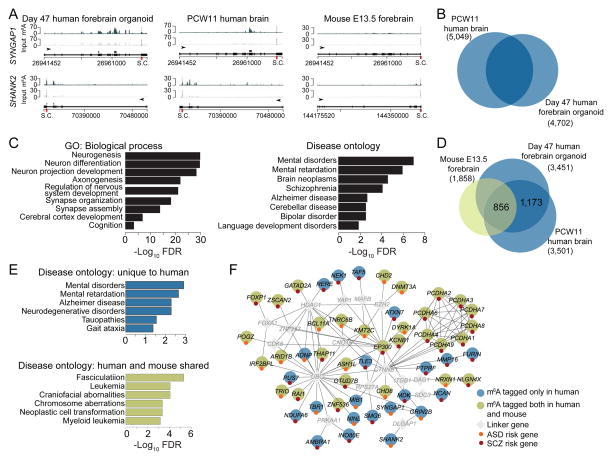
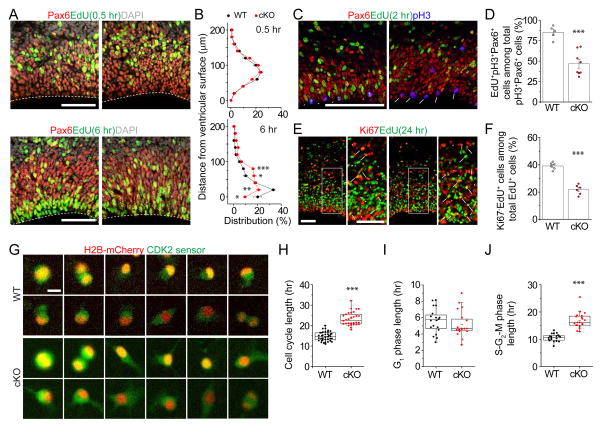
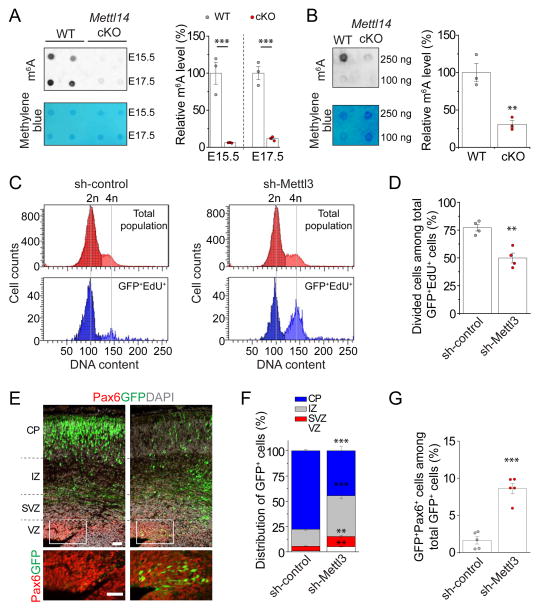
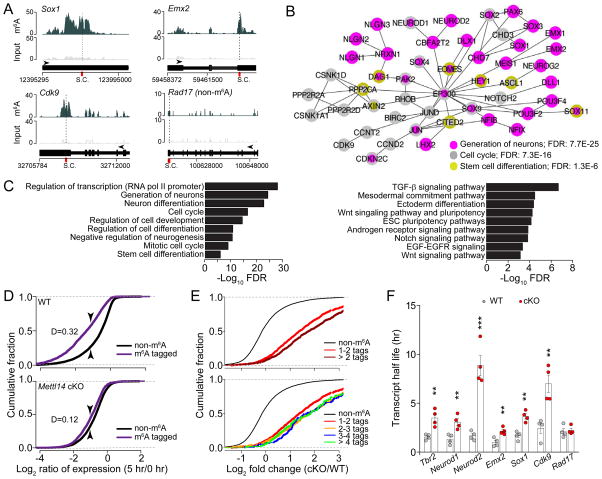
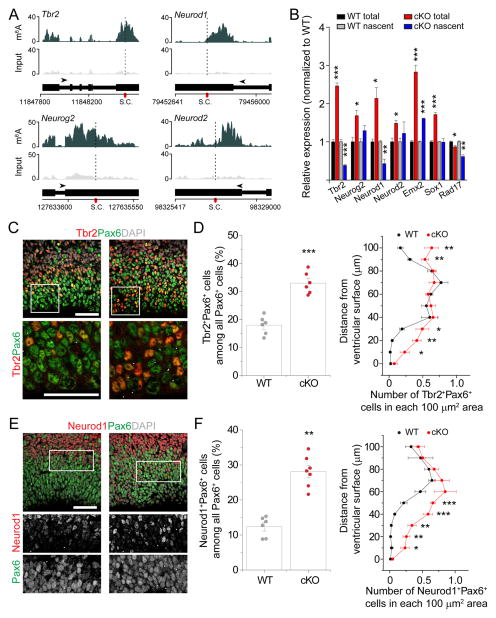
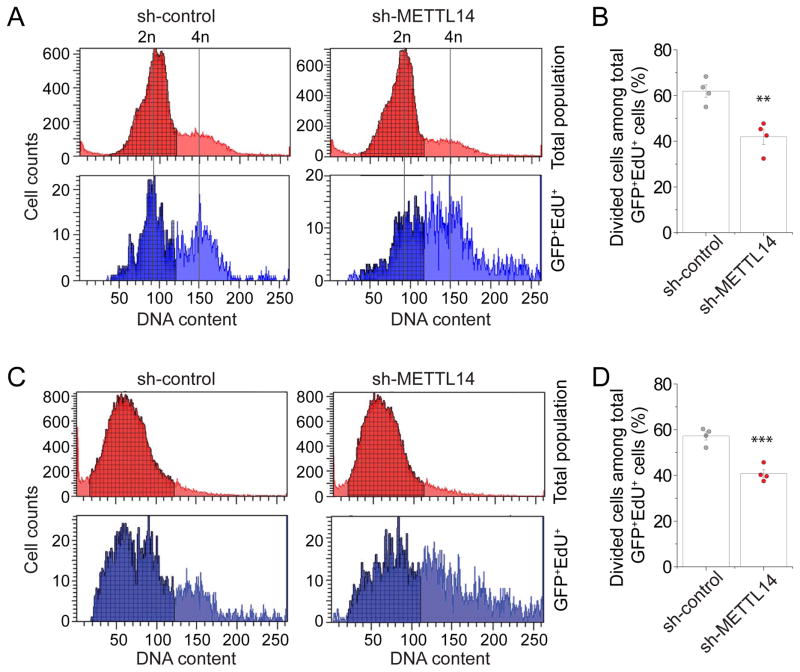
N-methyladenosine (mA), installed by the Mettl3/Mettl14 methyltransferase complex, is the most prevalent internal mRNA modification. Whether mA regulates mammalian brain development is unknown. Here, we show that mA depletion by Mettl14 knockout in embryonic mouse brains prolongs the cell cycle of radial glia cells and extends cortical neurogenesis into postnatal stages. mA depletion by Mettl3 knockdown also leads to a prolonged cell cycle and maintenance of radial glia cells. mA sequencing of embryonic mouse cortex reveals enrichment of mRNAs related to transcription factors, neurogenesis, the cell cycle, and neuronal differentiation, and mA tagging promotes their decay. Further analysis uncovers previously unappreciated transcriptional prepatterning in cortical neural stem cells. mA signaling also regulates human cortical neurogenesis in forebrain organoids. Comparison of mA-mRNA landscapes between mouse and human cortical neurogenesis reveals enrichment of human-specific mA tagging of transcripts related to brain-disorder risk genes. Our study identifies an epitranscriptomic mechanism in heightened transcriptional coordination during mammalian cortical neurogenesis.
由Mettl3/Mettl14甲基转移酶复合物介导的N6-甲基腺苷(mA)是最普遍的mRNA内部修饰。mA是否调节哺乳动物大脑发育尚不清楚。在这里,我们表明,通过敲除胚胎小鼠大脑中的Mettl14来耗尽mA会延长放射状胶质细胞的细胞周期,并将皮质神经发生延长至出生后阶段。通过敲低Mettl3来耗尽mA也会导致细胞周期延长和放射状胶质细胞的维持。对胚胎小鼠皮质进行mA测序,发现与转录因子、神经发生、细胞周期和神经元分化相关的mRNA富集,并且mA标记会促进它们的降解。进一步分析揭示了皮质神经干细胞中以前未被认识到的转录预模式。mA信号也调节前脑类器官中的人类皮质神经发生。对小鼠和人类皮质神经发生过程中mA-mRNA图谱的比较揭示了与脑疾病风险基因相关的转录本中人类特异性mA标记的富集。我们的研究确定了一种在哺乳动物皮质神经发生过程中增强转录协调的表观转录组机制。