Garneau Nicole L, Nuessle Tiffany M, Tucker Robin M, Yao Mengjie, Santorico Stephanie A, Mattes Richard D
Genetics of Taste Lab, Health Sciences Department, Denver Museum of Nature & Science, 2001 Colorado Blvd, Denver, CO 80205, USA.
Department of Food Science and Human Nutrition, Michigan State University, 469 Wilson Rd, Room 204, East Lansing, MI 48824, USA.
Chem Senses. 2017 Oct 31;42(9):769-775. doi: 10.1093/chemse/bjx058.
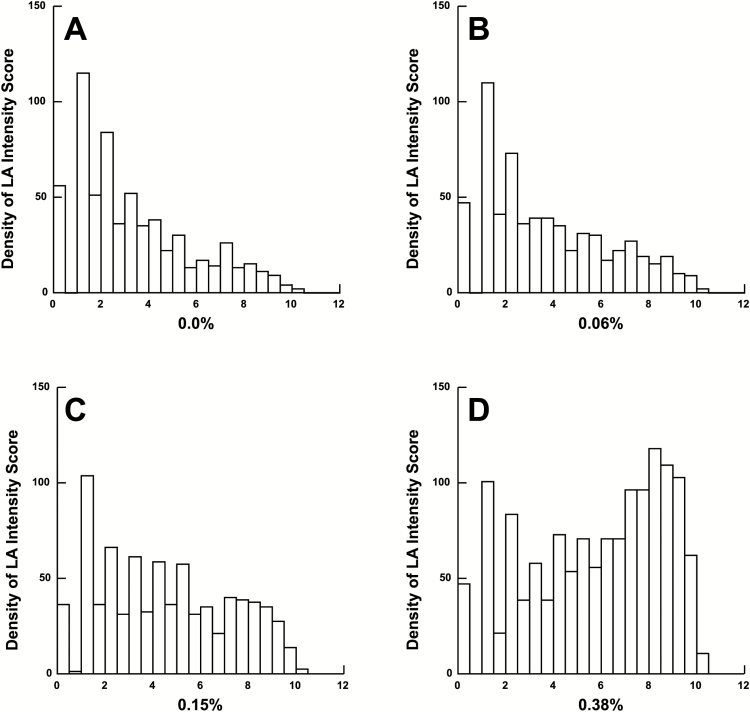
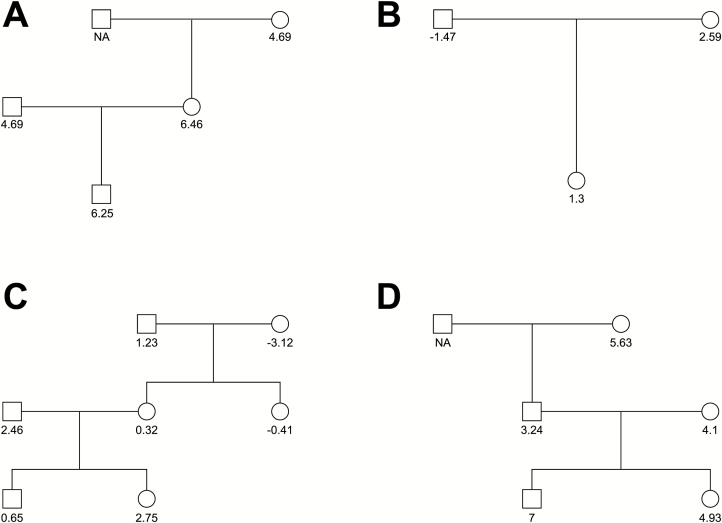
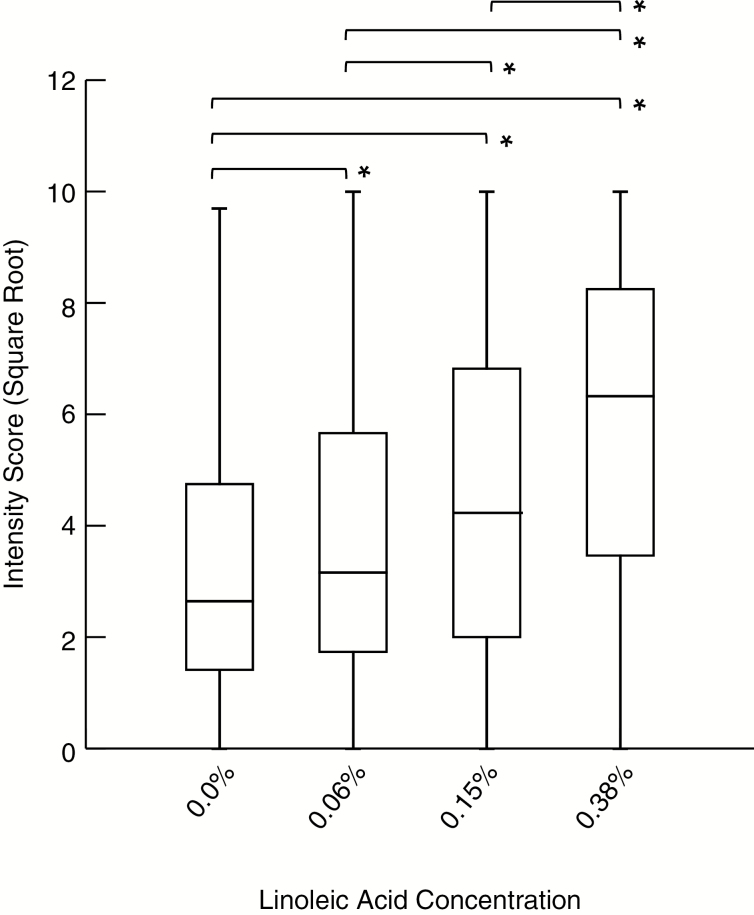
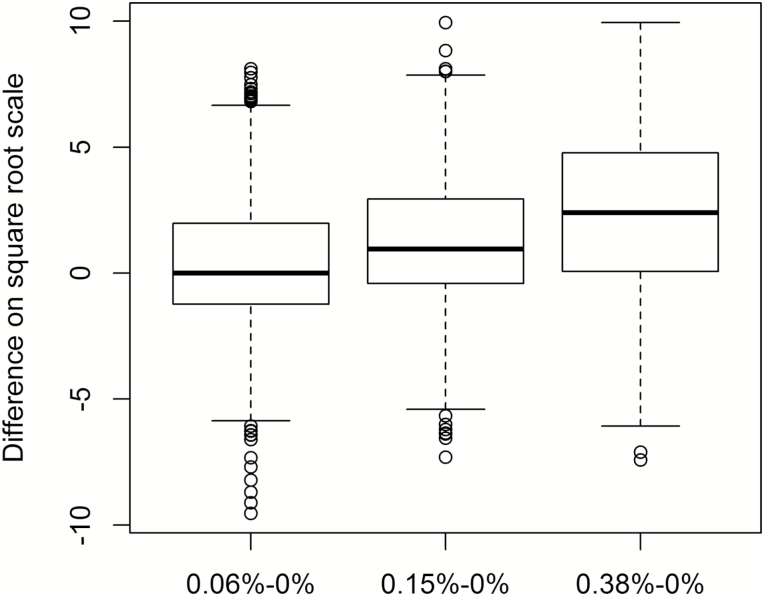
Dietary fats serve multiple essential roles in human health but may also contribute to acute and chronic health complications. Thus, understanding mechanisms that influence fat ingestion are critical. All sensory systems may contribute relevant cues to fat detection, with the most recent evidence supporting a role for the sense of taste. Taste detection thresholds for fat vary markedly between individuals and responses are not normally distributed. Genetics may contribute to these observations. Using crowdsourced data obtained from families visiting the Denver Museum of Nature & Science, our objective was to estimate the heritability of fat taste (oleogustus). A pedigree analysis was conducted with 106 families (643 individuals) who rated the fat taste intensity of graded concentrations of linoleic acid (LA) embedded in taste strips. The findings estimate that 19% (P = 0.043) of the variability of taste response to LA relative to baseline is heritable at the highest concentration tested.
膳食脂肪在人类健康中发挥着多种重要作用,但也可能导致急性和慢性健康问题。因此,了解影响脂肪摄入的机制至关重要。所有感觉系统都可能为脂肪检测提供相关线索,最新证据支持味觉在其中发挥作用。个体之间对脂肪的味觉检测阈值差异显著,且反应并非呈正态分布。遗传学可能导致了这些观察结果。利用从参观丹佛自然科学博物馆的家庭中获取的众包数据,我们的目标是估计脂肪味觉(油味觉)的遗传度。对106个家庭(643名个体)进行了系谱分析,这些家庭对嵌入味觉条中的不同浓度亚油酸(LA)的脂肪味觉强度进行了评分。研究结果估计,在测试的最高浓度下,相对于基线,对LA味觉反应变异性的19%(P = 0.043)是可遗传的。