Morera Daley S, Hennig Martin S, Talukder Asif, Lokeshwar Soum D, Wang Jiaojiao, Garcia-Roig Michael, Ortiz Nicolas, Yates Travis J, Lopez Luis E, Kallifatidis Georgios, Kramer Mario W, Jordan Andre R, Merseburger Axel S, Manoharan Murugesan, Soloway Mark S, Terris Martha K, Lokeshwar Vinata B
Department of Biochemistry and Molecular Biology, Medical College of Georgia, Augusta University, 1410 Laney Walker Boulevard, Room CN 1177A, Augusta, GA 30912-2100, USA.
Department of Urology, University Hospital Schleswig-Holstein, Kiel, Lübeck 23538, Germany.
Br J Cancer. 2017 Nov 7;117(10):1507-1517. doi: 10.1038/bjc.2017.318. Epub 2017 Oct 3.
Molecular markers of clinical outcome may aid in designing targeted treatments for bladder cancer. However, only a few bladder cancer biomarkers have been examined as therapeutic targets.
Data from The Cancer Genome Atlas (TCGA) and bladder specimens were evaluated to determine the biomarker potential of the hyaluronic acid (HA) family of molecules - HA synthases, HA receptors and hyaluronidase. The therapeutic efficacy of 4-methylumbelliferone (4MU), a HA synthesis inhibitor, was evaluated in vitro and in xenograft models.
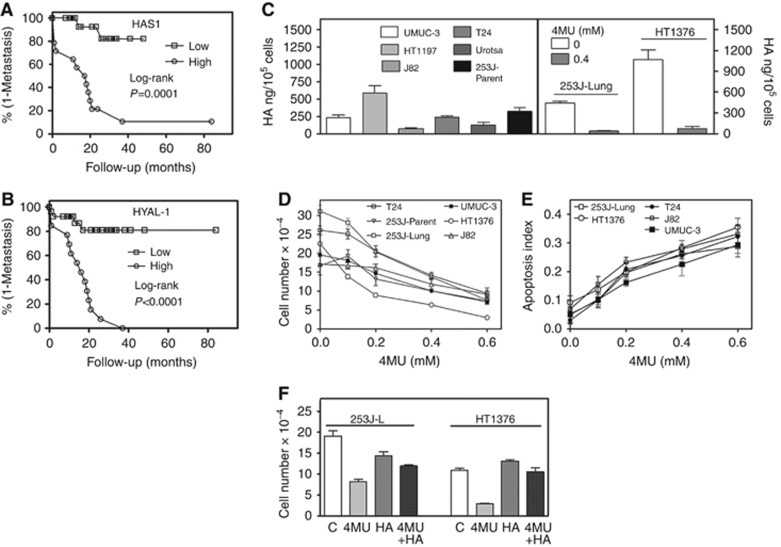
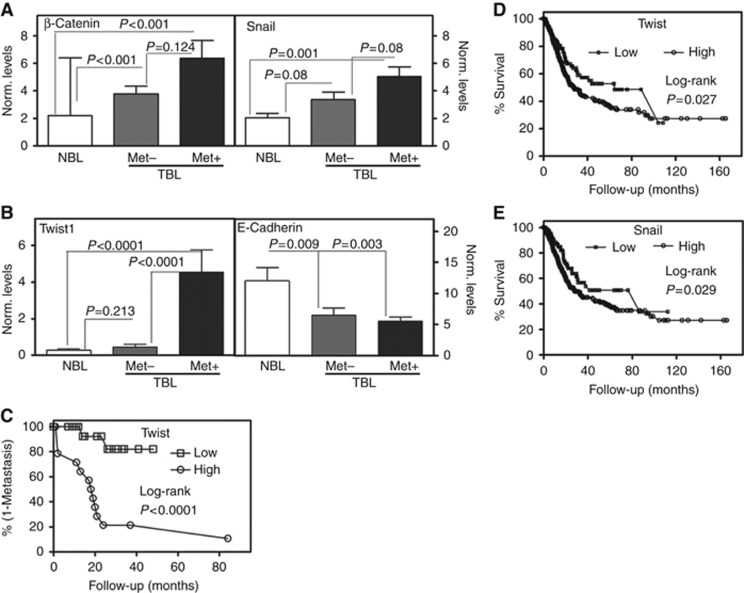
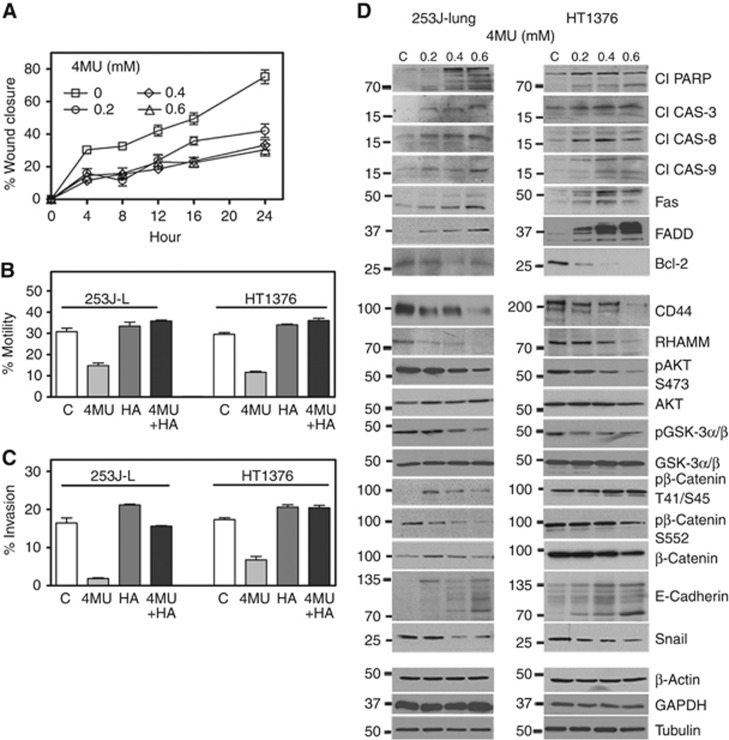
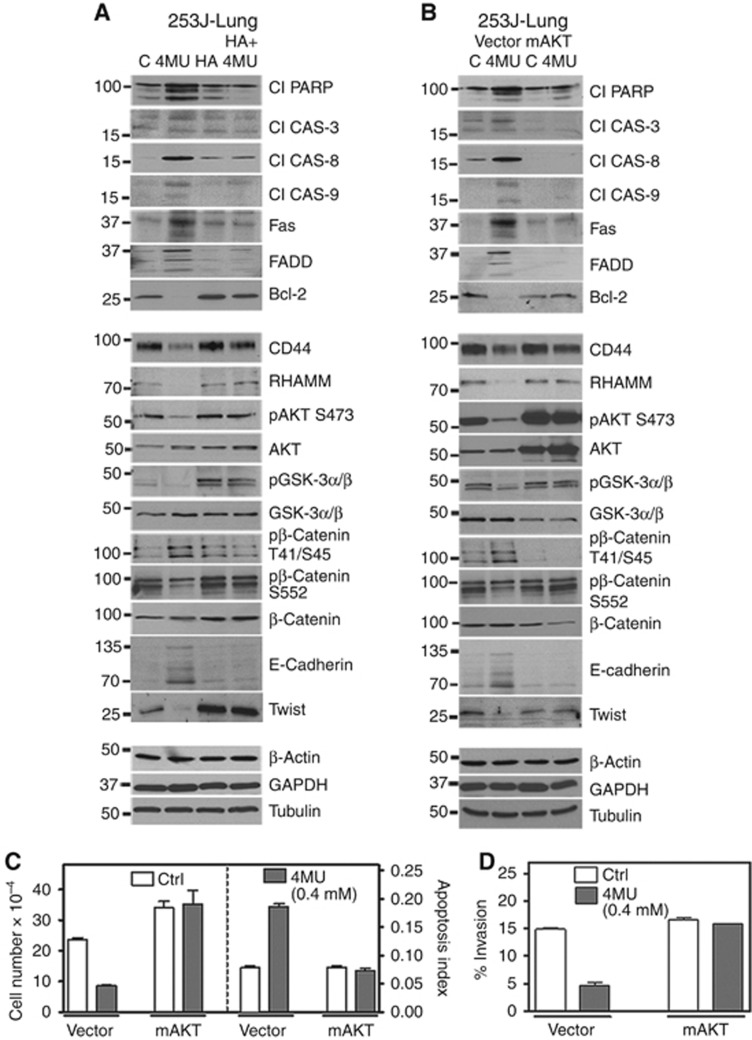
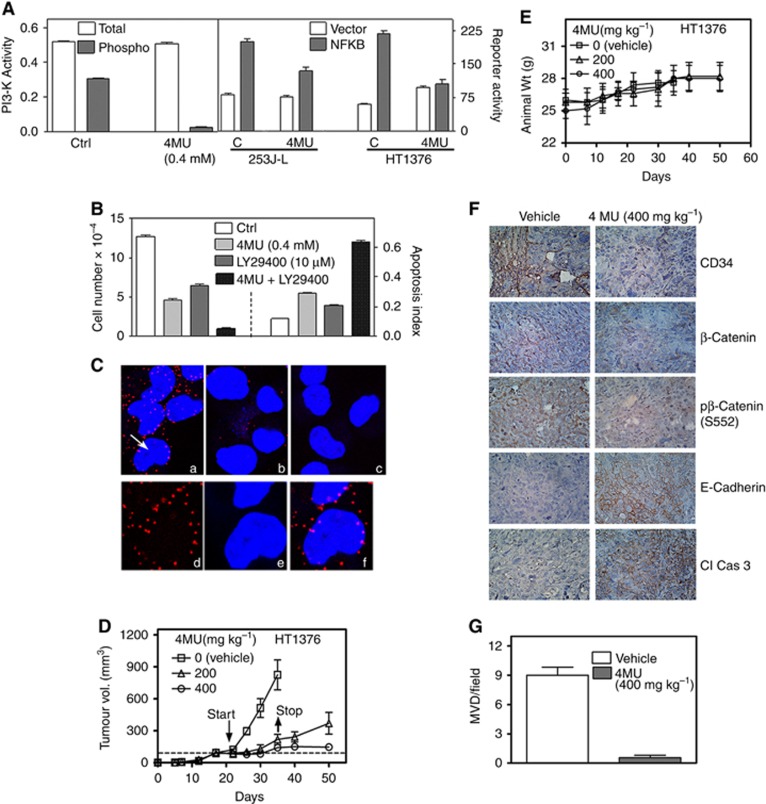
In clinical specimens and TCGA data sets, HA synthases and hyaluronidase-1 levels significantly predicted metastasis and poor survival. 4-Methylumbelliferone inhibited proliferation and motility/invasion and induced apoptosis in bladder cancer cells. Oral administration of 4MU both prevented and inhibited tumour growth, without dose-related toxicity. Effects of 4MU were mediated through the inhibition of CD44/RHAMM and phosphatidylinositol 3-kinase/AKT axis, and of epithelial-mesenchymal transition determinants. These were attenuated by HA, suggesting that 4MU targets oncogenic HA signalling. In tumour specimens and the TCGA data set, HA family expression correlated positively with β-catenin, Twist and Snail expression, but negatively with E-cadherin expression.
This study demonstrates that the HA family can be exploited for developing a biomarker-driven, targeted treatment for bladder cancer, and 4MU, a non-toxic oral HA synthesis inhibitor, is one such candidate.
临床结局的分子标志物有助于设计膀胱癌的靶向治疗方案。然而,仅有少数膀胱癌生物标志物被作为治疗靶点进行研究。
对来自癌症基因组图谱(TCGA)的数据和膀胱标本进行评估,以确定透明质酸(HA)分子家族——HA合成酶、HA受体和透明质酸酶的生物标志物潜力。在体外和异种移植模型中评估HA合成抑制剂4-甲基伞形酮(4MU)的治疗效果。
在临床标本和TCGA数据集中,HA合成酶和透明质酸酶-1水平显著预测转移和不良生存。4-甲基伞形酮抑制膀胱癌细胞的增殖、运动/侵袭并诱导其凋亡。口服4MU可预防和抑制肿瘤生长,且无剂量相关毒性。4MU的作用是通过抑制CD44/RHAMM和磷脂酰肌醇3激酶/AKT轴以及上皮-间质转化决定因素介导的。这些作用被HA减弱,表明4MU靶向致癌性HA信号传导。在肿瘤标本和TCGA数据集中,HA家族表达与β-连环蛋白、Twist和Snail表达呈正相关,但与E-钙黏蛋白表达呈负相关。
本研究表明,HA家族可用于开发一种基于生物标志物的膀胱癌靶向治疗方法,无毒口服HA合成抑制剂4MU就是这样一种候选药物。