Brossas Jean-Yves, Gulin Julián Ernesto Nicolás, Bisio Margarita Maria Catalina, Chapelle Manuel, Marinach-Patrice Carine, Bordessoules Mallaury, Palazon Ruiz George, Vion Jeremy, Paris Luc, Altcheh Jaime, Mazier Dominique
Centre d'Immunologie et des Maladies Infectieuses, INSERM U1135, Paris, France.
Sorbonne Universités, UPMC Univ Paris 06, Paris, France.
PLoS One. 2017 Oct 3;12(10):e0185504. doi: 10.1371/journal.pone.0185504. eCollection 2017.
Chagas disease is a debilitating often fatal disease resulting from infection by the protozoan parasite Trypanosoma cruzi. Chagas disease is endemic in 21 countries of the Americas, and it is an emerging disease in other countries as a result of migration. Given the chronic nature of the infection where intracellular parasites persist for years, the diagnosis of T. cruzi by direct detection is difficult, whereas serologic tests though sensitive may yield false-positive results. The development of new rapid test based on the identification of soluble parasitic antigens in serum would be a real innovation in the diagnosis of Chagas disease.
To identify new soluble biomarkers that may improve diagnostic tests, we investigated the proteins secreted by T. cruzi using mass spectrometric analyses of conditioned culture media devoid of serum collected during the emergence of trypomastigotes from infected Vero cells. In addition, we compared the secretomes of two T. cruzi strains from DTU Tc VI (VD and CL Brener).
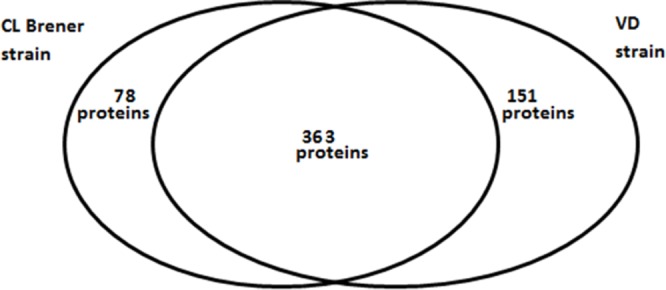
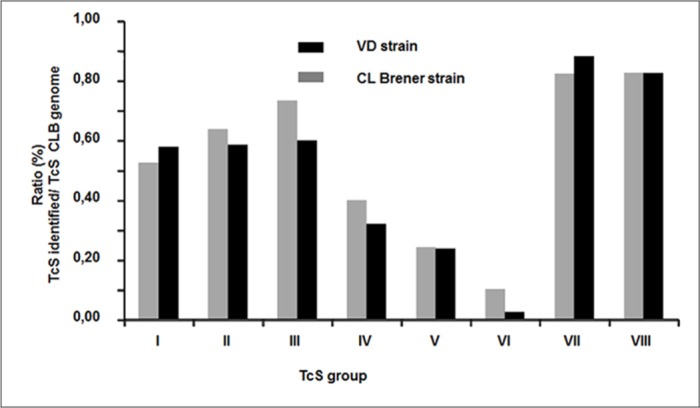
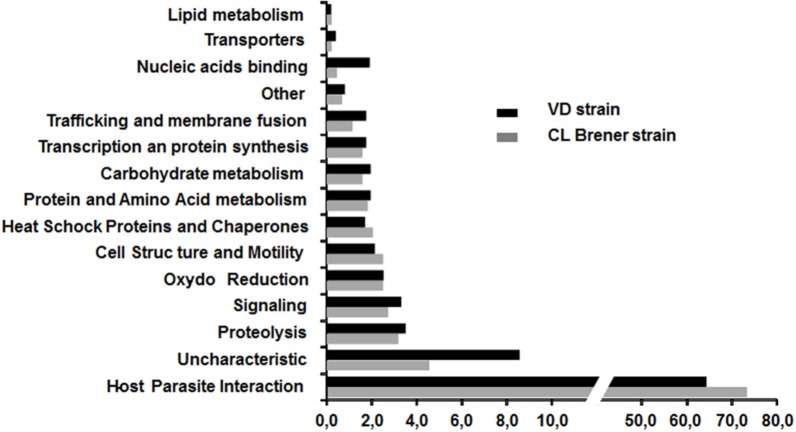
Analysis of the secretome collected during the emergence of trypomastigotes from Vero cells led to the identification of 591 T. cruzi proteins. Three hundred sixty three proteins are common to both strains and most belong to different multigenic super families (i.e. TcS, GP63, MASP, and DGF1). Ultimately we have established a list of 94 secreted proteins, common to both DTU Tc VI strains that do not belong to members of multigene families.
This study provides the first comparative analysis of the secretomes from two distinct T. cruzi strains of DTU TcVI. This led us to identify a subset of common secreted proteins that could potentially serve as serum markers for T. cruzi infection. Their potential could now be evaluated, with specific antibodies using sera collected from patients and residents from endemic regions.
恰加斯病是一种由原生动物寄生虫克氏锥虫感染引起的使人衰弱且往往致命的疾病。恰加斯病在美洲的21个国家流行,由于移民,在其他国家也成为一种新出现的疾病。鉴于感染的慢性性质,细胞内寄生虫会持续数年,通过直接检测诊断克氏锥虫很困难,而血清学检测虽然灵敏,但可能会产生假阳性结果。基于识别血清中可溶性寄生虫抗原开发新的快速检测方法将是恰加斯病诊断方面的一项真正创新。
为了识别可能改善诊断检测的新可溶性生物标志物,我们使用质谱分析法研究了克氏锥虫分泌的蛋白质,这些蛋白质来自于从感染的Vero细胞中释放出锥鞭毛体期间收集的无血清条件培养基。此外,我们比较了来自DTU Tc VI的两种克氏锥虫菌株(VD和CL Brener)的分泌蛋白组。
对从Vero细胞中释放锥鞭毛体期间收集的分泌蛋白组进行分析,鉴定出591种克氏锥虫蛋白。两种菌株共有363种蛋白,大多数属于不同的多基因超家族(即TcS、GP63、MASP和DGF1)。最终,我们确定了一份94种分泌蛋白的清单,这两种DTU Tc VI菌株共有这些蛋白,且它们不属于多基因家族成员。
本研究首次对DTU TcVI的两种不同克氏锥虫菌株的分泌蛋白组进行了比较分析。这使我们识别出一组可能作为克氏锥虫感染血清标志物的共同分泌蛋白。现在可以使用从患者和流行地区居民收集的血清以及特异性抗体来评估它们的潜力。