Malik Omri, Khamis Hadeel, Rudnizky Sergei, Marx Ailie, Kaplan Ariel
Faculty of Biology, Technion-Israel Institute of Technology, Haifa 32000, Israel.
Russell Berrie Nanotechnology Institute, Technion-Israel Institute of Technology, Haifa 32000, Israel.
Nucleic Acids Res. 2017 Sep 29;45(17):10190-10205. doi: 10.1093/nar/gkx720.
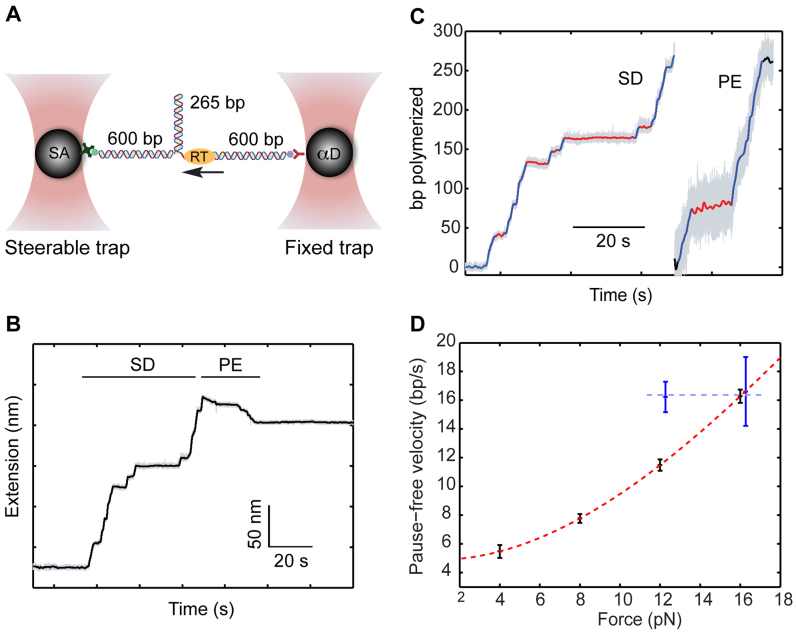
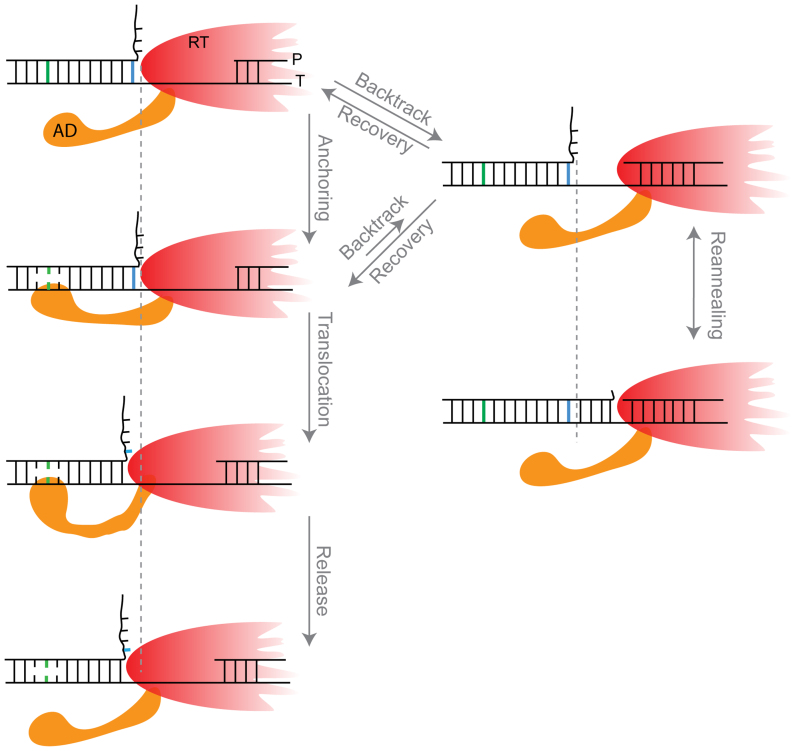
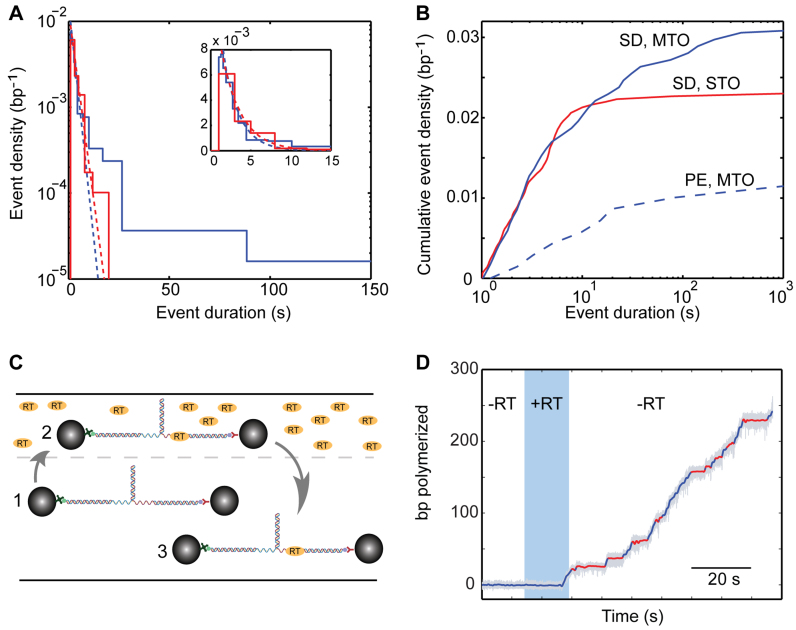
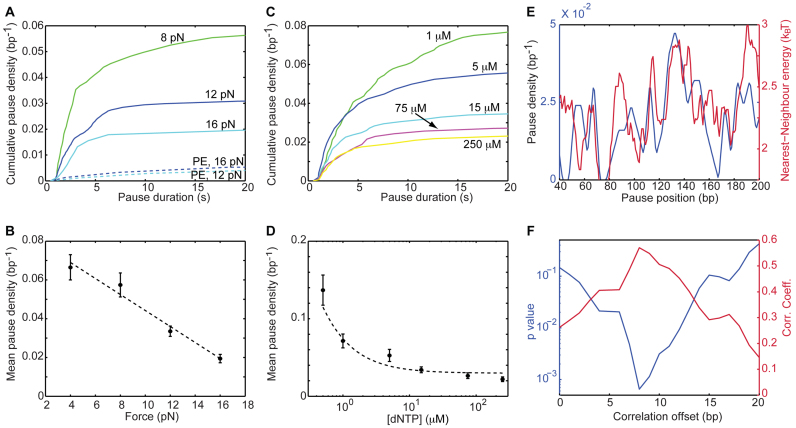
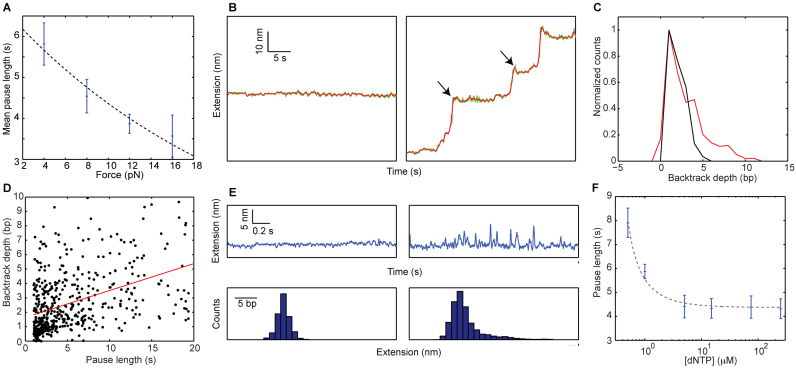
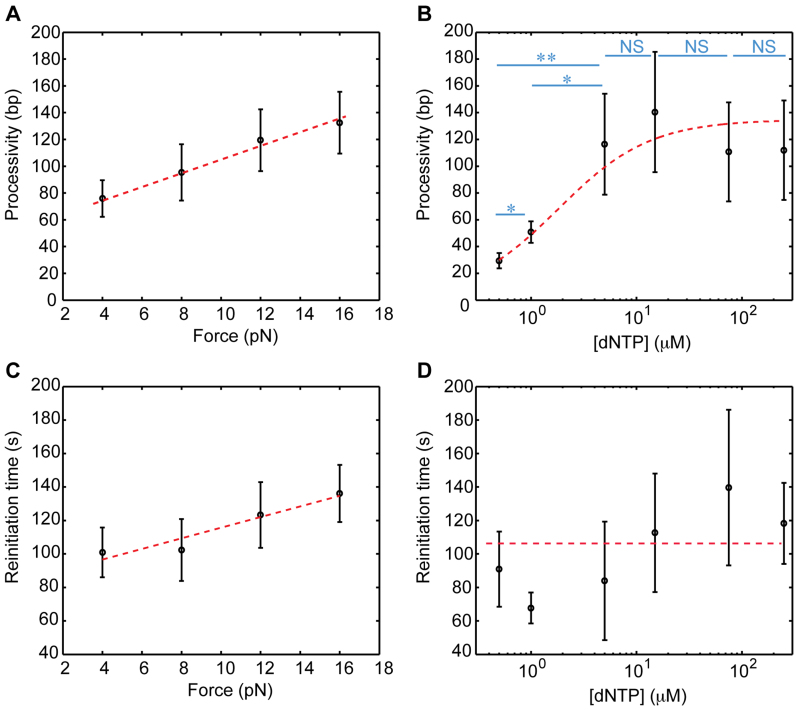
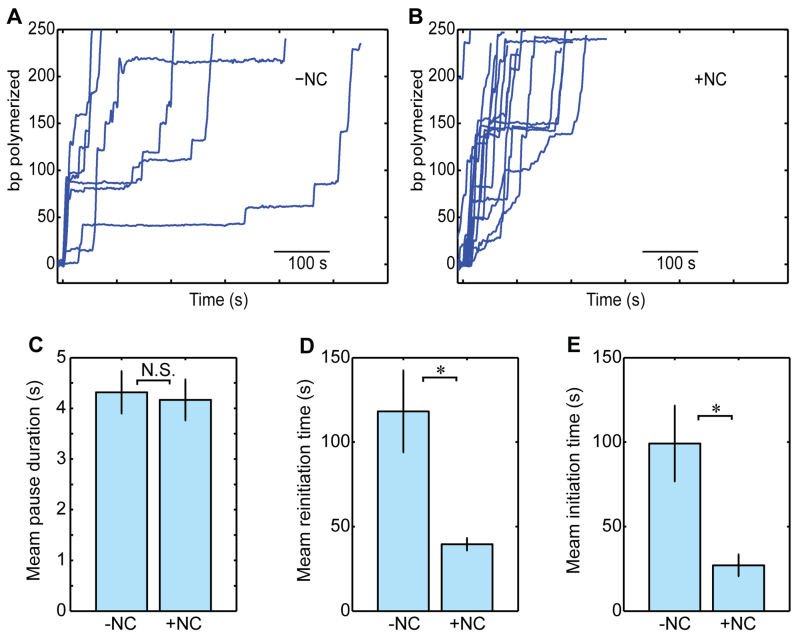
Reverse transcriptase (RT) catalyzes the conversion of the viral RNA into an integration-competent double-stranded DNA, with a variety of enzymatic activities that include the ability to displace a non-template strand concomitantly with polymerization. Here, using high-resolution optical tweezers to follow the activity of the murine leukemia Virus RT, we show that strand-displacement polymerization is frequently interrupted. Abundant pauses are modulated by the strength of the DNA duplex ∼8 bp ahead, indicating the existence of uncharacterized RT/DNA interactions, and correspond to backtracking of the enzyme, whose recovery is also modulated by the duplex strength. Dissociation and reinitiation events, which induce long periods of inactivity and are likely the rate-limiting step in the synthesis of the genome in vivo, are modulated by the template structure and the viral nucleocapsid protein. Our results emphasize the potential regulatory role of conserved structural motifs, and may provide useful information for the development of potent and specific inhibitors.
逆转录酶(RT)催化病毒RNA转化为具有整合能力的双链DNA,它具有多种酶活性,包括在聚合的同时置换非模板链的能力。在这里,我们使用高分辨率光镊跟踪小鼠白血病病毒RT的活性,结果表明链置换聚合反应经常中断。丰富的停顿受前方约8个碱基对的DNA双链强度调节,这表明存在尚未明确的RT/DNA相互作用,并且与酶的回溯相对应,酶的恢复也受双链强度调节。解离和重新起始事件会导致长时间的无活性,这可能是体内基因组合成中的限速步骤,它们受模板结构和病毒核衣壳蛋白调节。我们的结果强调了保守结构基序的潜在调节作用,并可能为开发强效和特异性抑制剂提供有用信息。