Department of Anatomy, School of Medicine, Chungnam National University, Daejeon 35015, Korea.
Department of Medical Science, School of Medicine, Chungnam National University, Daejeon 35015, Korea.
Int J Mol Sci. 2017 Sep 30;18(10):2081. doi: 10.3390/ijms18102081.
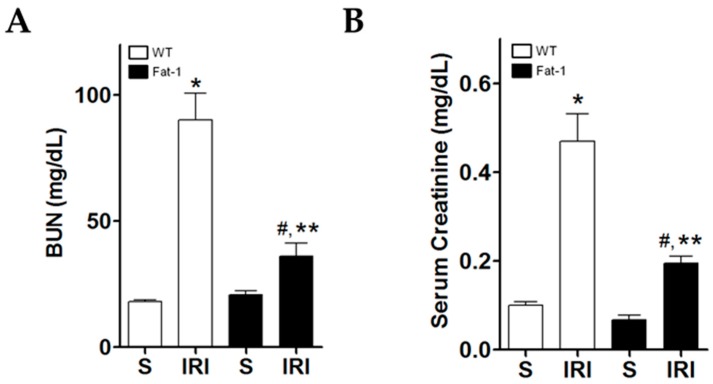
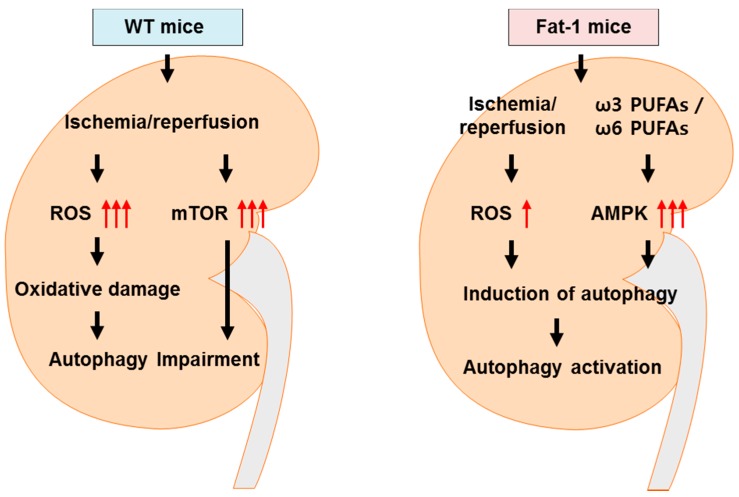
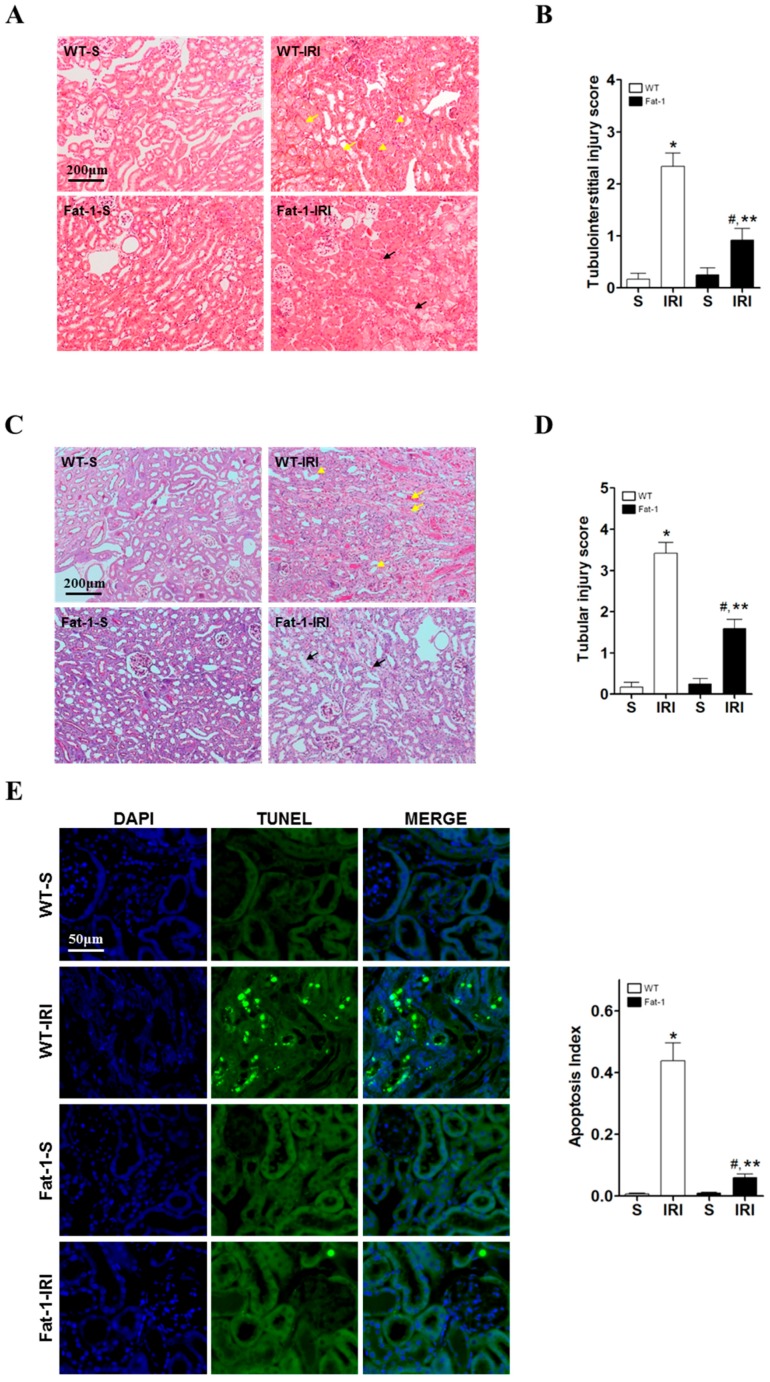
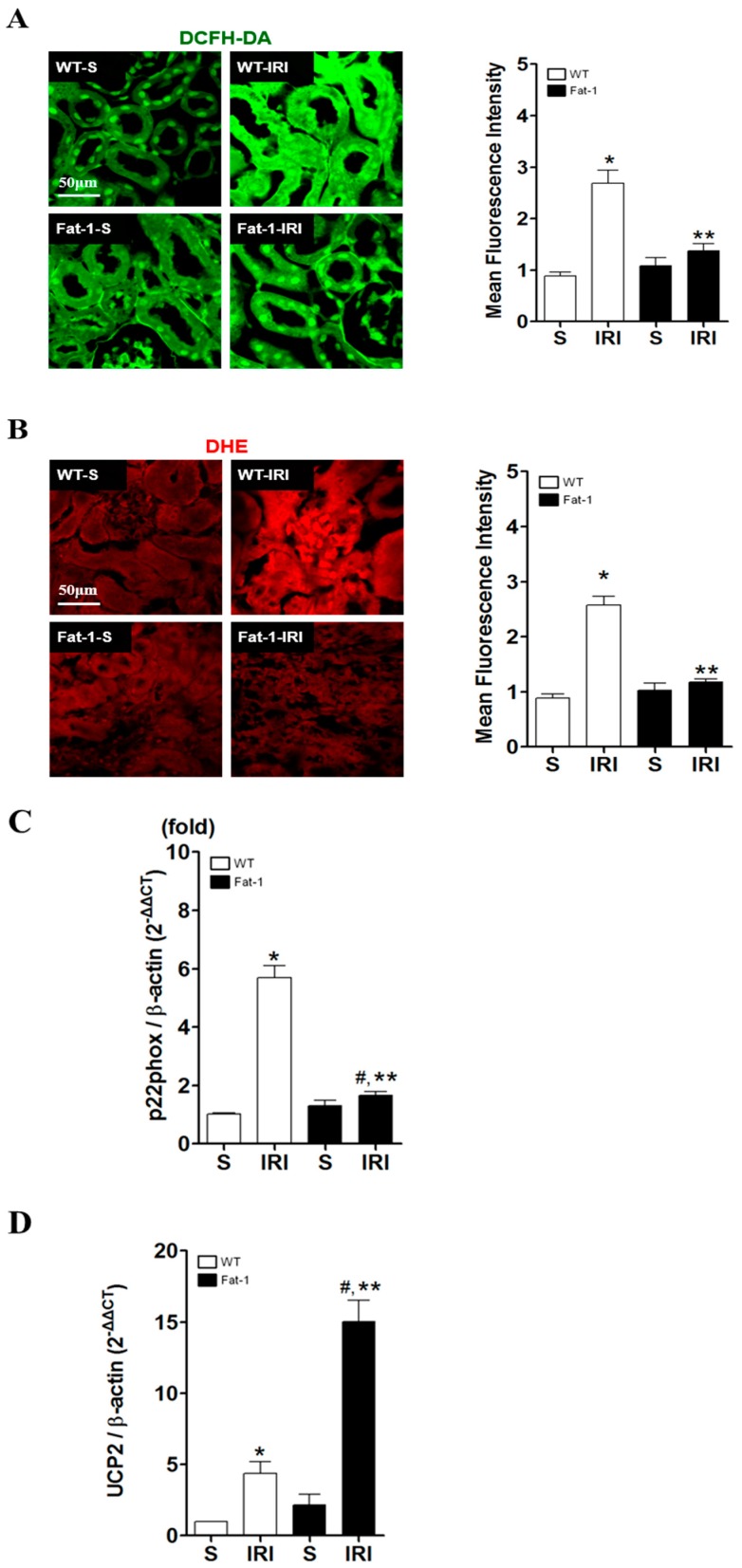
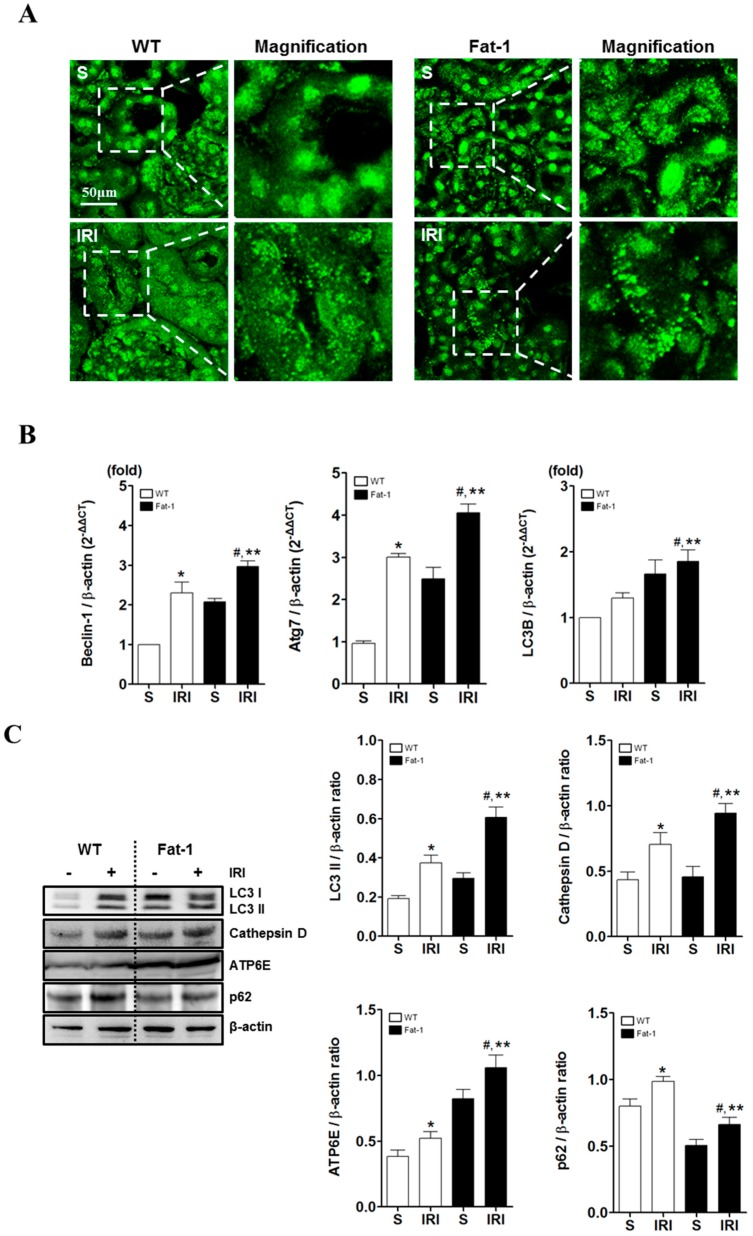
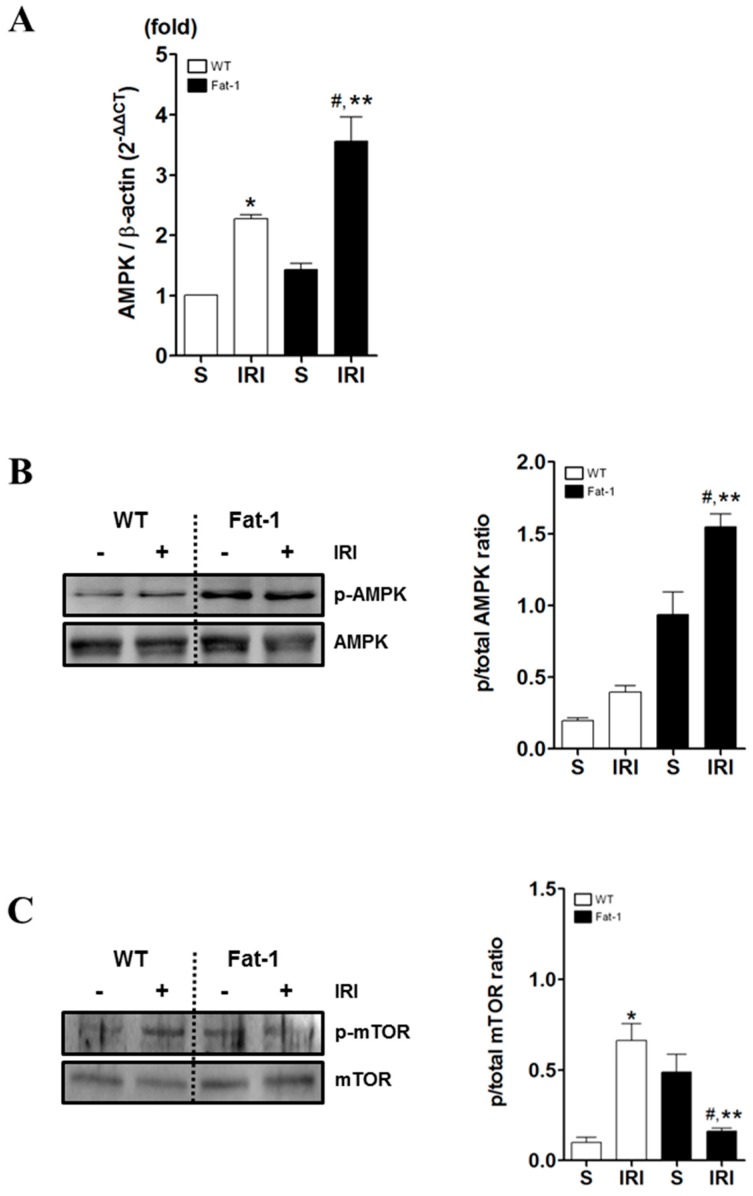
Regulated autophagy is involved in the repair of renal ischemia-reperfusion injury (IRI). Fat-1 transgenic mice produce ω3-Polyunsaturated fatty acids (ω3-PUFAs) from ω6-Polyunsaturated fatty acids (ω6-PUFAs) without a dietary ω3-PUFAs supplement, leading to a high accumulation of omega-3 in various tissues. ω3-PUFAs show protective effects against various renal injuries and it has recently been reported that ω3-PUFAs regulate autophagy. We assessed whether ω3-PUFAs attenuated IR-induced acute kidney injury (AKI) and evaluated its associated mechanisms. C57Bl/6 background fat-1 mice and wild-type mice (wt) were divided into four groups: wt sham ( = 10), fat-1 sham ( = 10), wt IRI (reperfusion 35 min after clamping both the renal artery and vein; = 15), and fat-1 IRI ( = 15). Kidneys and blood were harvested 24 h after IRI and renal histological and molecular data were collected. The kidneys of fat-1 mice showed better renal cell survival, renal function, and pathological damage than those of wt mice after IRI. In addition, fat-1 mice showed less oxidative stress and autophagy impairment; greater amounts of microtubule-associated protein 1A/1B-light chain 3 (LC3)-II, Beclin-1, and Atg7; lower amounts of p62; and, higher levels of renal cathepsin D and ATP6E than wt kidneys. They also showed more adenosine monophosphate-activated protein kinase (AMPK) activation, which resulted in the inhibition of phosphorylation of the mammalian target of rapamycin (mTOR). Collectively, ω3-PUFAs in fat-1 mice contributed to AMPK mediated autophagy activation, leading to a renoprotective response.
自噬在肾缺血再灌注损伤(IRI)的修复中起作用。Fat-1 转基因小鼠能够将 ω6-多不饱和脂肪酸(ω6-PUFAs)转化为 ω3-多不饱和脂肪酸(ω3-PUFAs),而无需 ω3-PUFAs 的饮食补充,导致各种组织中 ω3-多不饱和脂肪酸的大量积累。ω3-PUFAs 对各种肾损伤具有保护作用,最近有报道称 ω3-PUFAs 调节自噬。我们评估了 ω3-PUFAs 是否减轻了 IRI 引起的急性肾损伤(AKI),并评估了其相关机制。C57Bl/6 背景 Fat-1 小鼠和野生型小鼠(wt)分为四组:wt 假手术组( = 10)、Fat-1 假手术组( = 10)、wt IRI 组(再灌注 35 分钟后夹闭肾动静脉; = 15)和 Fat-1 IRI 组( = 15)。IRI 后 24 小时采集肾脏和血液,收集肾脏组织学和分子数据。IRI 后,Fat-1 小鼠的肾脏细胞存活率、肾功能和病理损伤均优于 wt 小鼠。此外,Fat-1 小鼠的氧化应激和自噬损伤较小;微管相关蛋白 1A/1B-轻链 3(LC3)-II、Beclin-1 和 Atg7 的含量较高,p62 的含量较低,肾组织蛋白酶 D 和 ATP6E 的含量较高;腺苷单磷酸激活蛋白激酶(AMPK)的激活程度更高,导致雷帕霉素靶蛋白(mTOR)的磷酸化受到抑制。总之,Fat-1 小鼠中的 ω3-PUFAs 有助于 AMPK 介导的自噬激活,从而产生肾保护反应。