Cancer Institute (Key Laboratory of Cancer Prevention and Intervention, China National Ministry of Education, China), the Second Affiliated Hospital, Zhejiang University School of Medicine, Hangzhou, Zhejiang, China.
Department of Abdominal Oncology, West China Hospital, Sichuan University, Chengdu, Sichuan, China.
Cell Commun Signal. 2017 Oct 3;15(1):38. doi: 10.1186/s12964-017-0192-z.
Chloride channel accessory 1 (CLCA1) belongs to the calcium-sensitive chloride conductance protein family, which is mainly expressed in the colon, small intestine and appendix. This study was conducted to investigate the functions and mechanisms of CLCA1 in colorectal cancer (CRC).
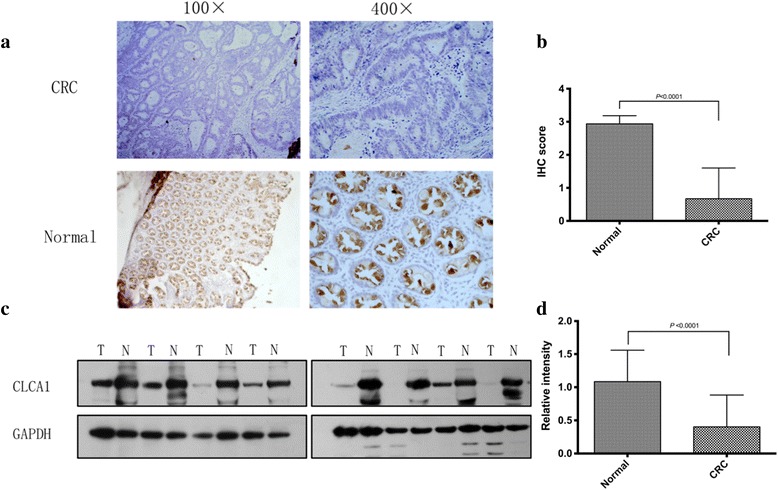
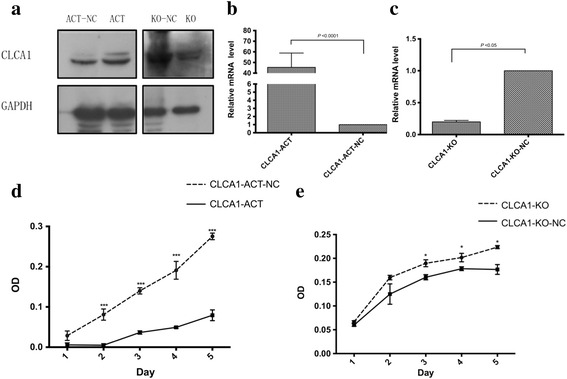
The CLCA1 protein expression level in CRC patients was evaluated by enzyme-linked immunosorbent assay (ELISA), immunohistochemistry (IHC), and western blotting analysis. Using CRISPR/Cas9 technology, CLCA1-upregulated (CLCA1-ACT) and CLCA1-knockout cells (CLCA1-KO), as well as their respective negative controls (CLCA1-ACT-NC and CLCA1-KO-NC), were constructed from the SW620 cell line. Cell growth and metastatic ability were assessed both in vitro and in vivo. The association of CLCA1 with epithelial-mesenchymal transition (EMT) and other signaling pathways was determined by western blotting assays.
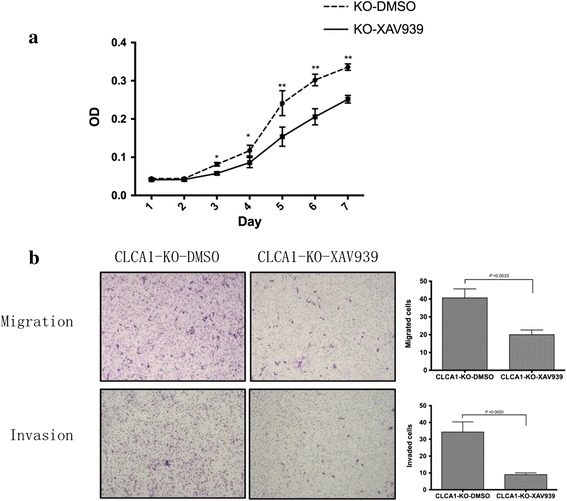
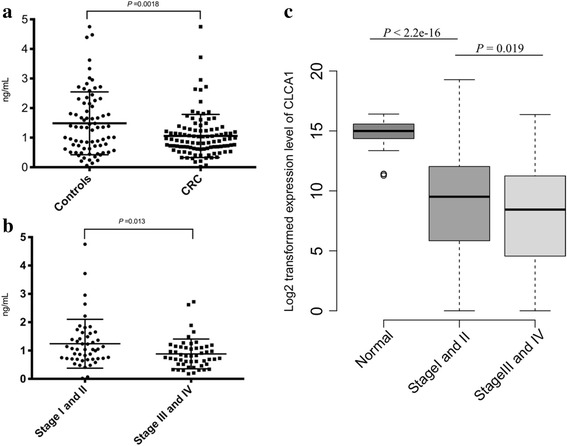
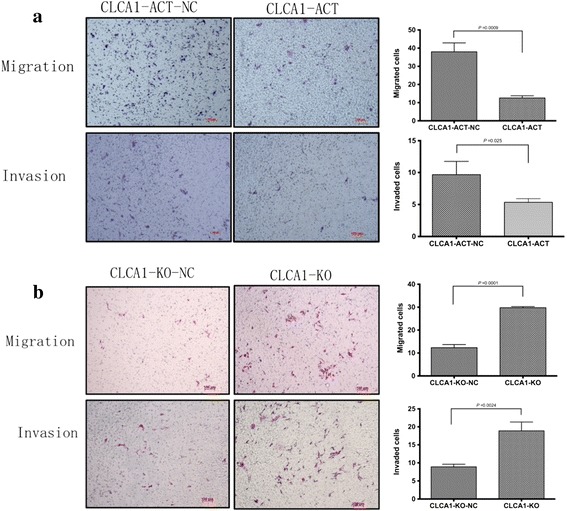
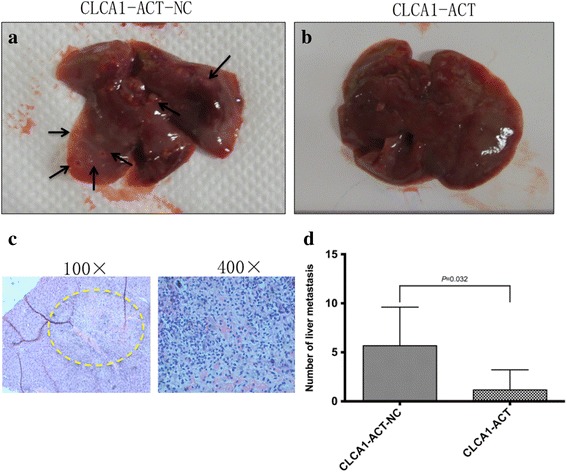
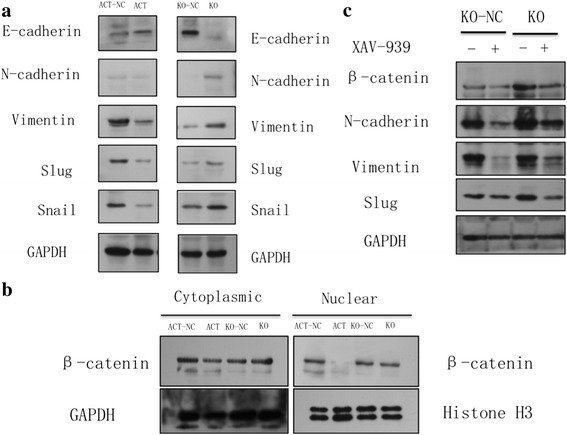
The expression level of CLCA1 in CRC tissues was significantly decreased compared with that in adjacent normal tissue (P< 0.05). Meanwhile, the serum concentration of CLCA1 in CRC patients was also significantly lower when compared with that of healthy controls (1.48 ± 1.06 ng/mL vs 1.06 ± 0.73 ng/mL, P = 0.0018). In addition, CLCA1 serum concentration and mRNA expression level in CRC tissues were inversely correlated with CRC metastasis and tumor stage. Upregulated CLCA1 suppressed CRC growth and metastasis in vitro and in vivo, whereas inhibition of CLCA1 led to the opposite results. Increased expression levels of CLCA1 could repress Wnt signaling and the EMT process in CRC cells.
Our findings suggest that increased expression levels of CLCA1 can suppress CRC aggressiveness. CLCA1 functions as a tumor suppressor possibly via inhibition of the Wnt/beta-catenin signaling pathway and the EMT process.
氯离子通道辅助蛋白 1(CLCA1)属于钙敏氯离子电导蛋白家族,主要在结肠、小肠和阑尾中表达。本研究旨在探讨 CLCA1 在结直肠癌(CRC)中的作用和机制。
采用酶联免疫吸附试验(ELISA)、免疫组织化学(IHC)和 Western blot 分析评估 CRC 患者 CLCA1 蛋白表达水平。利用 CRISPR/Cas9 技术,从 SW620 细胞系构建 CLCA1 过表达(CLCA1-ACT)和 CLCA1 敲除(CLCA1-KO)细胞以及各自的阴性对照(CLCA1-ACT-NC 和 CLCA1-KO-NC)。在体外和体内评估细胞生长和转移能力。Western blot 检测 CLCA1 与上皮间质转化(EMT)及其他信号通路的关系。
CRC 组织中 CLCA1 的表达水平明显低于邻近正常组织(P<0.05)。同时,CRC 患者血清 CLCA1 浓度也明显低于健康对照组(1.48±1.06ng/mL 比 1.06±0.73ng/mL,P=0.0018)。此外,CRC 组织中 CLCA1 血清浓度和 mRNA 表达水平与 CRC 转移和肿瘤分期呈负相关。上调 CLCA1 可抑制 CRC 在体外和体内的生长和转移,而抑制 CLCA1 则产生相反的结果。CLCA1 表达水平的增加可抑制 CRC 细胞中的 Wnt 信号和 EMT 过程。
本研究结果表明,CLCA1 表达水平的增加可抑制 CRC 的侵袭性。CLCA1 可能通过抑制 Wnt/β-catenin 信号通路和 EMT 过程发挥抑癌作用。