Department of Internal Medicine, Brody School of Medicine at East Carolina University, Greenville, NC, 27834, USA.
Department of Orthopaedic Surgery, Yonsei University College of Medicine, Seoul, 120-752, South Korea.
Sci Rep. 2017 Oct 3;7(1):12592. doi: 10.1038/s41598-017-12719-3.
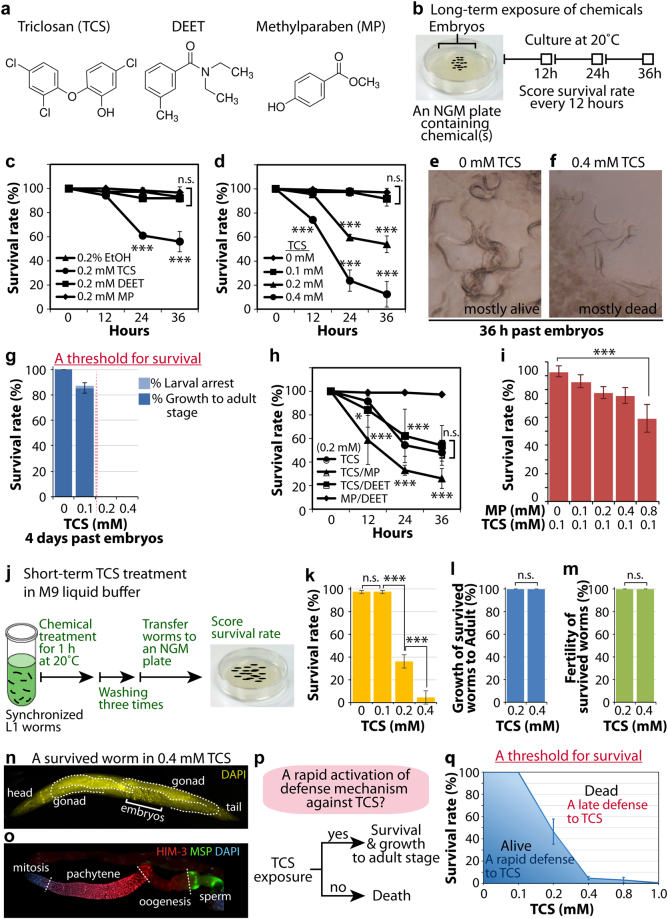
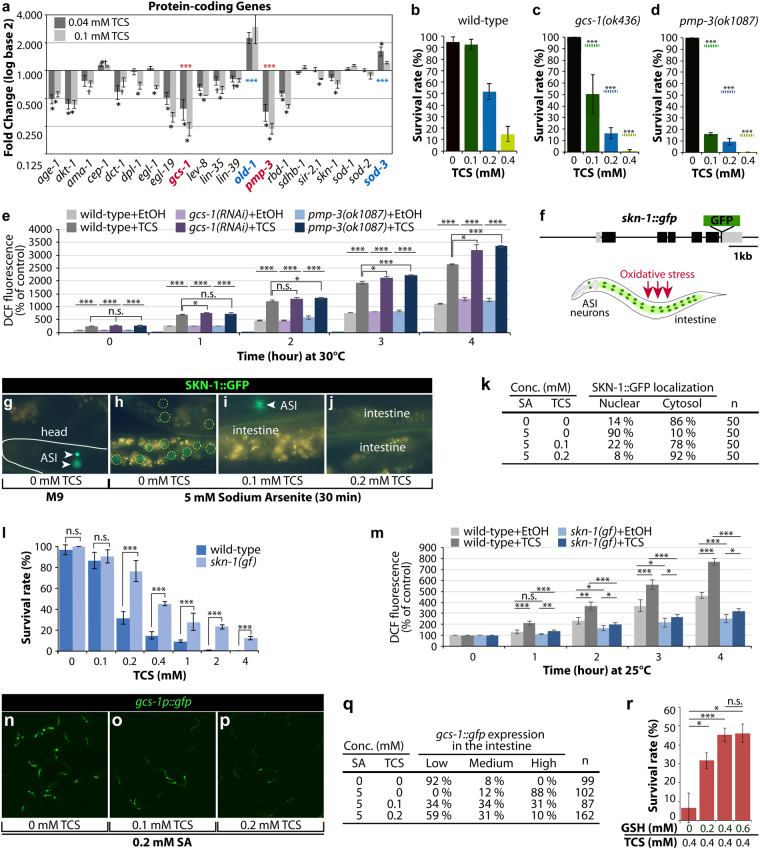
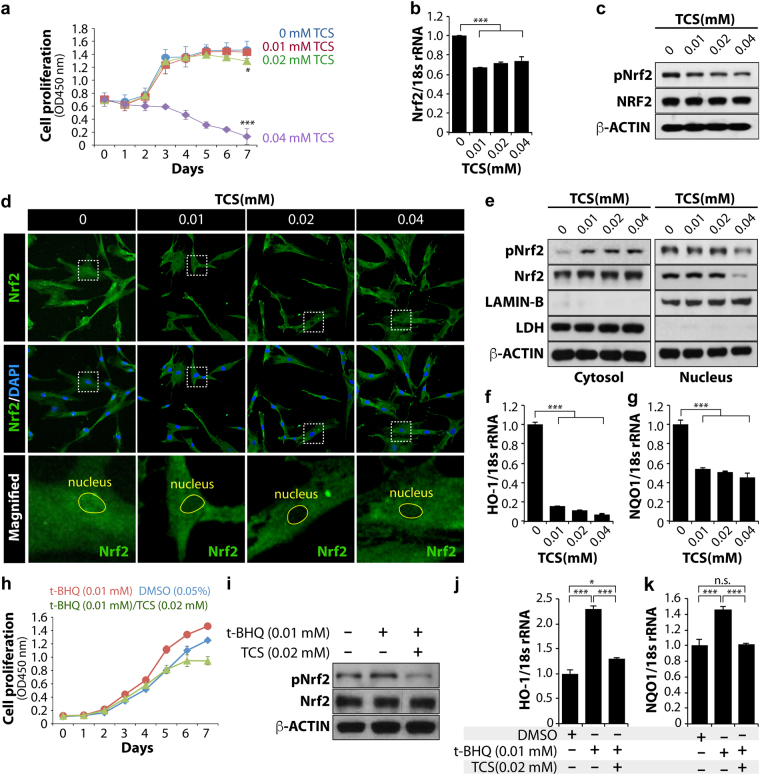
Triclosan (TCS), an antimicrobial chemical with potential endocrine-disrupting properties, may pose a risk to early embryonic development and cellular homeostasis during adulthood. Here, we show that TCS induces toxicity in both the nematode C. elegans and human mesenchymal stem cells (hMSCs) by disrupting the SKN-1/Nrf2-mediated oxidative stress response. Specifically, TCS exposure affected C. elegans survival and hMSC proliferation in a dose-dependent manner. Cellular analysis showed that TCS inhibited the nuclear localization of SKN-1/Nrf2 and the expression of its target genes, which were associated with oxidative stress response. Notably, TCS-induced toxicity was significantly reduced by either antioxidant treatment or constitutive SKN-1/Nrf2 activation. As Nrf2 is strongly associated with aging and chemoresistance, these findings will provide a novel approach to the identification of therapeutic targets and disease treatment.
三氯生(TCS)是一种具有潜在内分泌干扰特性的抗菌化学物质,可能会对早期胚胎发育和成年期的细胞内稳态造成风险。在这里,我们表明 TCS 通过破坏 SKN-1/Nrf2 介导的氧化应激反应,在秀丽隐杆线虫和人骨髓间充质干细胞(hMSC)中诱导毒性。具体来说,TCS 暴露以剂量依赖的方式影响秀丽隐杆线虫的存活和 hMSC 的增殖。细胞分析表明,TCS 抑制 SKN-1/Nrf2 的核定位和其靶基因的表达,这与氧化应激反应有关。值得注意的是,抗氧化剂处理或组成型 SKN-1/Nrf2 激活均可显著降低 TCS 诱导的毒性。由于 Nrf2 与衰老和化疗耐药性密切相关,这些发现将为鉴定治疗靶点和疾病治疗提供一种新方法。