DuPont Pioneer, 7300 NW 62nd Ave., Johnston, IA, USA.
Evogene Ltd, Saint Louis, MO, USA.
Sci Rep. 2017 Oct 3;7(1):12591. doi: 10.1038/s41598-017-12638-3.
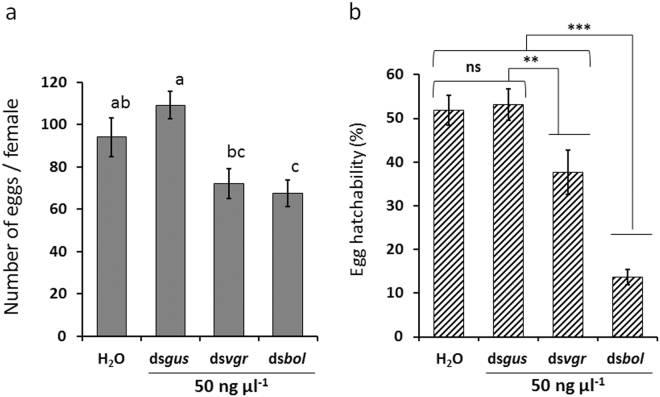
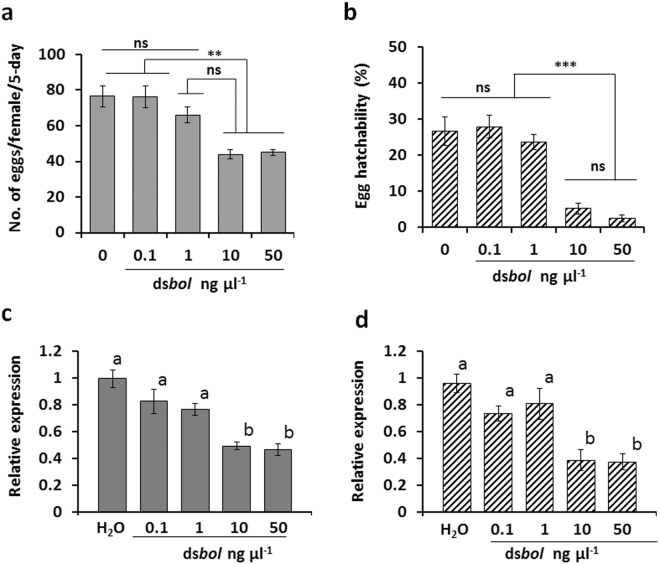
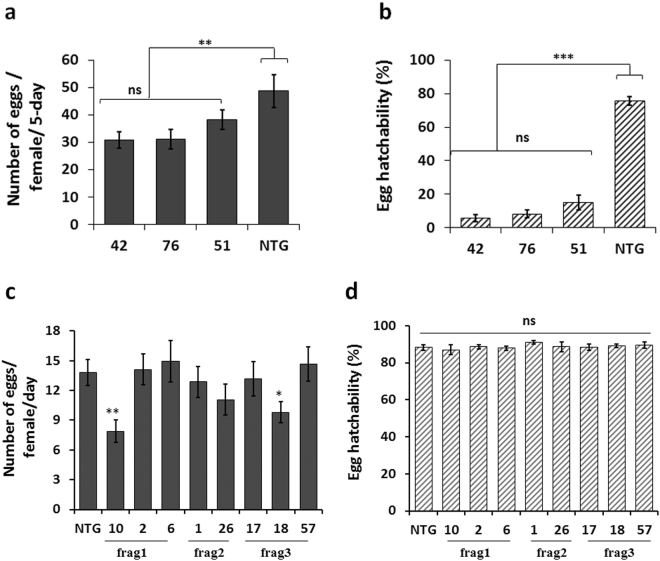
RNA interference (RNAi) in transgenic maize has recently emerged as an alternative mode of action for western corn rootworm (Diabrotica virgifera virgifera) control which can be combined with protein-based rootworm control options for improved root protection and resistance management. Currently, transgenic RNAi-based control has focused on suppression of genes that when silenced lead to larval mortality. We investigated control of western corn rootworm reproduction through RNAi by targeting two reproductive genes, dvvgr and dvbol, with the goal of reducing insect fecundity as a new tool for pest management. The results demonstrated that exposure of adult beetles, as well as larvae to dvvgr or dvbol dsRNA in artificial diet, caused reduction of fecundity. Furthermore, western corn rootworm beetles that emerged from larval feeding on transgenic maize roots expressing dvbol dsRNA also showed significant fecundity reduction. This is the first report of reduction of insect reproductive fitness through plant-mediated RNAi, demonstrating the feasibility of reproductive RNAi as a management tool for western corn rootworm.
RNA 干扰(RNAi)在转基因玉米中作为西方玉米根虫(Diabrotica virgifera virgifera)控制的替代作用模式最近出现,它可以与基于蛋白质的根虫控制选项结合使用,以提高根部保护和抗性管理。目前,基于转基因 RNAi 的控制主要集中在抑制沉默后导致幼虫死亡的基因上。我们通过靶向两个生殖基因 dvvgr 和 dvbol 来研究通过 RNAi 对西方玉米根虫繁殖的控制,目标是减少昆虫的繁殖力,作为害虫管理的新工具。结果表明,在人工饲料中暴露于成年甲虫以及幼虫中的 dvvgr 或 dvbol dsRNA 会导致繁殖力降低。此外,从喂食表达 dvbol dsRNA 的转基因玉米根的幼虫中出现的西方玉米根虫甲虫也表现出明显的繁殖力降低。这是通过植物介导的 RNAi 降低昆虫生殖适应性的第一个报告,证明了生殖 RNAi 作为西方玉米根虫管理工具的可行性。