Zhang Wanna, Ma Long, Xiao Haijun, Xie Bingtang, Smagghe Guy, Guo Yuyuan, Liang Gemei
State Key Laboratory for Biology of Plant Diseases and Insect Pests, Institute of Plant Protection, Chinese Academy of Agricultural Sciences, Beijing, 100193, China.
Tea Research Institute, Chinese Academy of Agricultural Sciences, Hangzhou, 310008, China.
PLoS One. 2016 May 18;11(5):e0155785. doi: 10.1371/journal.pone.0155785. eCollection 2016.
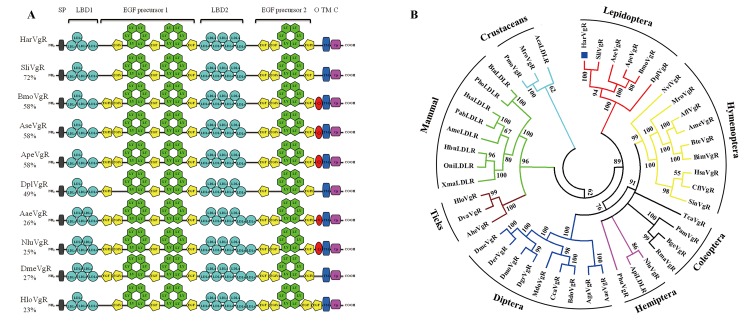
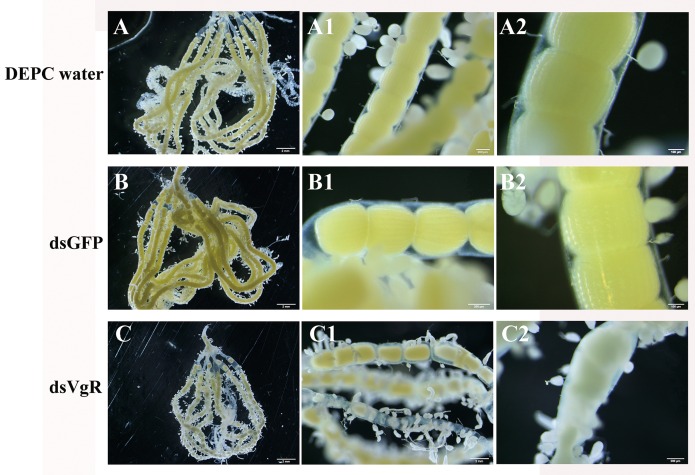
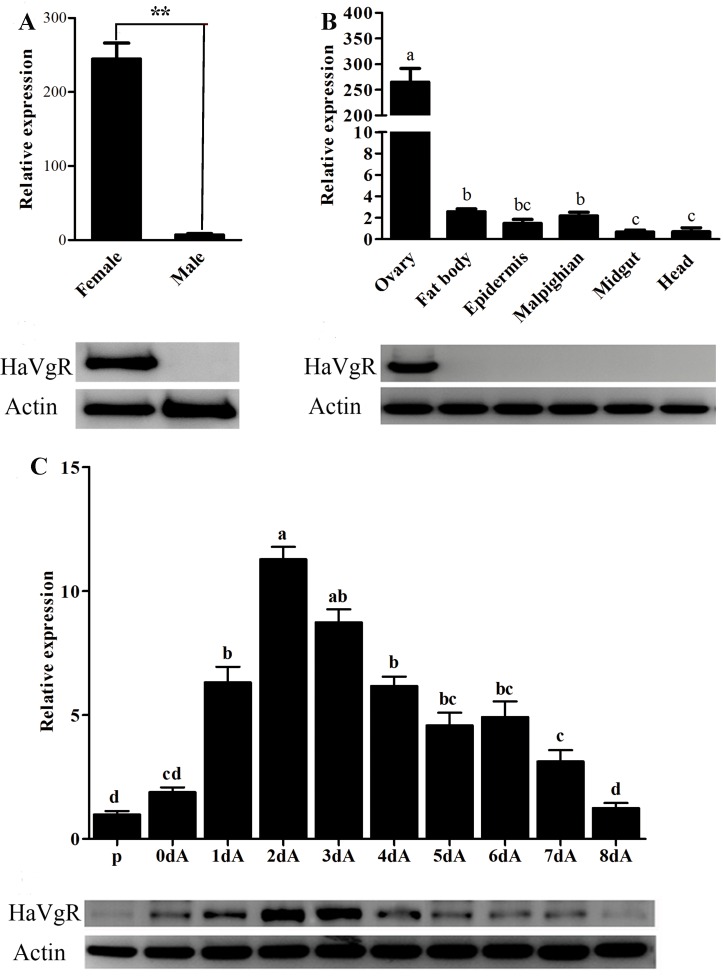
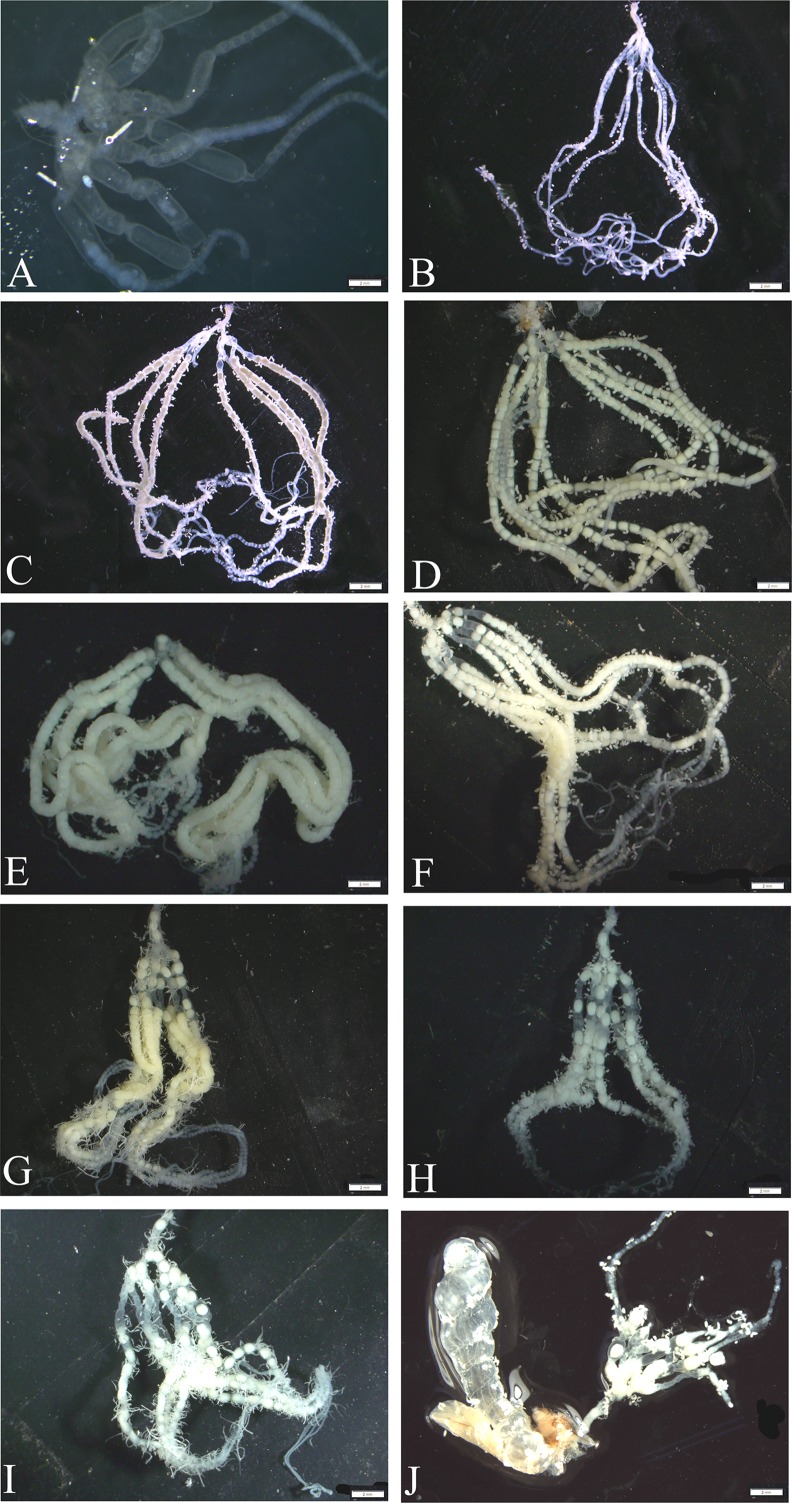
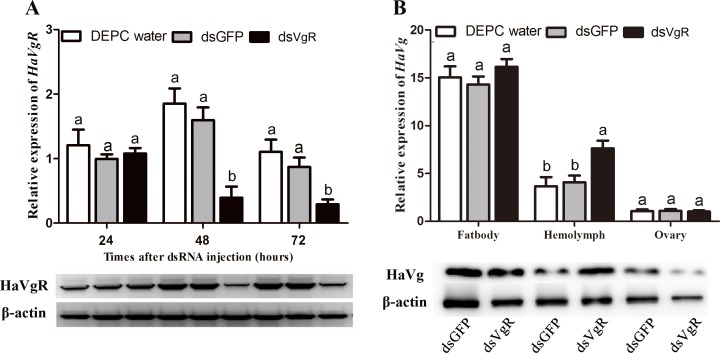
Developing oocytes accumulate plentiful yolk protein during oogenesis through receptor-mediated endocytosis. The vitellogenin receptor (VgR), belonging to the low-density lipoprotein receptor (LDLR) family, regulates the absorption of yolk protein. In this work, the full-length vitellogenin receptor (HaVgR) in the cotton bollworm Helicoverpa armigera was identified, encoding a 1817 residue protein. Sequence alignment revealed that the sequence of HaVgR contained all of the conservative structural motifs of LDLR family members, and phylogenetic analysis indicated that HaVgR had a high identity among Lepidoptera and was distinct from that of other insects. Consistent with other insects, HaVgR was specifically expressed in ovarian tissue. The developmental expression pattern showed that HaVgR was first transcribed in the newly metamorphosed female adults, reached a peak in 2-day-old adults and then declined. Western blot analysis also revealed an ovarian-specific and developing expression pattern, which was consistent with the HaVgR mRNA transcription. Moreover, RNAi-mediated HaVgR knockdown strongly reduced the VgR expression in both the mRNA and protein levels, which inhibited the yolk protein deposition in the ovaries, led to the dramatic accumulation of vitellogenin and the up-regulation of HaVg expression in hemolymph, and eventually resulted in a declined fecundity. Together, all of these findings demonstrate that HaVgR is a specific receptor in uptake and transportation of yolk protein for the maturation of oocytes and that it plays a critical role in female reproduction.
在卵子发生过程中,发育中的卵母细胞通过受体介导的内吞作用积累大量卵黄蛋白。卵黄原蛋白受体(VgR)属于低密度脂蛋白受体(LDLR)家族,可调节卵黄蛋白的吸收。在本研究中,鉴定了棉铃虫Helicoverpa armigera中的全长卵黄原蛋白受体(HaVgR),其编码一个含有1817个氨基酸残基的蛋白质。序列比对显示,HaVgR的序列包含LDLR家族成员的所有保守结构基序,系统发育分析表明,HaVgR在鳞翅目昆虫中具有高度同源性,且与其他昆虫的VgR不同。与其他昆虫一致,HaVgR在卵巢组织中特异性表达。发育表达模式表明,HaVgR在新羽化的雌性成虫中首次转录,在2日龄成虫中达到峰值,然后下降。蛋白质免疫印迹分析也显示出卵巢特异性和发育性表达模式,这与HaVgR mRNA转录一致。此外,RNA干扰介导的HaVgR基因敲低在mRNA和蛋白质水平上均显著降低了VgR的表达,抑制了卵巢中的卵黄蛋白沉积,导致卵黄原蛋白在血淋巴中大量积累以及HaVg表达上调,最终导致繁殖力下降。综上所述,所有这些发现表明,HaVgR是卵母细胞成熟过程中摄取和转运卵黄蛋白的特异性受体,并且在雌性生殖中起着关键作用。