Sorbonne Universités, UPMC Univ Paris 06, UPEC, INRA, CNRS, IRD, Institute of Ecology and Environmental Sciences of Paris, Paris, France.
Sci Rep. 2017 Oct 3;7(1):12629. doi: 10.1038/s41598-017-13015-w.
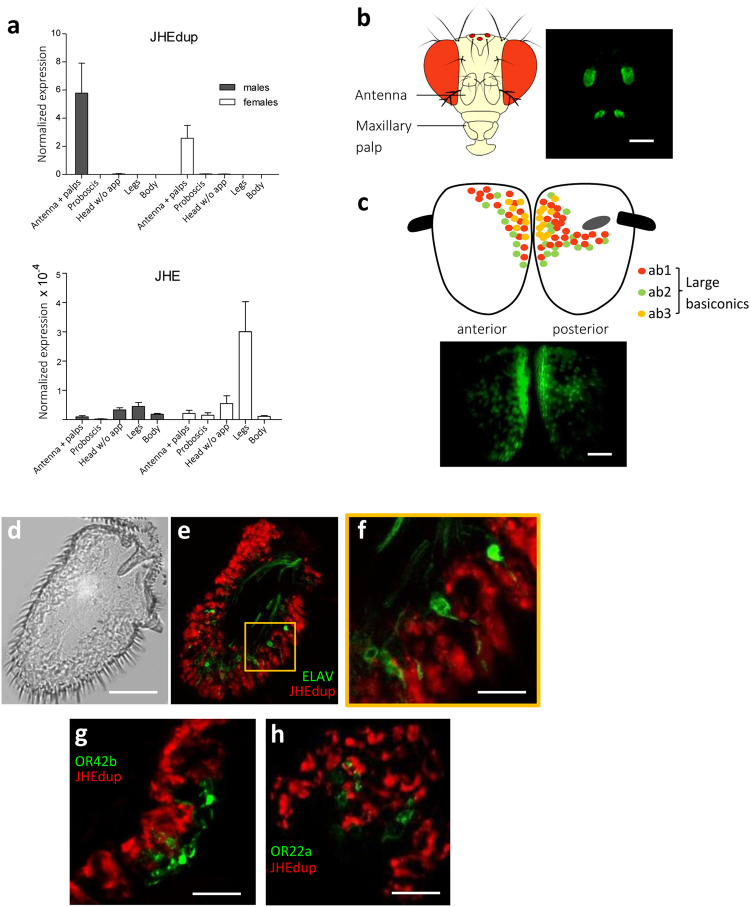
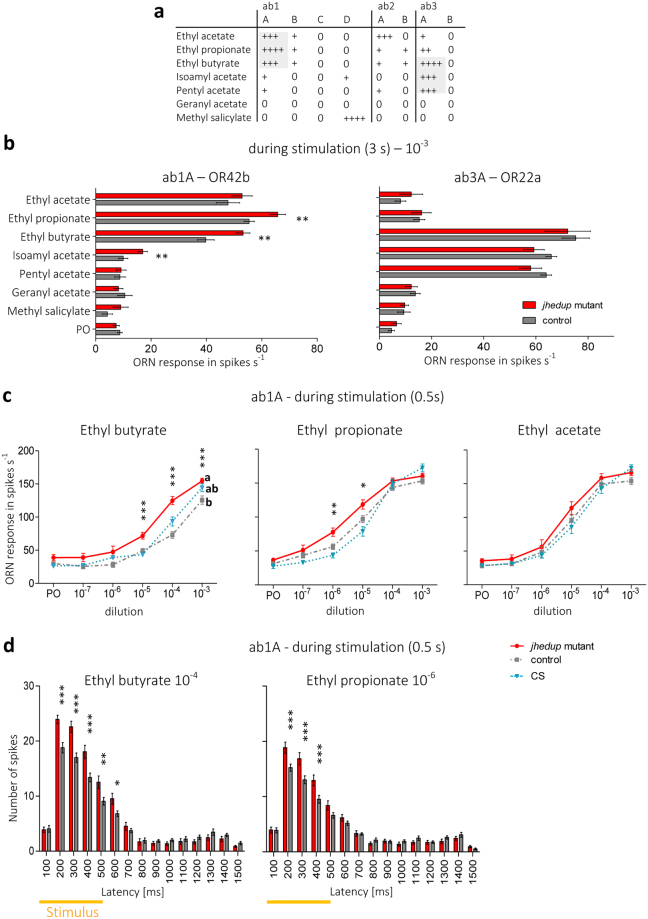
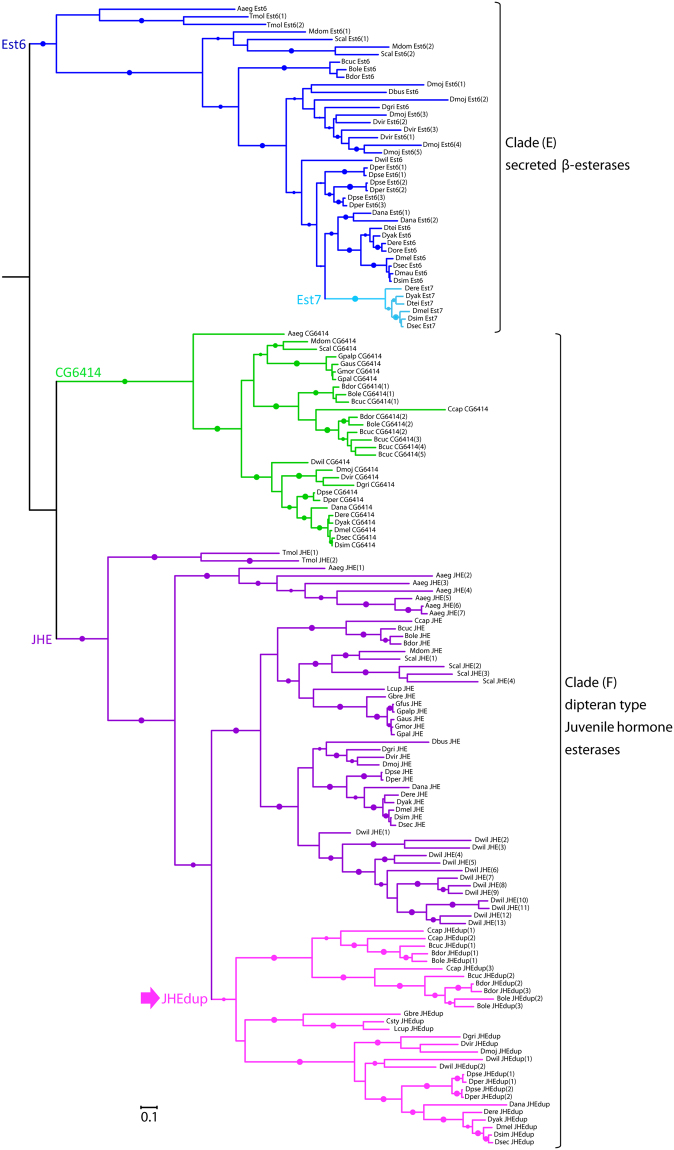
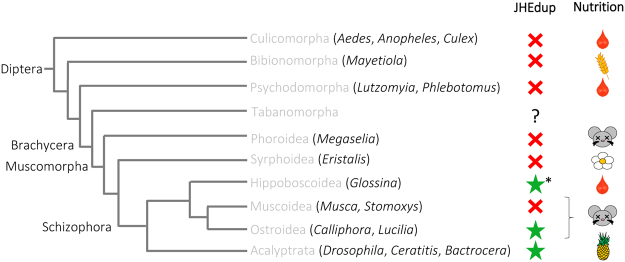
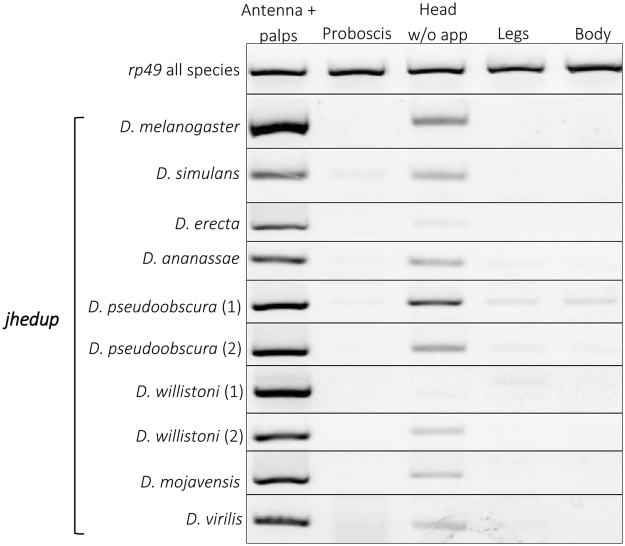
Odorant degrading enzymes (ODEs) are thought to be responsible, at least in part, for olfactory signal termination in the chemosensory system by rapid degradation of odorants in the vicinity of the receptors. A carboxylesterase, specifically expressed in Drosophila antennae, called "juvenile hormone esterase duplication (JHEdup)" has been previously reported to hydrolyse different fruit esters in vitro. Here we functionally characterize JHEdup in vivo. We show that the jhedup gene is highly expressed in large basiconic sensilla that have been reported to detect several food esters. An electrophysiological analysis demonstrates that ab1A olfactory neurons of jhedup mutant flies exhibit an increased response to certain food acetates. Furthermore, mutant flies show a higher sensitivity towards the same odorants in behavioural assays. A phylogenetic analysis reveals that jhedup arose as a duplication of the juvenile hormone esterase gene during the evolution of Diptera, most likely in the ancestor of Schizophora, and has been conserved in all the 12 sequenced Drosophila species. Jhedup exhibits also an olfactory-predominant expression pattern in other Drosophila species. Our results support the implication of JHEdup in the degradation of food odorants in D. melanogaster and propose a neofunctionalization of this enzyme as a bona fide ODE in Drosophilids.
气味降解酶(ODEs)被认为至少部分地通过受体附近气味物质的快速降解来负责嗅觉信号的终止。一种羧酸酯酶,在果蝇触角中特异性表达,称为“保幼激素酯酶重复(JHEdup)”,之前已被报道能够在体外水解不同的水果酯。在这里,我们在体内对 JHEdup 进行了功能表征。我们表明,jhedup 基因在大的锥形感器中高度表达,这些感器已被报道可以检测几种食物酯。电生理分析表明,jhedup 突变体果蝇的 ab1A 嗅觉神经元对某些食物乙酸盐的反应增强。此外,在行为测定中,突变体果蝇对相同气味的敏感性更高。系统发育分析表明,jhedup 是在双翅目昆虫的进化过程中由保幼激素酯酶基因重复产生的,很可能在 Schizophora 的祖先中产生,并且在所有 12 种测序的果蝇物种中都得到了保守。Jhedup 在其他果蝇物种中也表现出嗅觉优势表达模式。我们的研究结果支持 JHEdup 在黑腹果蝇中降解食物气味的作用,并提出了这种酶作为真正的 ODE 在果蝇中的新功能化。