Center for Integrative Genomics, Faculty of Biology and Medicine, University of Lausanne, CH-1015, Lausanne, Switzerland.
Neurobiology Section, Division of Biological Sciences, University of California San Diego, La Jolla, CA, 92093, USA.
BMC Biol. 2022 Oct 11;20(1):230. doi: 10.1186/s12915-022-01425-w.
The nose of most animals comprises multiple sensory subsystems, which are defined by the expression of different olfactory receptor families. Drosophila melanogaster antennae contain two morphologically and functionally distinct subsystems that express odorant receptors (Ors) or ionotropic receptors (Irs). Although these receptors have been thoroughly characterized in this species, the subsystem-specific expression and roles of other genes are much less well-understood.
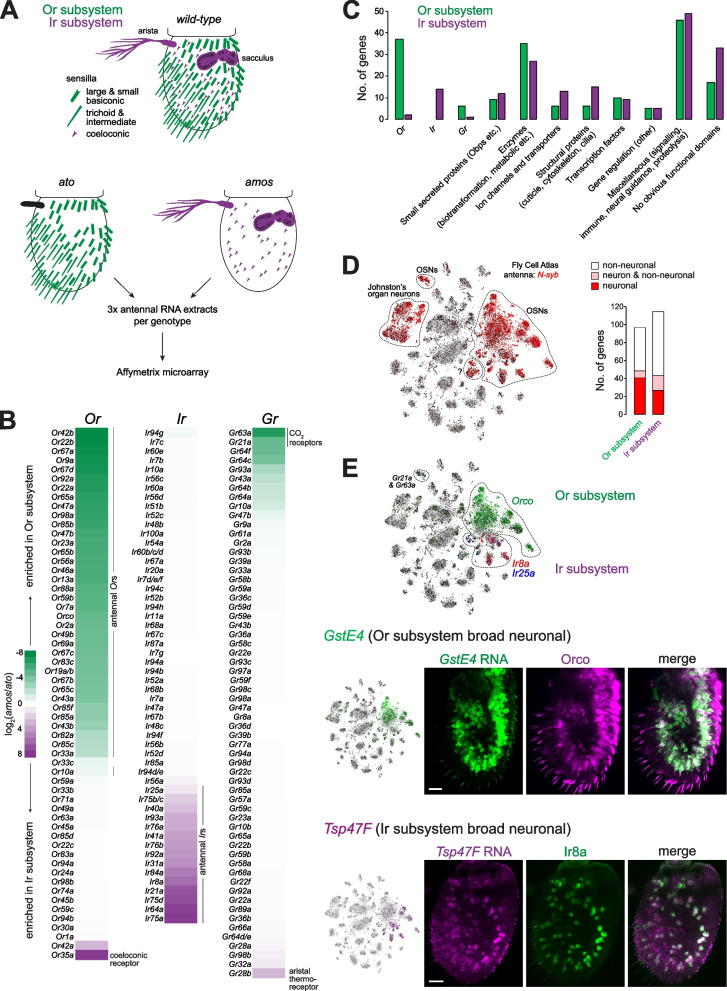
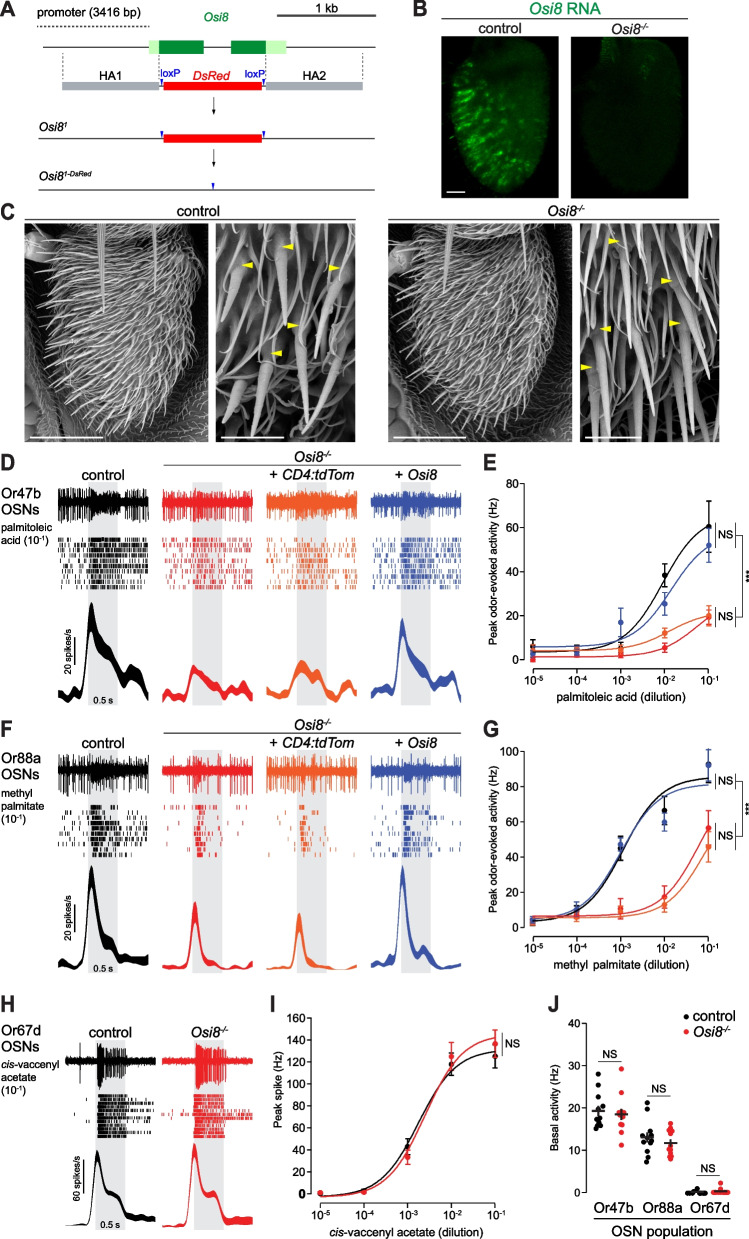
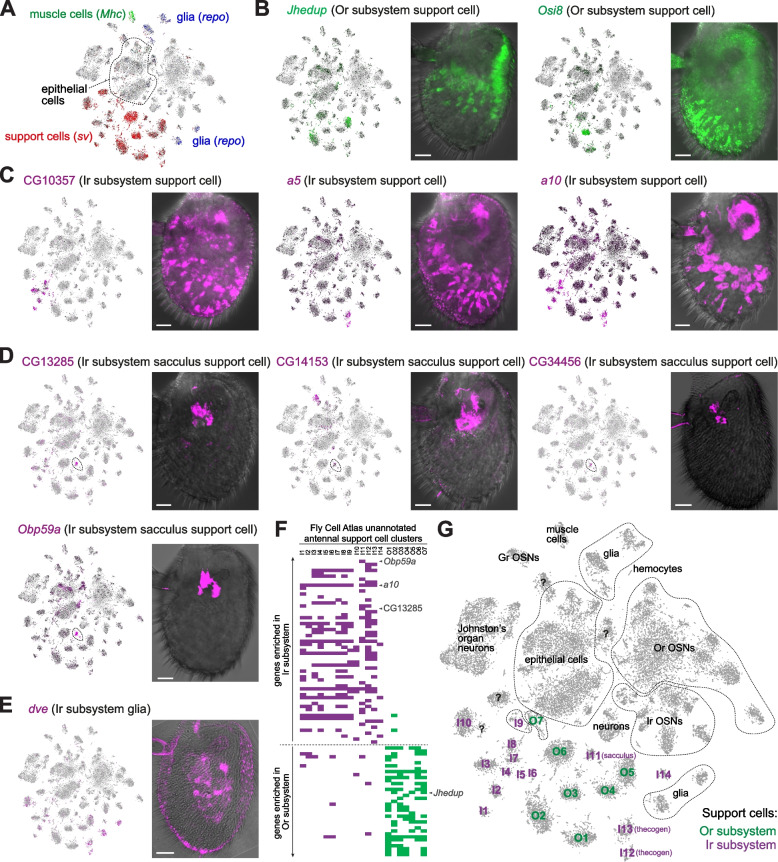
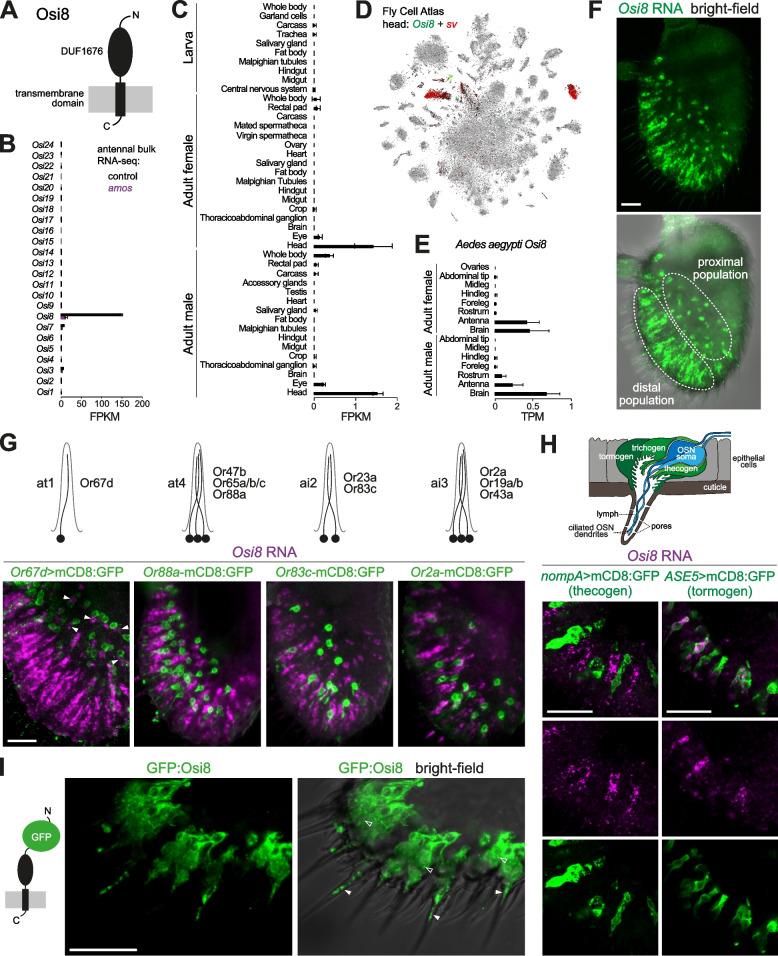
Here we generate subsystem-specific transcriptomic datasets to identify hundreds of genes, encoding diverse protein classes, that are selectively enriched in either Or or Ir subsystems. Using single-cell antennal transcriptomic data and RNA in situ hybridization, we find that most neuronal genes-other than sensory receptor genes-are broadly expressed within the subsystems. By contrast, we identify many non-neuronal genes that exhibit highly selective expression, revealing substantial molecular heterogeneity in the non-neuronal cellular components of the olfactory subsystems. We characterize one Or subsystem-specific non-neuronal molecule, Osiris 8 (Osi8), a conserved member of a large, insect-specific family of transmembrane proteins. Osi8 is expressed in the membranes of tormogen support cells of pheromone-sensing trichoid sensilla. Loss of Osi8 does not have obvious impact on trichoid sensillar development or basal neuronal activity, but abolishes high sensitivity responses to pheromone ligands.
This work identifies a new protein required for insect pheromone detection, emphasizes the importance of support cells in neuronal sensory functions, and provides a resource for future characterization of other olfactory subsystem-specific genes.
大多数动物的鼻子由多个感觉子系统组成,这些子系统是由不同的嗅觉受体家族的表达来定义的。果蝇的触角包含两个形态和功能上不同的亚系统,分别表达气味受体(Ors)或离子型受体(Irs)。尽管这些受体在这个物种中已经得到了彻底的研究,但其他基因的亚系统特异性表达和作用却知之甚少。
在这里,我们生成了亚系统特异性转录组数据集,以鉴定数百个基因,这些基因编码多种蛋白类,在 Or 或 Ir 亚系统中选择性富集。利用单细胞触角转录组数据和 RNA 原位杂交,我们发现除了感觉受体基因外,大多数神经元基因在亚系统中广泛表达。相比之下,我们鉴定出许多非神经元基因表现出高度选择性表达,揭示了嗅觉亚系统中非神经元细胞成分的显著分子异质性。我们对一个 Or 亚系统特异性的非神经元分子 Osiris 8(Osi8)进行了特征描述,它是一个保守的、昆虫特异性的跨膜蛋白大家族的成员。Osi8 在性信息素感知的毛形感器的支持细胞的膜上表达。缺失 Osi8 对毛形感器的发育或基础神经元活动没有明显影响,但消除了对性信息素配体的高敏感性反应。
这项工作鉴定了一种新的昆虫性信息素检测所必需的蛋白,强调了支持细胞在神经元感觉功能中的重要性,并为未来对其他嗅觉亚系统特异性基因的特征描述提供了资源。