Departments of Biomedical Engineering, Washington University in St. Louis, St. Louis, MO, 63130, USA.
ICCE Institute at Washington University, Washington University in St. Louis, St. Louis, MO, 63110, USA.
Sci Rep. 2017 Oct 3;7(1):12574. doi: 10.1038/s41598-017-13006-x.
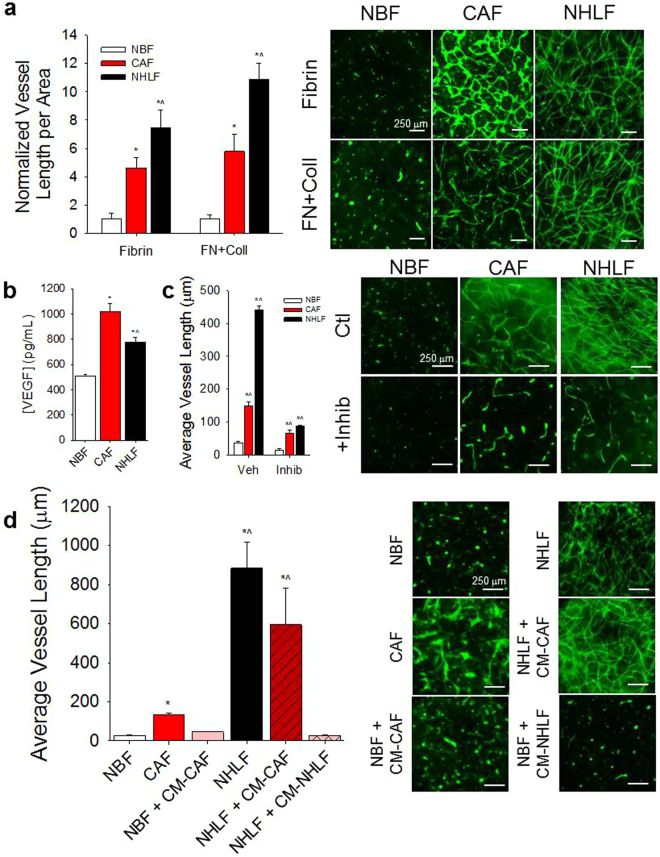
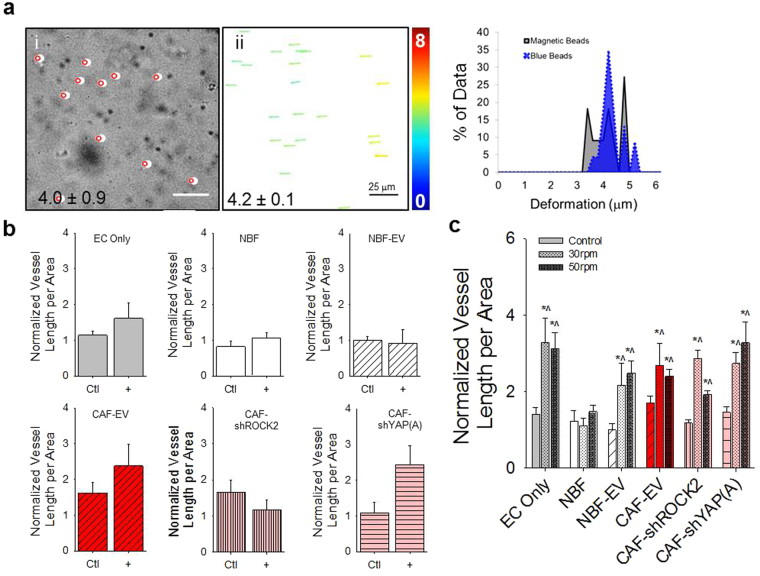
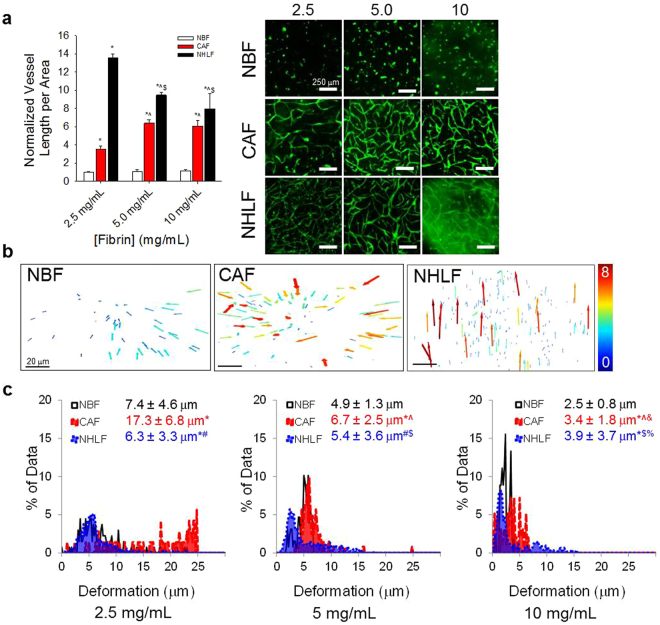
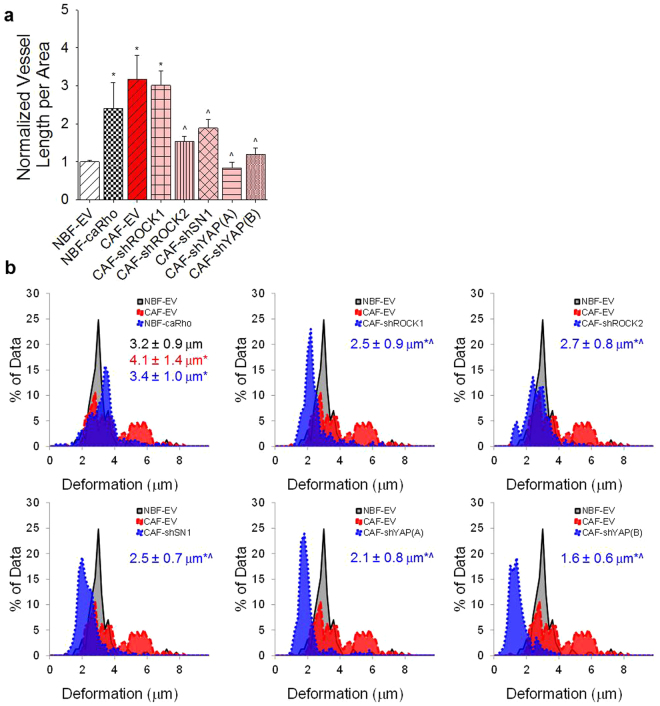
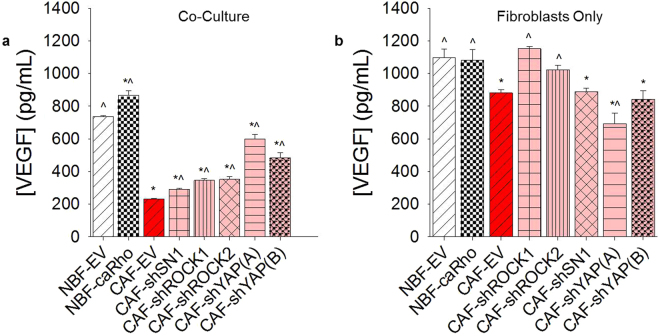
The role of cancer-associated fibroblasts (CAFs) as regulators of tumor progression, specifically vascular growth, has only recently been described. CAFs are thought to be more mechanically active but how this trait may alter the tumor microenvironment is poorly understood. We hypothesized that enhanced mechanical activity of CAFs, as regulated by the Rho/ROCK pathway, contributes to increased blood vessel growth. Using a 3D in vitro tissue model of vasculogenesis, we observed increased vascularization in the presence of breast cancer CAFs compared to normal breast fibroblasts. Further studies indicated this phenomenon was not simply a result of enhanced soluble signaling factors, including vascular endothelial growth factor (VEGF), and that CAFs generated significantly larger deformations in 3D gels compared to normal fibroblasts. Inhibition of the mechanotransductive pathways abrogated the ability of CAFs to deform the matrix and suppressed vascularization. Finally, utilizing magnetic microbeads to mechanically stimulate mechanically-inhibited CAFs showed partial rescue of vascularization. Our studies demonstrate enhanced mechanical activity of CAFs may play a crucial and previously unappreciated role in the formation of tumor-associated vasculature which could possibly offer potential novel targets in future anti-cancer therapies.
癌症相关成纤维细胞(CAFs)作为肿瘤进展的调节因子,特别是血管生长的调节因子,最近才被描述。CAFs 被认为具有更高的机械活性,但这种特性如何改变肿瘤微环境还知之甚少。我们假设 Rho/ROCK 通路调节的 CAFs 的增强的机械活性有助于增加血管生长。使用血管生成的体外 3D 组织模型,我们观察到与正常乳腺成纤维细胞相比,乳腺癌 CAFs 存在时血管生成增加。进一步的研究表明,这种现象不仅仅是增强的可溶性信号因子(包括血管内皮生长因子(VEGF))的结果,而且 CAFs 在 3D 凝胶中产生的变形明显大于正常成纤维细胞。抑制机械转导途径会削弱 CAFs 使基质变形的能力,并抑制血管生成。最后,利用磁性微珠机械刺激机械抑制的 CAFs 显示血管生成部分得到挽救。我们的研究表明,CAFs 的增强的机械活性可能在肿瘤相关血管形成中发挥关键作用,这是以前未被认识到的,这可能为未来的抗癌治疗提供潜在的新靶点。