• 文献检索
  • 文档翻译
  • 深度研究
  • 学术资讯
  • Suppr Zotero 插件Zotero 插件
  • 邀请有礼
  • 套餐&价格
  • 历史记录
应用&插件
Suppr Zotero 插件Zotero 插件浏览器插件Mac 客户端Windows 客户端微信小程序
定价
高级版会员购买积分包购买API积分包
服务
文献检索文档翻译深度研究API 文档MCP 服务
关于我们
关于 Suppr公司介绍联系我们用户协议隐私条款
关注我们

Suppr 超能文献

核心技术专利:CN118964589B侵权必究
粤ICP备2023148730 号-1Suppr @ 2026

文献检索

告别复杂PubMed语法,用中文像聊天一样搜索,搜遍4000万医学文献。AI智能推荐,让科研检索更轻松。

立即免费搜索

文件翻译

保留排版,准确专业,支持PDF/Word/PPT等文件格式,支持 12+语言互译。

免费翻译文档

深度研究

AI帮你快速写综述,25分钟生成高质量综述,智能提取关键信息,辅助科研写作。

立即免费体验

皮肤之下的社交媒体:急性应激后使用脸书会损害皮质醇恢复。

Social Media under the Skin: Facebook Use after Acute Stress Impairs Cortisol Recovery.

作者信息

Rus Holly M, Tiemensma Jitske

机构信息

Psychoneuroendocrinology Lab, Psychological Sciences, University of California, MercedMerced, CA, United States.

出版信息

Front Psychol. 2017 Sep 19;8:1609. doi: 10.3389/fpsyg.2017.01609. eCollection 2017.

DOI:10.3389/fpsyg.2017.01609
PMID:28974938
原文链接:https://pmc.ncbi.nlm.nih.gov/articles/PMC5610684/
Abstract

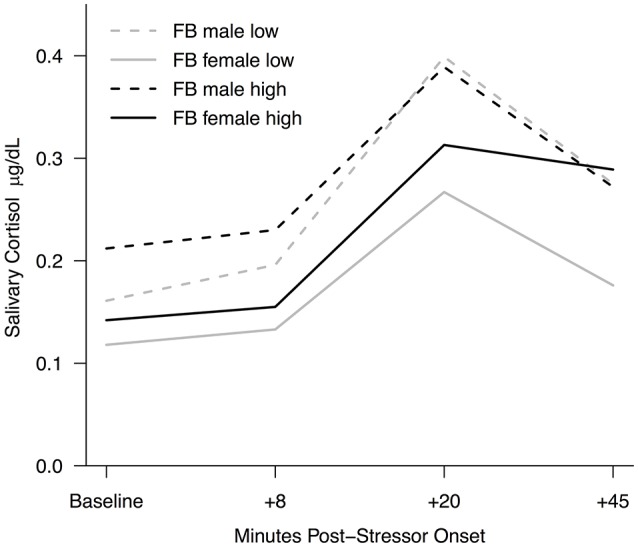
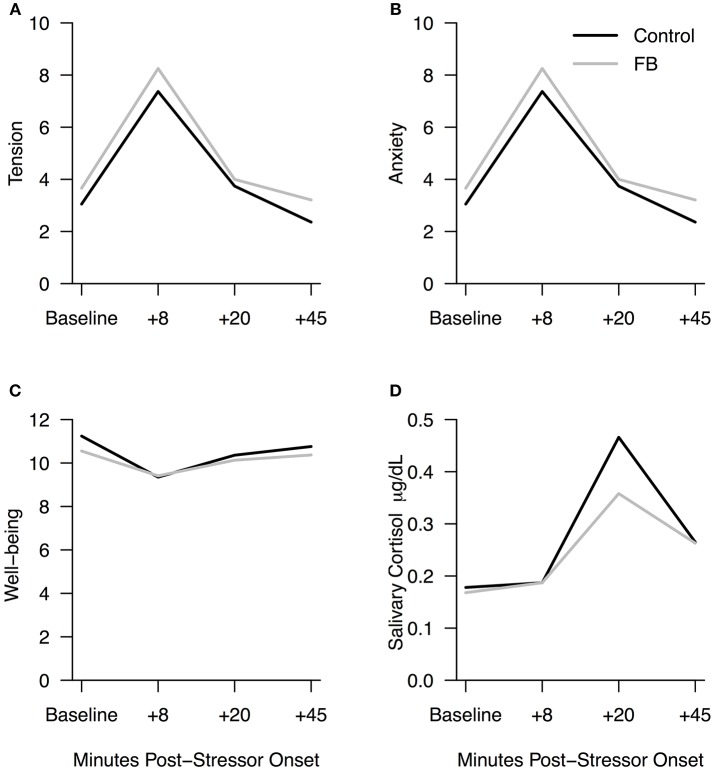
Social media's influence on stress remains largely unknown. Conflicting research suggests that Facebook use may both enhance undermine psychosocial constructs related to well-being. Using novel experimental methods, this study examined the impact of social media use on stress recovery. Facebook users ( = 92, 49 males, mean age 19.55 = 1.63) were randomly assigned to use their own Facebook profile or quietly read after experiencing an acute social stressor. All participants showed significant changes in subjective and physiological stress markers during recovery. Participants who used Facebook experienced greater sustained cortisol concentration ( < 0.05) when controlling for gender and emotional investment in the website compared to controls. Results suggest that social media use may delay or impair recovery after experiencing an acute social stressor. This novel study incorporated objective physiological markers with subjective psychosocial measures to show that Facebook use may negatively impact well-being.

摘要

社交媒体对压力的影响在很大程度上仍然未知。相互矛盾的研究表明,使用脸书可能既会增强也会破坏与幸福感相关的社会心理结构。本研究采用新颖的实验方法,考察了社交媒体使用对压力恢复的影响。脸书用户(n = 92,49名男性,平均年龄19.55岁±1.63岁)在经历急性社会应激源后,被随机分配使用自己的脸书个人资料或安静阅读。所有参与者在恢复过程中主观和生理压力指标均有显著变化。与对照组相比,在控制了性别和对网站的情感投入后,使用脸书的参与者皮质醇浓度持续升高(p < 0.05)。结果表明,社交媒体使用可能会延迟或损害急性社会应激源后的恢复。这项新颖的研究将客观生理指标与主观社会心理测量相结合,表明使用脸书可能会对幸福感产生负面影响。
https://cdn.ncbi.nlm.nih.gov/pmc/blobs/d4ac/5610684/2caa52895380/fpsyg-08-01609-g0003.jpg
https://cdn.ncbi.nlm.nih.gov/pmc/blobs/d4ac/5610684/d5c9ba48a1ed/fpsyg-08-01609-g0001.jpg
https://cdn.ncbi.nlm.nih.gov/pmc/blobs/d4ac/5610684/7d3ec96654cf/fpsyg-08-01609-g0002.jpg
https://cdn.ncbi.nlm.nih.gov/pmc/blobs/d4ac/5610684/2caa52895380/fpsyg-08-01609-g0003.jpg
https://cdn.ncbi.nlm.nih.gov/pmc/blobs/d4ac/5610684/d5c9ba48a1ed/fpsyg-08-01609-g0001.jpg
https://cdn.ncbi.nlm.nih.gov/pmc/blobs/d4ac/5610684/7d3ec96654cf/fpsyg-08-01609-g0002.jpg
https://cdn.ncbi.nlm.nih.gov/pmc/blobs/d4ac/5610684/2caa52895380/fpsyg-08-01609-g0003.jpg

相似文献

1
Social Media under the Skin: Facebook Use after Acute Stress Impairs Cortisol Recovery.皮肤之下的社交媒体:急性应激后使用脸书会损害皮质醇恢复。
Front Psychol. 2017 Sep 19;8:1609. doi: 10.3389/fpsyg.2017.01609. eCollection 2017.
2
Social media as a shield: Facebook buffers acute stress.社交媒体作为一种保护:脸书可缓冲急性压力。
Physiol Behav. 2018 Mar 1;185:46-54. doi: 10.1016/j.physbeh.2017.12.021. Epub 2017 Dec 19.
3
Social media use following exposure to an acute stressor facilitates recovery from the stress response.暴露于急性应激源后使用社交媒体有助于从应激反应中恢复。
Physiol Behav. 2020 Sep 1;223:113012. doi: 10.1016/j.physbeh.2020.113012. Epub 2020 Jun 10.
4
Facebook behaviors associated with diurnal cortisol in adolescents: Is befriending stressful?青少年中与昼夜皮质醇相关的Facebook行为:结交朋友会带来压力吗?
Psychoneuroendocrinology. 2016 Jan;63:238-46. doi: 10.1016/j.psyneuen.2015.10.005. Epub 2015 Oct 9.
5
The burden of online friends: the effects of giving up Facebook on stress and well-being.线上社交好友的负担:停用脸书对压力和幸福感的影响。
J Soc Psychol. 2018;158(4):496-507. doi: 10.1080/00224545.2018.1453467. Epub 2018 Apr 9.
6
Cortisol and Subjective Stress Responses to Acute Psychosocial Stress in Fibromyalgia Patients and Control Participants.纤维肌痛症患者和对照参与者在急性心理社会应激下的皮质醇和主观应激反应。
Psychosom Med. 2018 Apr;80(3):317-326. doi: 10.1097/PSY.0000000000000551.
7
Help-Seeking on Facebook Versus More Traditional Sources of Help: Cross-Sectional Survey of Military Veterans.在脸书上寻求帮助与更传统的求助途径:退伍军人的横断面调查
J Med Internet Res. 2018 Feb 26;20(2):e62. doi: 10.2196/jmir.9007.
8
Social comparisons on social media: the impact of Facebook on young women's body image concerns and mood.社交媒体上的社会比较:脸书对年轻女性身体形象担忧和情绪的影响。
Body Image. 2015 Mar;13:38-45. doi: 10.1016/j.bodyim.2014.12.002. Epub 2015 Jan 20.
9
Trier Social Stress Test in vivo and in virtual reality: Dissociation of response domains.体内和虚拟现实中的特里尔社会应激测试:反应域的分离
Int J Psychophysiol. 2016 Dec;110:47-55. doi: 10.1016/j.ijpsycho.2016.10.008. Epub 2016 Oct 12.
10
Cardiac Patients' Experiences and Perceptions of Social Media: Mixed-Methods Study.心脏病患者对社交媒体的体验与认知:混合方法研究
J Med Internet Res. 2017 Sep 15;19(9):e323. doi: 10.2196/jmir.8081.

引用本文的文献

1
The Impact of Social Media & Technology on Child and Adolescent Mental Health.社交媒体与技术对儿童及青少年心理健康的影响
J Psychiatry Psychiatr Disord. 2025;9(2):111-130. Epub 2025 Apr 16.
2
A Comparative Study of Short-Term Social Media Use with Face-to-Face Interaction in Adolescence.青少年短期社交媒体使用与面对面互动的比较研究。
Children (Basel). 2025 Apr 3;12(4):460. doi: 10.3390/children12040460.
3
Social media does not elicit a physiological stress response as measured by heart rate and salivary cortisol over 20-minute sessions of cell phone use.

本文引用的文献

1
Using computerized text analysis to assess communication within an Italian type 1 diabetes Facebook group.利用计算机文本分析评估意大利1型糖尿病脸书群组内的交流情况。
Health Psychol Open. 2015 Nov 19;2(2):2055102915615338. doi: 10.1177/2055102915615338. eCollection 2015 Jul.
2
Online social integration is associated with reduced mortality risk.在线社交融入与降低死亡风险相关。
Proc Natl Acad Sci U S A. 2016 Nov 15;113(46):12980-12984. doi: 10.1073/pnas.1605554113. Epub 2016 Oct 31.
3
Giving support to others reduces sympathetic nervous system-related responses to stress.
社交媒体并不会在使用手机 20 分钟的过程中,像通过心率和唾液皮质醇测量那样引起生理应激反应。
PLoS One. 2024 Apr 3;19(4):e0298553. doi: 10.1371/journal.pone.0298553. eCollection 2024.
4
Negative psychological and physiological effects of social networking site use: The example of Facebook.使用社交网站的负面心理和生理影响:以脸书为例。
Front Psychol. 2023 Aug 3;14:1141663. doi: 10.3389/fpsyg.2023.1141663. eCollection 2023.
5
Social-networks use as adaptive or maladaptive strategy for coping with stress.社交网络作为应对压力的适应或不适应策略的使用。
Sci Rep. 2023 Jul 23;13(1):11895. doi: 10.1038/s41598-023-39042-4.
6
Alpha-Adrenergic Mechanisms in the Cardiovascular Hyperreactivity to Norepinephrine-Infusion in Essential Hypertension.原发性高血压患者对去甲肾上腺素输注引起心血管反应性增强与肾上腺素能机制有关。
Front Endocrinol (Lausanne). 2022 Jul 22;13:824616. doi: 10.3389/fendo.2022.824616. eCollection 2022.
7
From Wellbeing to Social Media and Back: A Multi-Method Approach to Assessing the Bi-Directional Relationship Between Wellbeing and Social Media Use.从幸福到社交媒体,再回归幸福:一种评估幸福与社交媒体使用之间双向关系的多方法途径。
Front Psychol. 2021 Dec 24;12:789302. doi: 10.3389/fpsyg.2021.789302. eCollection 2021.
8
An exploratory study of clinical and physiological correlates of problematic social media use in adolescents.青少年社交媒体使用问题的临床和生理相关性的探索性研究。
Psychiatry Res. 2021 Aug;302:114020. doi: 10.1016/j.psychres.2021.114020. Epub 2021 May 19.
9
Online peer to peer support: Qualitative analysis of UK and US open mental health Facebook groups.在线点对点支持:对英国和美国开放心理健康Facebook群组的定性分析。
Digit Health. 2020 Dec 10;6:2055207620979209. doi: 10.1177/2055207620979209. eCollection 2020 Jan-Dec.
10
Where it Hurts the Most: Peer Interactions on Social Media and in Person are Differentially Associated with Emotional Reactivity and Sustained Affect Among Adolescent Girls.最痛之处:社交媒体和现实生活中的同伴互动与青少年女孩的情绪反应性和持续情绪呈不同关联。
Res Child Adolesc Psychopathol. 2021 Feb;49(2):155-167. doi: 10.1007/s10802-020-00725-5. Epub 2020 Nov 27.
支持他人可减少与交感神经系统相关的应激反应。
Psychophysiology. 2016 Apr;53(4):427-35. doi: 10.1111/psyp.12578. Epub 2015 Nov 17.
4
Facebook behaviors associated with diurnal cortisol in adolescents: Is befriending stressful?青少年中与昼夜皮质醇相关的Facebook行为:结交朋友会带来压力吗?
Psychoneuroendocrinology. 2016 Jan;63:238-46. doi: 10.1016/j.psyneuen.2015.10.005. Epub 2015 Oct 9.
5
Passive Facebook usage undermines affective well-being: Experimental and longitudinal evidence.被动使用 Facebook 会损害情感幸福感:实验和纵向证据。
J Exp Psychol Gen. 2015 Apr;144(2):480-8. doi: 10.1037/xge0000057. Epub 2015 Feb 23.
6
Self-compassion training modulates alpha-amylase, heart rate variability, and subjective responses to social evaluative threat in women.自我同情训练调节女性唾液淀粉酶、心率变异性和对社会评价性威胁的主观反应。
Psychoneuroendocrinology. 2014 Apr;42:49-58. doi: 10.1016/j.psyneuen.2013.12.018. Epub 2014 Jan 7.
7
Can Facebook use induce well-being?脸书(Facebook)能促进幸福感吗?
Cyberpsychol Behav Soc Netw. 2013 Sep;16(9):674-8. doi: 10.1089/cyber.2012.0301.
8
Facebook use predicts declines in subjective well-being in young adults.脸书的使用预测年轻人主观幸福感的下降。
PLoS One. 2013 Aug 14;8(8):e69841. doi: 10.1371/journal.pone.0069841. eCollection 2013.
9
Facebook friends with (health) benefits? Exploring social network site use and perceptions of social support, stress, and well-being.Facebook 好友带来的(健康)益处?探索社交网站的使用以及对社会支持、压力和幸福感的认知。
Cyberpsychol Behav Soc Netw. 2013 Oct;16(10):721-7. doi: 10.1089/cyber.2012.0521. Epub 2013 Jun 21.
10
Sharing, liking, commenting, and distressed? The pathway between Facebook interaction and psychological distress.分享、点赞、评论和苦恼?Facebook 互动和心理困扰之间的途径。
Cyberpsychol Behav Soc Netw. 2013 Oct;16(10):728-34. doi: 10.1089/cyber.2012.0272. Epub 2013 Jun 7.