Apostolou Panagiotis, Ntanovasilis Dimitrios-Athanasios, Papasotiriou Ioannis
Research Genetic Cancer Centre S.A., Florina, Greece.
J Biol Res (Thessalon). 2017 Sep 25;24:11. doi: 10.1186/s40709-017-0068-9. eCollection 2017 Dec.
Minimizing the effects of transportation on the properties of biological material is a major challenge for the scientific community. The viability of cells is important in cases where their study is urgent for evaluation of treatment response or for the study of cancer progression. Circulating tumor cells (CTCs) constitute a cell subpopulation with great importance for oncologists, because of their prognostic value. Detection and isolation of CTCs from blood samples is a routine activity in many laboratories, but concerns exist with regard to the maintenance of the cells during transportation. In this study, experiments were conducted to determine the stability of gene and protein expression in CTCs over a period of 96 h.
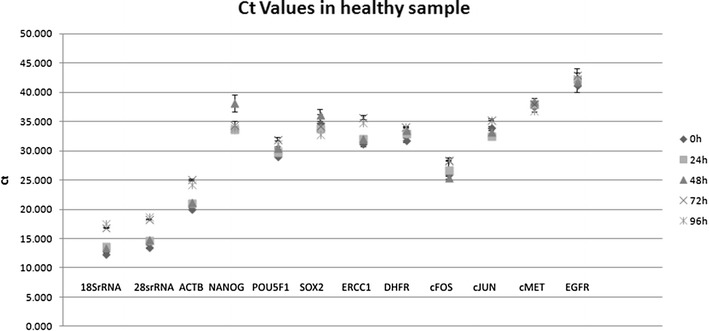
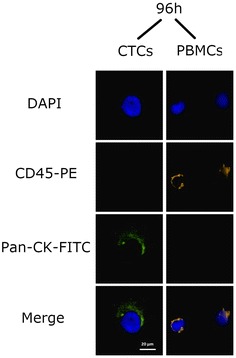
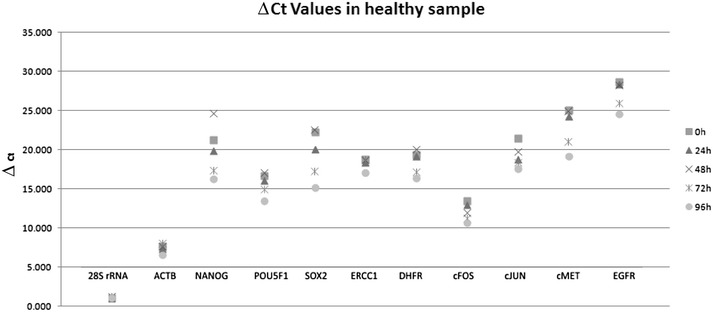
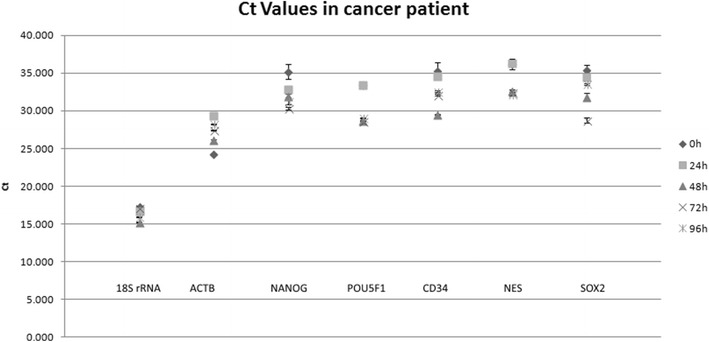
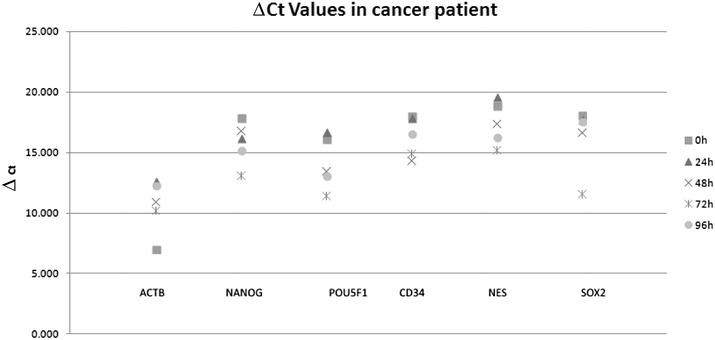
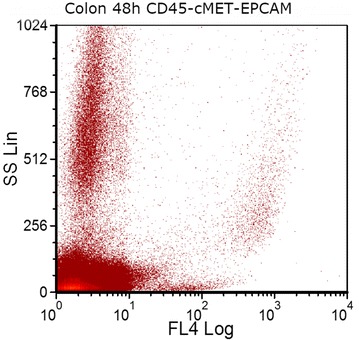
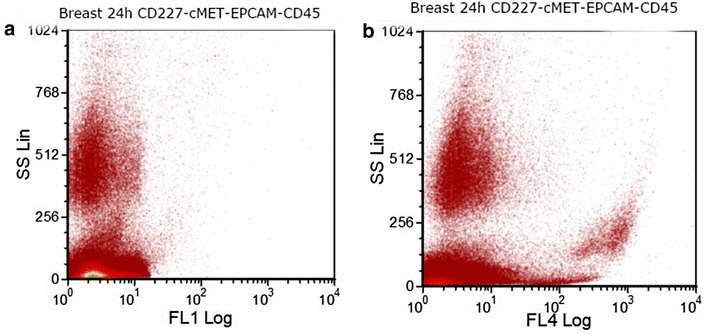
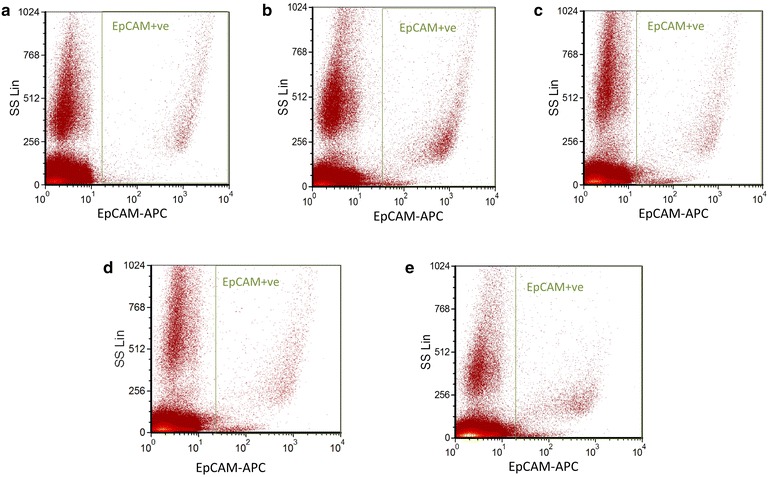
Blood samples collected from healthy individuals and patients with cancer were each divided into five aliquots, which were stored at 2-8 °C and analyzed after 0, 24, 48, 72 and 96 h of storage. CTCs from patients and CD45-negative cells from healthy individuals were isolated each day using enrichment protocols, and qPCR was performed to determine expression levels of genes encoding specific biological markers. In addition, cells from breast and colon cancer cell lines were spiked into blood samples from healthy individuals, and these samples were stored and analyzed over a period of 96 h by PCR and by flow cytometry. The markers that were studied included housekeeping genes and genes associated with the response to chemotherapy, as well as genes encoding transcription factors. The results demonstrated that the expression profiles of specific genes and proteins in CTCs were not significantly affected by 72 h of storage. After 96 h of storage, expression of some genes was altered.
The transportation of blood at low temperature (2-8 °C) in the presence of the anticoagulant EDTA can protect CTCs from alteration of gene and protein expression for at least 72 h. Furthermore, under these conditions, CTCs can be detected and isolated 96 h after blood collection.
将运输对生物材料特性的影响降至最低是科学界面临的一项重大挑战。在急需通过细胞研究来评估治疗反应或研究癌症进展的情况下,细胞的活力至关重要。循环肿瘤细胞(CTC)对肿瘤学家来说是一个非常重要的细胞亚群,因为它们具有预后价值。从血样中检测和分离CTC是许多实验室的常规操作,但在运输过程中细胞的保存存在问题。在本研究中,进行了实验以确定CTC中基因和蛋白质表达在96小时内的稳定性。
从健康个体和癌症患者采集的血样均分成五等份,保存在2-8°C,分别在保存0、24、48、72和96小时后进行分析。每天使用富集方案从患者中分离CTC以及从健康个体中分离CD45阴性细胞,并进行qPCR以确定编码特定生物标志物的基因的表达水平。此外,将来自乳腺癌和结肠癌细胞系的细胞加入到健康个体的血样中,这些样品在96小时内通过PCR和流式细胞术进行保存和分析。所研究的标志物包括管家基因、与化疗反应相关的基因以及编码转录因子的基因。结果表明,72小时的保存对CTC中特定基因和蛋白质的表达谱没有显著影响。保存96小时后,一些基因的表达发生了改变。
在抗凝剂乙二胺四乙酸(EDTA)存在的情况下低温(2-8°C)运输血液可保护CTC的基因和蛋白质表达至少72小时不发生改变。此外,在这些条件下,采血96小时后仍可检测和分离CTC。