Yu Haibing, Zhang Hongyu, Chu Zhigang, Ruan Qiongfang, Chen Xueru, Kong Danli, Huang Xiaodong, Li Huawen, Tang Huanwen, Wu Hongjin, Wang Yifei, Xie Weiguo, Ding Yuanling, Yao Paul
School of Public Health, Guangdong Medical University, Dongguan 523808, PR China.
Department of Hematology, Peking University Shenzhen Hospital, Shenzhen 518036, PR China.
Oncotarget. 2017 Jun 27;8(37):61646-61661. doi: 10.18632/oncotarget.18661. eCollection 2017 Sep 22.
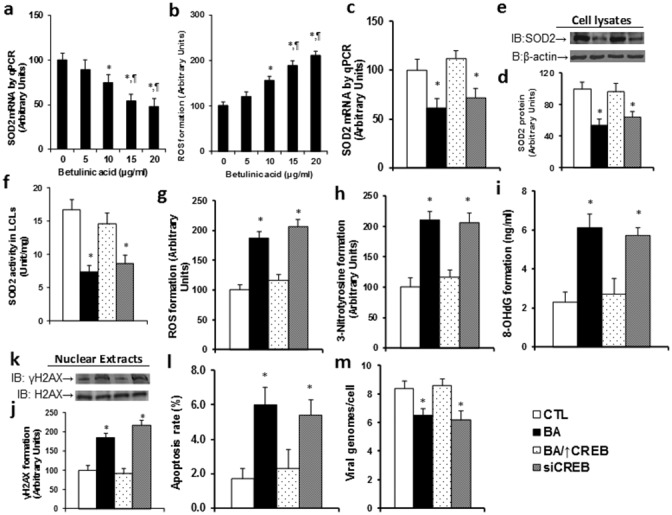
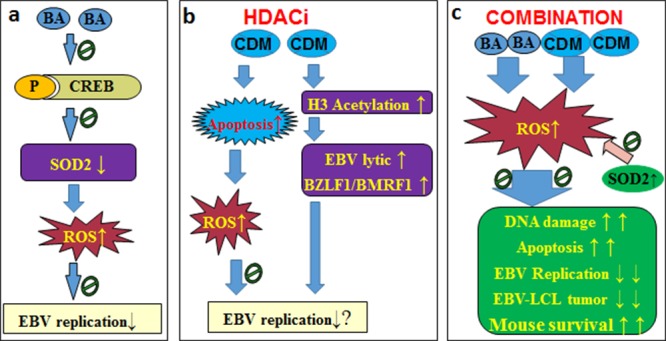
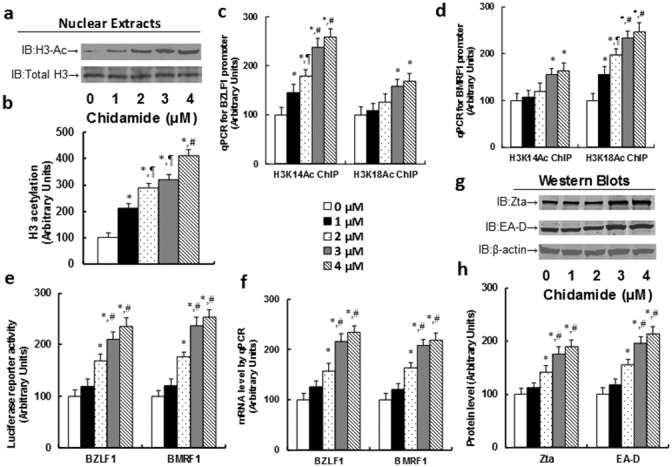
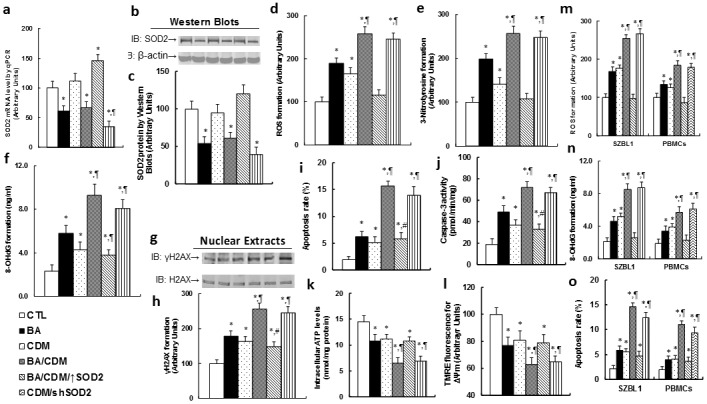
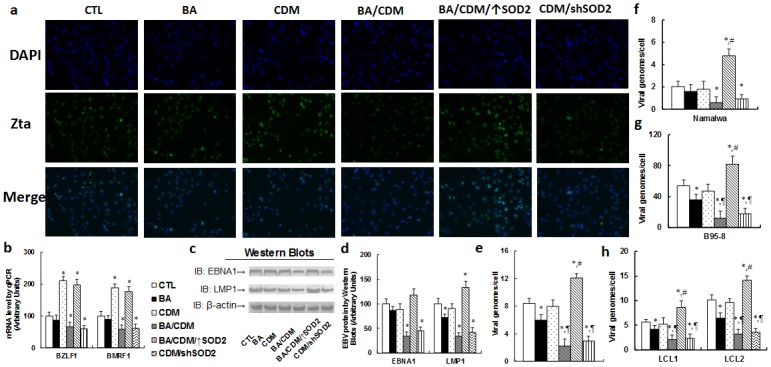
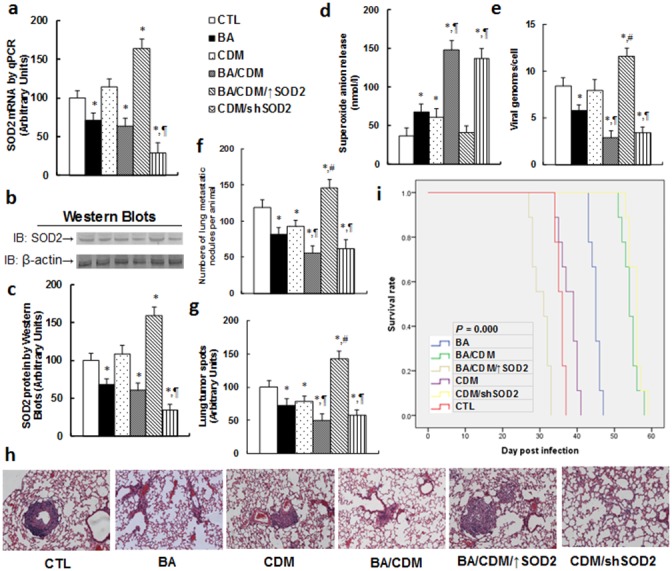
Epstein-Barr virus (EBV) has widely infected more than 90% of human populations. Currently, there is no efficient way to remove the virus because the EBV carriers are usually in a latent stage that allows them to escape the immune system and common antiviral drugs. In the effort to develop an efficient strategy for the removal of the EBV virus, we have shown that betulinic acid (BA) slightly suppresses EBV replication through SOD2 suppression with subsequent reactive oxygen species (ROS) generation and DNA damage in EBV-transformed LCL (lymphoblastoid cell line) cells. Chidamide (CDM, CS055), a novel histone deacetylase inhibitor (HDACi), could significantly switch EBV from the latent stage to the lytic stage with increased gene expression of BZLF1 and BMRF1, but has a small effect on EBV replication due to the suppression effect of CDM-mediated ROS generation. Interestingly, a combination of BA and CDM synergistically inhibits EBV replication with ROS over-generation and subsequent DNA damage and apoptosis. Overexpression of SOD2 diminishes this effect, while SOD2 knockdown mimics this effect. An xenograft tumor development study with the tail vein injection of EBV-transformed LCL cells in nude mice proves that the combination of BA and CDM synergistically increases superoxide anion release in tumor tissues and suppresses EBV replication and tumor growth, and significantly prolongs mouse survival. We conclude that the combination of BA and CDM could be an efficient strategy for clinical EBV removal.
爱泼斯坦-巴尔病毒(EBV)已广泛感染超过90%的人类。目前,尚无有效的方法清除该病毒,因为EBV携带者通常处于潜伏阶段,这使得病毒能够逃避免疫系统和常见的抗病毒药物。为了开发一种有效的清除EBV病毒的策略,我们发现桦木酸(BA)通过抑制超氧化物歧化酶2(SOD2),随后在EBV转化的淋巴母细胞系(LCL)细胞中产生活性氧(ROS)和DNA损伤,从而轻微抑制EBV复制。西达本胺(CDM,CS055)是一种新型组蛋白去乙酰化酶抑制剂(HDACi),它可以显著地使EBV从潜伏阶段转变为裂解阶段,同时增加BZLF1和BMRF1的基因表达,但由于CDM介导的ROS产生的抑制作用,对EBV复制的影响较小。有趣的是,BA和CDM联合使用可通过ROS过度产生以及随后的DNA损伤和细胞凋亡协同抑制EBV复制。超氧化物歧化酶2(SOD2)的过表达可减弱这种作用,而SOD2基因敲低则模拟这种作用。在裸鼠中通过尾静脉注射EBV转化的LCL细胞进行的异种移植肿瘤发展研究证明,BA和CDM联合使用可协同增加肿瘤组织中超氧阴离子的释放,抑制EBV复制和肿瘤生长,并显著延长小鼠存活时间。我们得出结论,BA和CDM联合使用可能是临床上清除EBV的有效策略。