Domínguez Rubio A Paula, Martínez Jimena H, Martínez Casillas Diana C, Coluccio Leskow Federico, Piuri Mariana, Pérez Oscar E
Departamento de Química Biológica, Facultad de Ciencias Exactas y Naturales, Universidad de Buenos AiresBuenos Aires, Argentina.
Instituto de Química Biológica de la Facultad de Ciencias Exactas y Naturales, Universidad de Buenos Aires, Consejo Nacional de Investigaciones Científicas y TécnicasBuenos Aires, Argentina.
Front Microbiol. 2017 Sep 20;8:1783. doi: 10.3389/fmicb.2017.01783. eCollection 2017.
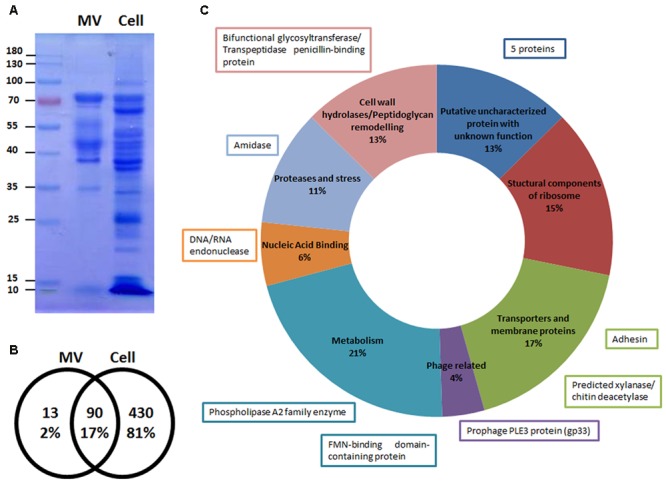
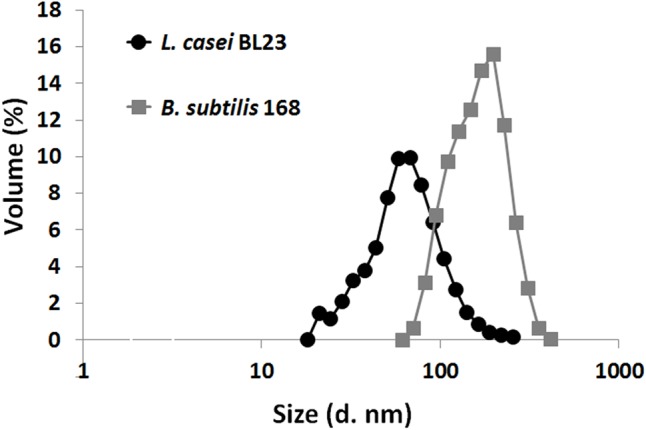
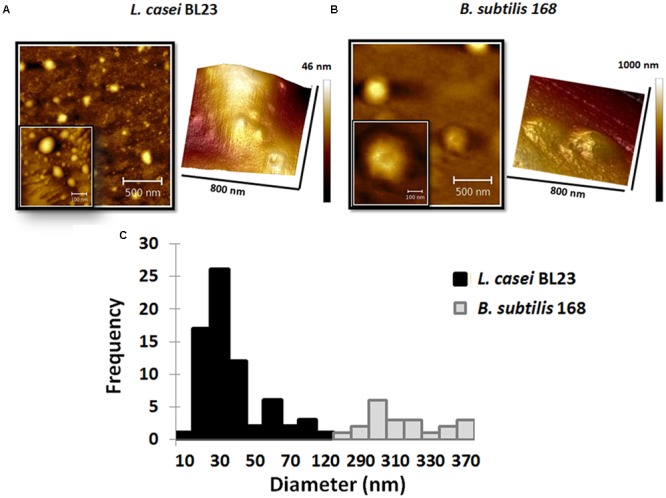
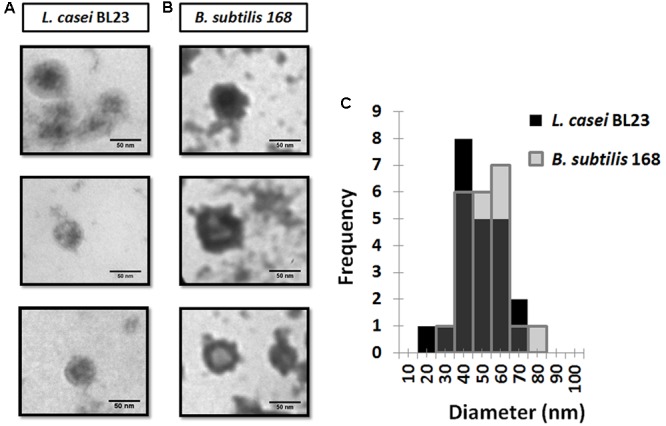
Archaea, bacteria, and eukarya secrete membrane microvesicles (MVs) as a mechanism for intercellular communication. We report the isolation and characterization of MVs from the probiotic strain BL23. MVs were characterized using analytical high performance techniques, DLS, AFM and TEM. Similar to what has been described for other Gram-positive bacteria, MVs were on the nanometric size range (30-50 nm). MVs carried cytoplasmic components such as DNA, RNA and proteins. Using a proteomic approach (LC-MS), we identified a total of 103 proteins; 13 exclusively present in the MVs. The MVs content included cell envelope associated and secretory proteins, heat and cold shock proteins, several metabolic enzymes, proteases, structural components of the ribosome, membrane transporters, cell wall-associated hydrolases and phage related proteins. In particular, we identified proteins described as mediators of probiotic effects such as p40, p75 and the product of LCABL_31160, annotated as an adhesion protein. The presence of these proteins suggests a role for the MVs in the bacteria-gastrointestinal cells interface. The expression and further encapsulation of proteins into MVs of GRAS (Generally Recognized as Safe) bacteria could represent a scientific novelty, with applications in food, nutraceuticals and clinical therapies.
古菌、细菌和真核生物分泌膜微泡(MVs)作为一种细胞间通讯机制。我们报道了从益生菌菌株BL23中分离和鉴定MVs的过程。使用分析高性能技术、动态光散射(DLS)、原子力显微镜(AFM)和透射电子显微镜(TEM)对MVs进行了表征。与其他革兰氏阳性菌的描述相似,MVs的尺寸在纳米范围内(30-50纳米)。MVs携带细胞质成分,如DNA、RNA和蛋白质。使用蛋白质组学方法(液相色谱-质谱联用,LC-MS),我们总共鉴定出103种蛋白质;其中13种仅存在于MVs中。MVs的成分包括与细胞膜相关和分泌的蛋白质、热休克蛋白和冷休克蛋白、几种代谢酶、蛋白酶、核糖体的结构成分、膜转运蛋白、细胞壁相关水解酶和噬菌体相关蛋白质。特别地,我们鉴定出了被描述为益生菌效应介质的蛋白质,如p40、p75以及LCABL_31160的产物,注释为一种粘附蛋白。这些蛋白质的存在表明MVs在细菌与胃肠道细胞界面中发挥作用。将蛋白质表达并进一步封装到公认安全(GRAS)的细菌的MVs中可能代表一种科学新事物,在食品、营养保健品和临床治疗中有应用。